January 2022 in “International Journal of Pharmacognosy and Pharmaceutical Sciences” This review examines the ethanomedicinal uses and pharmacological properties of Semecarpus anacardium, commonly used in traditional medicine, and does not provide new clinical results; it highlights a range of potential benefits including anti-inflammatory and antioxidant activities.
 45 citations
,
January 2020 in “Pharmaceutical Biology”
45 citations
,
January 2020 in “Pharmaceutical Biology” This review discusses the potential dermatological applications of Dendrobium officinale polysaccharides, noting their hair growth promoting, skin moisturizing, and antioxidant effects, but reports no new clinical results.
21 citations
,
November 2023 in “Heliyon” This review explored the use of six tropical plants, such as Acacia concinna and Garcinia mangostana, as natural active ingredients in shampoos, highlighting their beneficial physicochemical properties and biological activities for hair care and scalp maintenance.
 48 citations
,
January 2003
48 citations
,
January 2003 In this study, researchers isolated and identified diverse endophytes from plants in Asia, finding that these microorganisms have significant potential for producing useful metabolites, including enzymes and antibiotics.
January 2023 in “Rasayan journal of chemistry/Rasayan journal of Chemistry” This study suggests that compounds from Sansevieria trifasciata Prain may have promising potential as effective 5α-reductase inhibitors for alopecia treatment, outperforming finasteride in binding affinity tests.
 January 2026 in “Lumbung Farmasi Jurnal Ilmu Kefarmasian”
 This study found that a topical emulsion containing purified extracts of sidr leaves and roasted candlenut seeds significantly increased hair growth compared to the base and 2% minoxidil, potentially through their antioxidant and anti-inflammatory properties.
 25 citations
,
May 2020 in “Progress in Organic Coatings”
25 citations
,
May 2020 in “Progress in Organic Coatings” This study found that bio-based waterborne polyurethanes derived from castor oil may offer effective hair-styling performance without skin irritation and appear to be safer for the environment compared to traditional hair sprays.
 March 2026 in “Buletin Veteriner Udayana”
 In this study, dogs with atopic dermatitis showed significant improvements in macroscopic skin lesions, such as reduced pruritus and hair regrowth, after receiving coconut oil massages every three days for 33 days.
 March 2026 in “Buletin Veteriner Udayana”
 In this case report, a combination therapy including pyrantel pamoate, chlorpheniramine maleate, vitamin B-complex, and topical candlenut oil effectively treated dermatitis and Ancylostoma spp. infection in a dog, leading to improvement in skin condition and hair growth after 14 days.
 1 citations
,
January 2023 in “Journal of research in pharmacy”
1 citations
,
January 2023 in “Journal of research in pharmacy” This study found that the methanolic extract of Carduus adpressus exhibited strong antibacterial, antioxidant, and wound-healing activities, suggesting its potential use in developing wound-healing agents.
August 2024 in “Panggung Kebaikan” In this community service project, the researchers found that educating the public about using clove leaves as a herbal remedy for hair growth issues in Indonesia significantly increased public knowledge from 17.91% to 45.86%.
 March 2022 in “Zenodo (CERN European Organization for Nuclear Research)”
 This review discusses the potential of Indonesian plants for hair growth promotion and highlights the need for more rigorous research to validate their effectiveness for treating hair loss.
 3 citations
,
January 2022 in “Medical Mycology Journal”
3 citations
,
January 2022 in “Medical Mycology Journal” This study observed Malassezia hyphae in the keratotic plugs of healthy individuals, which contrasts with previous findings of these hyphae primarily in lesions of pityriasis versicolor patients.
This study found that applying topical cinnamon essential oil on male wistar rats increased hair length and hair follicle diameter similarly to 2% minoxidil over 30 days.
 June 2025 in “Jurnal Pemberdayaan Ekonomi dan Masyarakat”
 This study concluded that there is a significant market potential for rosemary oil-based hair care products in Indonesia, though consumer education and market penetration remain challenges.

This study found that a hair tonic formulation containing 1.5% light fraction patchouli oil demonstrated strong antifungal activity against Malassezia globosa and promoted hair growth in rabbits, suggesting potential benefits for hair care despite the need for human clinical trials to confirm safety and effectiveness.
2 citations
,
September 2018 in “Walailak Journal of Science and Technology (WJST)” This study found that Thuja orientalis fruits have higher monoterpene, flavonoid, phenolic content, and antioxidant activity than leaves, suggesting potential value for the pharmaceutical industry.
 October 2023 in “Arab Gulf journal of scientific research”
 This study found that adding Cinnamomum zeylanicum bark extract to a powder shampoo formulation significantly improved antioxidant activity without affecting its cleansing ability, although its clinical effectiveness remains to be tested.
 1 citations
,
January 2018 in “Acta dermato-venereologica”
1 citations
,
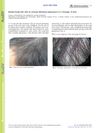
January 2018 in “Acta dermato-venereologica” A teenager's hair with alternating white and dark bands, known as Pili annulati, is a genetic condition that is usually harmless and often considered attractive.
August 2009 in “PHARMACY: Jurnal Farmasi Indonesia (Pharmaceutical Journal of Indonesia)” This study concluded that ethanolic extract of Morinda may enhance hair growth in male rabbits.
 March 2025 in “Formosa Journal of Sustainable Research”
 In this study involving male mice, Mangkokan leaf extract (Polyscias scutellaria) at a 7% concentration was found to heal incision wounds faster compared to 3% and 5% concentrations.
May 2026 in “Riset Informasi Kesehatan” This experimental study evaluated shampoo formulations with varying concentrations of candlenut oil, concluding that the 12% formulation (Formula 2) demonstrated optimal physical characteristics and quality standards, with acceptable pH and viscosity but reduced foam stability at higher oil concentrations.
 August 2022 in “FAKUMI MEDICAL JOURNAL Jurnal Mahasiswa Kedokteran”
 This study found no significant effect of dandruff on the severity of androgenic alopecia compared to cases without dandruff.
20 citations
,
January 2002 in “Laboratory Animals” This study identified a compound heterozygous mutation in a hairless rhesus macaque, which was associated with skin abnormalities similar to those in hairless mice and humans with APL.
December 2025 in “JURNAL PIJAR MIPA” This study explored the Belanger tradition, a Sasak hair-cleansing ritual using natural ingredients, and concluded that it combines cultural heritage with sustainable practices and scientifically supported benefits.
This study found that applying an ethanol extract of Prasiola japonica improved hair regrowth, length, and follicular density in testosterone-induced hair loss conditions in mice, while also promoting dermal papilla cell proliferation and reducing dihydrotestosterone production, though effects were less pronounced than those of minoxidil.
This review provides an overview of the ethno-medical uses, chemical components, and pharmaceutical profile of the plant Myrtus, but reports no new research findings.
September 1973 in “Primates”  September 2022 in “KnE medicine”
 In this study, variations in candle nut oil concentration (5%, 6%, 7%) impacted the characteristics and stability of a hair tonic nanoemulsion, influencing factors like droplet size, pH, and viscosity.
 December 2025 in “Fullerene Journal of Chemistry”
 This study investigated the potential of nutmeg-derived phytochemicals as anti-alopecia agents using molecular docking and simulations, finding that geranylgeraniol exhibited significant binding stability and potential efficacy against androgenetic alopecia comparable to finasteride and superior to minoxidil.