 July 2015 in “Actas Dermo-Sifiliográficas”
 A young woman with a rare fungal infection showed significant improvement after treatment with antifungal medication.
This creative piece by Christa Fairbrother poetically explores the experiences of living with arthritis, with no new research findings reported.
 3 citations
,
August 2021 in “Veterinary World”
3 citations
,
August 2021 in “Veterinary World” This study found that platelet-rich plasma improved the healing of skin wounds in sheep compared to honey by reducing early inflammation and enhancing collagen synthesis and organization.
1 citations
,
March 2013 in “Journal of Dermatological Case Reports” This case report describes an atypical presentation of lichen planopilaris affecting only facial vellus hair, without scalp involvement, in a 46-year-old man.
 2 citations
,
June 2024 in “Sociological research and innovation”
2 citations
,
June 2024 in “Sociological research and innovation” This study highlighted the complex stigma, misinformation, and coping mechanisms among unmarried women with PCOS in Pakistan, emphasizing the role of family support and accurate information in managing emotional well-being.
1 citations
,
March 2023 in “Medicine” This study found that albumin-bound paclitaxel combined with nedaplatin shows promise as neoadjuvant therapy for esophageal squamous cell carcinoma, achieving a high complete response rate with manageable side effects.
This study found that an extract treatment showed similar efficacy and tolerability to calcipotriol/betamethasone ointment in reducing psoriasis severity and symptoms over 28 days in patients with mild-to-moderate plaque psoriasis.
 April 2026 in “Zenodo (CERN European Organization for Nuclear Research)”
 In this case study, a female patient with alopecia areata experienced significant symptom reduction following Ayurvedic treatment, including Nasya and Pracchanna karma, suggesting potential benefits of Ayurveda for autoimmune hair disorders.
2 citations
,
April 2023 in “Polymers” This study explored the creation of 3D-printed baricitinib pills using polylactic acid and found that the doughnut-shaped tablets increased surface area and drug release, with 59% released from the higher concentration pill over 24 hours.
58 citations
,
September 2019 in “EMBO Molecular Medicine” This study found that the CDK4/6 inhibitor palbociclib may protect human hair follicles from the damaging effects of taxane chemotherapy by inducing G1 arrest in stem/progenitor cells.
10 citations
,
November 2016 in “Clinical and experimental dermatology” This case report describes a 52-year-old woman with multiple autoimmune conditions suggesting a diagnosis of PAS IIIC, characterized by prominent skin-related symptoms.
November 2022 in “Munich Personal RePEc Archive (Ludwig Maximilian University of Munich)” In this study, the pi4kβ1β2 double mutant in Arabidopsis thaliana exhibited altered root growth, increased susceptibility to Blumeria graminis, and a potential correlation between PI4K activity and auxin response and immunity due to changes in vesicular trafficking and actin filaments.
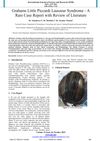 October 2023 in “International Journal of Science and Research (IJSR)”
 This paper describes Grahams Little Piccardi Lassueur Syndrome, a rare type of Lichen Planopilaris that causes different types of alopecia and distinctive skin papules, primarily affecting females aged 40 to 70, and notes the current challenges in treatment options, particularly once scarring occurs.
1 citations
,
January 2019 in “International Research Journal of Ayurveda & Yoga” This case report demonstrates successful treatment of Indralupta using Prachhana karma, Shirolepa, and Bhringarajadi Rasayana in Ayurvedic practice.
 August 2022 in “International Journal of Current Science Research and Review”
 This review discusses Ayurvedic detoxification methods for poisonous plants, known as Visha Dravyas, and reports no new clinical results.
July 2017 in “Journal of Ayurveda and Integrated Medical Sciences” This study reported that Ayurvedic treatment involving the internal administration of Vidangarishta, Krimikutararasa, and Shatavari Guda, alongside external papaya exudate application, led to significant, rapid, and lasting improvements in alopecia areata in a week-long trial.
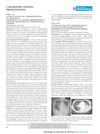 May 2025 in “The Journal of Rheumatology”
 This case report highlights a rare instance of diffuse alveolar hemorrhage in a patient with catastrophic antiphospholipid syndrome, emphasizing the importance of early recognition and multidisciplinary management.
January 2026 in “International journal of Indian medicine” This case study reports significant hair regrowth in a patient with alopecia areata using Ayurvedic treatments, which included Nasya with Bindu Taila, Pracchan Karma, and topical therapies with castor leaves and buffalo butter, without causing adverse effects.
2 citations
,
January 2016 in “Gynecological Endocrinology” This case report describes a patient with polyglandular autoimmune syndrome type 2 diagnosed via adrenal crisis, with thyroid, adrenal, and ovarian involvement.
8 citations
,
January 2020 in “Indian Dermatology Online Journal” In this study, PRP injections showed comparable effectiveness to triamcinolone for alopecia areata, with a significant decrease in SALT score at one interval, and 12.5% of patients in the PRP group experienced excellent hair regrowth compared to none in the triamcinolone group.
 January 2023 in “Indian Journal of Unani Medicine”
 This report suggests that a Unani formulation, jawarish Falafali, effectively reduced symptoms and TSH levels in a 35-year-old woman with hypothyroidism over two months, while T3 and T4 levels remained normal.
August 2025 in “International Journal of Ayurveda360” In this randomized controlled trial, the combination of Bhringaraja Taila Shiroabhyanga and Yastimadhuka Taila Nasya was found to significantly improve hair density, reduce hair fall, and decrease scalp visibility in females with Khalitya compared to Nasya alone, with no reported adverse effects.
July 2025 in “Case Reports in Dermatology” This case report highlights that early signs like pili torti may precede lichen planopilaris in some patients, emphasizing the importance of timely intervention to prevent permanent hair loss.
8 citations
,
July 2022 in “Journal of Ayurveda and Integrative Medicine” This case report suggests that shodhana and shamana treatments may facilitate hair regrowth in a patient with índralupta, with improvements observed within 15 days.
March 2000 in “Current Problems in Dermatology” January 2025 in “Sanjeevani Darshan National Journal of Ayurveda & Yoga” This source examines alopecia areata, an autoimmune condition causing patchy hair loss, describing the current reliance on corticosteroid injections despite their severe side effects, and explores Ayurvedic treatments identified as Shaman and Shodhan for managing an equivalent condition called Indralupta.
11 citations
,
May 2009 in “Clinical and Experimental Dermatology” This case report describes a 12-year-old girl's persistent and worsening scalp condition, ultimately diagnosed as pityriasis amiantacea secondary to localized Darier's disease, after numerous ineffective treatments.
 2 citations
,
December 2019 in “Leprosy Review”
2 citations
,
December 2019 in “Leprosy Review” This report describes a rare case of leprotic alopecia in a 26-year-old female, secondary to paucibacillary leprosy, with a clinical picture mimicking alopecia areata-vitiligo overlap syndrome.
July 1999 in “Journal of the American Academy of Dermatology” This review discusses valproic acid as a common antiseizure medication associated with alopecia and highlights the need for its inclusion in relevant medical guides, without presenting new clinical findings.
September 2023 in “Journal of the American Academy of Dermatology” This study found that in participants with notalgia paresthetica, 8 weeks of treatment with difelikefalin significantly improved itch intensity and increased the rate of strict complete response compared to placebo, starting as early as week 3.