 1 citations
,
July 2023 in “Cureus”
1 citations
,
July 2023 in “Cureus” This article examines advancements in understanding and managing androgenic alopecia (male pattern baldness), discussing genetic and psychological factors, diagnostic methods, classifications, and various treatment options, including traditional and emerging therapies, to aid healthcare professionals in making informed treatment decisions.
 50 citations
,
July 2014 in “International Journal of Clinical Pharmacology and Therapeutics”
50 citations
,
July 2014 in “International Journal of Clinical Pharmacology and Therapeutics” This study found that both topical and oral finasteride significantly reduced plasma DHT after one week, with lower finasteride plasma exposure for the topical formulation.
October 2024 in “Más dermatología” The abstract describes a journal that covers a wide range of topics from basic research to dermo-aesthetics, emphasizing multidisciplinary approaches and scientific rigor across subjects like molecular biology, gene therapy, and dermocosmetics, but provides no specific study results.

This phase II study found that a 0.05% topical dutasteride solution was more effective than oral finasteride (1 mg/day) in increasing hair count and width in males with androgenetic alopecia over 24 weeks, without causing irritation.
In this study, researchers highlighted that while oral valproate often causes hair loss, preliminary experiments with topical valproic acid solution suggest its potential for hair regeneration, potentially offering fewer side effects and reduced cost compared to existing treatments.
 2 citations
,
March 1985 in “Journal of The American Academy of Dermatology”
2 citations
,
March 1985 in “Journal of The American Academy of Dermatology” Minoxidil solution used on the scalp did not lower blood pressure in patients without hypertension.
 5 citations
,
January 2014 in “Hospital pharmacy”
5 citations
,
January 2014 in “Hospital pharmacy” This case report suggests that frequent application of diphenylcyclopropenone 2% solution to the scalp for alopecia areata may lead to scalp angioedema.
 February 2024 in “Skin Research and Technology”
 This study found that combining scalp repair serum microneedles with oral and topical medications significantly improved hair regrowth in patients with moderate to severe androgenetic alopecia.
 9 citations
,
January 1997 in “Gynecological Endocrinology”
9 citations
,
January 1997 in “Gynecological Endocrinology” This review discusses the regulation of hair growth, causes of excessive androgen secretion, and current safe solutions for hyperandrogenism manifestations in women but reports no new clinical results.
 4 citations
,
August 2016 in “JEADV. Journal of the European Academy of Dermatology and Venereology/Journal of the European Academy of Dermatology and Venereology”
4 citations
,
August 2016 in “JEADV. Journal of the European Academy of Dermatology and Venereology/Journal of the European Academy of Dermatology and Venereology” This case report observed that after 6 months of treatment with topical cetirizine and oral vitamin D, hair density and quality improved in three girls with congenital hypotrichosis due to ectodermal dysplasia.
1 citations
,
December 1995 in “Archives of Dermatology” This case report describes a patient with advanced androgenetic alopecia who underwent a 6-month trial of topical minoxidil and oral finasteride, aiming to optimize hair regrowth without surgery.
 August 2025 in “Archives of Dermatological Research”
 In this randomized controlled trial, oral minoxidil at 2.5 mg daily was more effective than topical minoxidil for increasing hair thickness, counts, and density in men with androgenetic alopecia, demonstrating more significant improvements and better compliance over six months.
 July 2024 in “Forum Dermatologicum”
 This review evaluates various topical treatments for androgenetic alopecia but does not provide new clinical findings, emphasizing the need for selecting therapies with limited systemic side effects.
 July 2024 in “Journal of Cosmetic Dermatology”
 This article highlights that fractionated laser therapy is gaining attention as a minimally invasive and effective treatment for androgenetic alopecia, offering a potential solution to traditional treatments' limitations.
 January 2022 in “International Journal of Research Publications”
 In this case report, an 8-year-old child with tinea capitis caused by Microsporum canis showed significant clinical and mycological improvement after a four-week course of oral griseofulvin, highlighting the importance of comprehensive diagnostic examinations to confirm the diagnosis and determine the best treatment.
June 2019 in “The Professional Medical Journal” In this prospective study, the addition of the steroid triamcinolone to the tumescent solution was significantly more effective in preventing post-operative edema in hair transplant patients than a postoperative oral steroid course, showing a 93.3% success rate compared to 57.8% in the oral steroid group.
Topical finasteride may better target hair follicles without significant benefits over oral form.
 48 citations
,
January 2017 in “Skin Pharmacology and Physiology”
48 citations
,
January 2017 in “Skin Pharmacology and Physiology” This study found that polymeric nanoparticles may effectively deliver finasteride topically to hair follicles, potentially improving alopecia treatment with fewer side effects than oral forms.
 42 citations
,
December 2015 in “International Journal of Clinical Pharmacology and Therapeutics”
42 citations
,
December 2015 in “International Journal of Clinical Pharmacology and Therapeutics” This study found that applying a novel 0.25% finasteride solution to the scalp can effectively reduce scalp DHT levels in men with androgenetic alopecia, potentially reducing systemic side-effects.
 15 citations
,
January 2020 in “BioMed Research International”
15 citations
,
January 2020 in “BioMed Research International” In this study of patients with androgenetic alopecia, botulinum toxin type A was found to significantly increase hair counts and improve hair density and coverage, with enhanced results observed when combined with oral finasteride, revealing a safe and effective treatment approach without adverse effects.
 8 citations
,
April 2020 in “Journal of The American Academy of Dermatology”
8 citations
,
April 2020 in “Journal of The American Academy of Dermatology” This report describes nine women who were allergic to topical minoxidil but successfully tolerated low-dose oral minoxidil without significant adverse effects, suggesting it may be a viable alternative for those with similar allergies.
January 2022 in “Indian journal of drugs in dermatology” This review of available data noted that oral minoxidil shows promise for treating various alopecia disorders, including androgenetic alopecia and alopecia areata, but high-quality studies are needed to better understand its effectiveness and mechanisms in these conditions.
June 2020 in “Journal of skin and stem cell” This case report describes a 19-year-old female with recurrent alopecia totalis who experienced complete remission after re-treatment with various therapies, emphasizing the importance of long-term follow-up in managing alopecia areata.
 September 2025 in “International Journal of Innovative Technologies in Social Science”
 This study found that low-dose oral minoxidil (≤5 mg/day) effectively increased hair number and diameter in men and women with androgenetic alopecia, and was generally well-tolerated with mostly mild adverse effects, although serious complications were rare and associated mainly with pre-existing heart conditions.
 June 2022 in “Journal of The European Academy of Dermatology and Venereology”
 This study reports no results yet and only indicates an ongoing randomized placebo-controlled trial investigating the effects of microneedling combined with topical dutasteride solution for treating androgenetic alopecia.
 4 citations
,
June 2020 in “BMC Ophthalmology”
4 citations
,
June 2020 in “BMC Ophthalmology” This case report suggests that prolonged use of topical minoxidil for androgenic alopecia may cause central serous chorioretinopathy, and oral eplerenone appeared effective in resolving symptoms in the patient presented.
 February 2025 in “Journal of the American Academy of Dermatology”
 Spironolactone helps prevent swelling caused by minoxidil in women with hair loss.
 February 2026 in “MDPI (MDPI AG)”
 This review provides a comprehensive look at injectable treatments like PRP, stem cells, and exosomes for hair regrowth, highlighting their potential to minimize systemic and localized side effects associated with conventional medications, and improve patient care by stimulating natural hair growth.
 12 citations
,
November 2011 in “International Journal of Dermatology”
12 citations
,
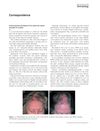
November 2011 in “International Journal of Dermatology” A woman developed a scalp condition from using minoxidil, which improved with a different treatment but left scarring.
September 1989 in “Drug and Therapeutics Bulletin” This article discusses the use of oral and topical minoxidil for hair growth, detailing its effects and the regulatory status of topical minoxidil in the UK, but it presents no new clinical results.