 48 citations
,
May 2012 in “Journal of Midwifery & Women's Health”
48 citations
,
May 2012 in “Journal of Midwifery & Women's Health” This review discusses the symptoms, diagnosis, and current treatment recommendations for polycystic ovary syndrome, noting that many women may remain undiagnosed and at risk for complications.
1 citations
,
January 2022 in “Pakistan BioMedical Journal” This study reported that a significant number of young women in Pakistan may unknowingly have PCOS, with many experiencing irregular periods, weight gain, and increased cravings potentially linked to dietary habits.

This article discusses the challenges of diagnosing and managing polycystic ovarian syndrome and reports no new research findings, emphasizing the need for improved diagnostic criteria and lifestyle intervention to prevent complications.
August 2019 in “Repozitorij Farmaceutsko-biokemijskog fakulteta (Sveučilišta u Zagrebu)” This review discusses the pathophysiology of polycystic ovary syndrome and its non-pharmacological and pharmacological treatment options, but reports no new clinical results.
In this study, introducing the rat OTC gene into spf-ash mice led to increased OTC activity and normalized hair growth and biochemical markers like urinary orotic acid and serum citrulline, partially correcting the symptoms of OTC deficiency.
 August 2025 in “International Journal of Environmental Sciences”
 In this descriptive cross-sectional study, researchers observed that less than 10% of female nursing students in Dharmapuri have been diagnosed with polycystic ovarian syndrome, though many show increasing symptom prevalence and poor health-related behaviors, underlining the need for better education and regular gynecological check-ups.
26 citations
,
August 2008 in “Clinical endocrinology” This paper summarizes proceedings from a PCOS Special Interest Group, reporting recent advances in the understanding of PCOS follicular abnormalities, associated cardiovascular risks, and dermatological issues, but does not present new clinical findings.
 9 citations
,
July 2009 in “Journal Of Endocrinology, Metabolism And Diabetes Of South Africa”
9 citations
,
July 2009 in “Journal Of Endocrinology, Metabolism And Diabetes Of South Africa” The document concludes that managing PCOS involves treating symptoms and reducing long-term metabolic risks, with lifestyle changes being important.
January 2019 in “OpenBU/Boston University Institutional Repository (Boston University)” In this study, women with a PCOS diagnosis were more likely to report clinical signs of androgen excess, including hirsutism, acne, and alopecia, with ethnic patterns in symptom prevalence.
 April 2017 in “Journal of Investigative Dermatology”
 This study found that the PON1 192 R allele was associated with an increased risk of psoriasis and altered lipid profiles in patients from Western Mexico.
 November 2008 in “Pediatrics in Review”
 This review summarizes recent developments in oral contraceptive pills and other contraceptive methods, highlighting advances in formulations and delivery systems to improve efficacy and user compliance.
 January 2024 in “Epidemiology international journal”
 This study observed a 19.7% prevalence of polycystic ovarian syndrome among Afro-Caribbean women in Tobago, a rate higher than that reported in North American studies.
May 2026 in “Journal of Pharmacognosy and Phytochemistry” This review discusses the renaming of Polycystic Ovary Syndrome to Polyendocrine Metabolic Ovarian Syndrome, reflecting its broader recognition as a multisystem metabolic-endocrine disorder, and reports no new clinical results.
 65 citations
,
November 2004 in “Journal of the American Academy of Dermatology”
65 citations
,
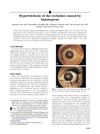
November 2004 in “Journal of the American Academy of Dermatology” This article reports a case where the IOP-lowering drug bimatoprost was associated with eyelash hypertrichosis.
July 2025 in “Dermatology Reports” This report presents a rare case of discoid lupus erythematosus in a Saudi woman, highlighting the need for dermatologists to recognize atypical presentations to prevent misdiagnosis and treatment delays.
 November 2017 in “Elsevier eBooks”
 This article reviews the complications and health risks associated with polycystic ovary syndrome and reports no new clinical findings.
 989 citations
,
August 2007 in “The Lancet”
989 citations
,
August 2007 in “The Lancet” This article reviews the clinical features, diagnostic criteria, and possible genetic and environmental influences of polycystic ovary syndrome but provides no new research findings.
6 citations
,
March 2024 in “The Lancet Child & Adolescent Health” 11 citations
,
April 2023 in “Skin Health and Disease” This review discusses the interplay between dermatology and psychology in psychodermatology, highlighting the impact of neuroendocrine stress pathways on skin diseases and the importance of considering skin of color.
February 2026 in “Research Society and Development” This review highlights the multiple physical and psychological impacts of polycystic ovary syndrome in reproductive-aged women and underscores the importance of early medical evaluation and lifestyle changes for effective treatment.
 July 2023 in “Journal of ayurveda and integrated medical sciences”
 This case report details the treatment of a 28-year-old woman with PCOS symptoms, including irregular menstruation, weight gain, and hair loss, using Ayurvedic management after ultrasound showed a bilateral PCO pattern.
 December 2013 in “International Journal of Dermatology”
 The clinical signs of Adams-Oliver syndrome can vary greatly, even among family members.
35 citations
,
January 2024 in “BioMolecular Concepts” This review discusses the relationship between oxidative stress and polycystic ovarian syndrome and reports no new clinical results; the authors emphasize the need for further research into therapeutic strategies.
This abstract provides information on various oral contraceptives, their potential hazardous interactions, and possible side effects, without presenting new research findings.
This review outlines acne management strategies for individuals with polycystic ovary syndrome, but reports no new clinical results.
 1 citations
,
May 2011 in “Molecular Medicine Reports”
1 citations
,
May 2011 in “Molecular Medicine Reports” This study found no association between the -866G/A polymorphism in the UCP2 gene and the development of polycystic ovary syndrome.
November 2009 in “Oncology Times” This article reports that the American Society of Clinical Oncology and the Oncology Nursing Society have issued the first national standards for safe chemotherapy administration to improve patient care and reduce errors.
 10 citations
,
October 2014 in “Journal of Ovarian Research”
10 citations
,
October 2014 in “Journal of Ovarian Research” This study found a significant association between the IRS-2 gene variant and an increased risk of PCOS, especially in non-obese women in the Chinese population from Taiwan.
 March 2012 in “Journal of Pediatric and Adolescent Gynecology”
 This study found that while most adolescents with PCOS do not show overt diabetes, over half have insulin resistance, and ethnicity is a significant predictor of type 2 diabetes.
 5 citations
,
July 2014 in “Actas dermo-sifiliográficas/Actas dermo-sifiliográficas”
5 citations
,
July 2014 in “Actas dermo-sifiliográficas/Actas dermo-sifiliográficas” Latanoprost eye drops caused excessive hair growth and eyelash whitening in a woman.