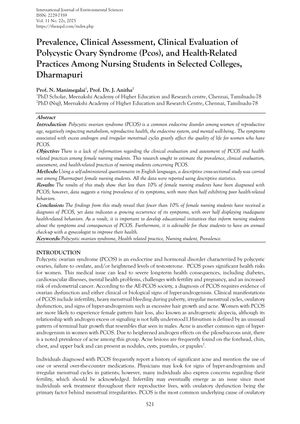
Prevalence, Clinical Assessment, Clinical Evaluation of Polycystic Ovary Syndrome (PCOS), and Health-Related Practices Among Nursing Students in Selected Colleges, Dharmapuri

    P. Manimegalai, P. Anitha
    TLDR Less than 10% of nursing students have PCOS, but many show symptoms and poor health habits, needing more education and yearly check-ups.
    The study on female nursing students in Dharmapuri reveals that while fewer than 10% have been diagnosed with PCOS, there is a rising prevalence of its symptoms, with over half of the students exhibiting poor health-related behaviors. This highlights the need for educational initiatives to inform students about PCOS symptoms and consequences. Additionally, it is recommended that these students undergo annual gynecological check-ups to enhance their health.
    Discuss this study in the Community →

    Related Community Posts Join

    6 / 23 results

      community How does hair loss and recovery work?

      in Chat  12 upvotes 1 year ago
      Hair loss varies due to genetic sensitivity to DHT and other factors. Treatments discussed include finasteride, minoxidil, RU58841, and microneedling.

      community Sugar and Hair loss connections

      in Research/Science  41 upvotes 9 months ago
      High sugar diets may worsen hair loss by increasing 5α-reductase activity and androgen levels, especially in women with PCOS. A low sugar diet might reduce scalp DHT levels, similar to finasteride, but genetics also significantly influence hair loss.

      community C’est terrible - at my wits end

      in Female  450 upvotes 2 years ago
      A 29-year-old woman is experiencing gradual hair thinning since age 15, suspects Androgenic Alopecia, and has tried 5% minoxidil with little success. She has purchased various hair loss treatments including minoxidil, dutasteride, finasteride, and spironolactone, but is cautious about starting them due to potential interactions with her ADHD medication.

    Similar Research

    5 / 1000+ results