May 2025 in “Preprints.org” This review discusses the potential of olive mill wastewater as a sustainable source of dermatological ingredients with antioxidant and regenerative properties but reports no new clinical findings.
 27 citations
,
September 2018 in “Medicines”
27 citations
,
September 2018 in “Medicines” This study reported that oleic acid-based nanovesicles improve follicular delivery and reduce side effects of minoxidil compared to traditional MXD lotions.
August 2026 in “Quality in Sport” This review discusses evidence that regular physical activity and tailored dietary interventions improve metabolic health in women with PMOS, advocating for personalized lifestyle management in their care, and reports no new clinical results.
64 citations
,
March 2004 in “Journal of Clinical Investigation” This study found that inhibiting the enzyme ornithine decarboxylase (ODC) prevented UVB-induced basal cell carcinomas in a mouse model, suggesting ODC is a potential target for chemoprevention strategies.
1 citations
,
March 2021 in “medRxiv (Cold Spring Harbor Laboratory)” This study provided insight into unexpected uses and abuse of oral contraceptive pills by Jordanian males, primarily for bodybuilding, as reported by community pharmacists.
 February 2022 in “Faculty Opinions – Post-Publication Peer Review of the Biomedical Literature”
 Low-dose oral minoxidil is a promising, safe treatment for various hair diseases, improving hair thickness and density, but more research is needed on long-term side effects and treatment duration.
1 citations
,
February 2025 in “Journal of Pharma Insights and Research.” This analysis explores the potential benefits of various nutraceuticals, such as Ashwagandha, Cinnamon, and Fenugreek, in managing Polycystic Ovarian Disease, suggesting these may improve menstrual regularity, insulin sensitivity, and other symptoms when used alongside conventional treatments.
3 citations
,
January 2023 in “Agronomy” This research reported that KDML105 bran extract demonstrated antioxidant activities, reduced nitric oxide production, and influenced gene expression related to the hair cycle in cultured dermal papilla cells, suggesting potential as an anti-hair loss agent by supporting the anagen phase and angiogenesis.
8 citations
,
August 2014 in “Biochemical and Biophysical Research Communications” The study found that over-expressing ornithine decarboxylase in the outer root sheath of the hair follicle in mice increases UVB-induced tumor growth and invasive squamous cell carcinoma compared to inter-follicular epidermal keratinocytes.
 September 2023 in “International Journal For Multidisciplinary Research”
 In this case report, a 29-year-old woman with PCOS experienced significant improvement in symptoms and ultrasound findings after three months of Ayurvedic treatment, suggesting potential benefits of adherence to Ayurvedic principles for managing PCOS.
6 citations
,
July 1994 in “Journal of Dermatological Science” This study found that introducing the recombinant rat OTC gene into SPF-ASH mice restored normal hair growth and metabolic function, improving symptoms associated with OTC deficiency.
 9 citations
,
August 2019 in “Journal of The European Academy of Dermatology and Venereology”
9 citations
,
August 2019 in “Journal of The European Academy of Dermatology and Venereology” Minoxidil activation by hair enzymes predicts treatment success for female hair loss.
 July 2023 in “CRC Press eBooks”
 This chapter reviews various ayurvedic formulations for managing PCOS symptoms but presents no new research findings, suggesting further detailed exploration of their efficacy through an ayurvedic perspective.
 January 1989 in “Skin research”
 In this study, an oleanolic acid-containing scalp treatment increased terminal hair counts significantly more than placebo in men under 50 with androgenic alopecia, but only three showed clinical improvement, with minimal side effects reported.
9 citations
,
January 2014 in “Molecular Genetics and Metabolism Reports” This study discovered that a specific G to C mutation in the ornithine aminotransferase gene is linked to the retarded hair growth phenotype in mice and may serve as a model for human gyrate atrophy.
 September 2024 in “Journal of the American Academy of Dermatology”
 This review discusses the consensus reached by international experts on guidelines for prescribing and monitoring low-dose oral minoxidil for hair loss, and reports no new clinical results.
3 citations
,
May 2021 in “PloS one” This study found that Jordanian males use oral contraceptive pills, particularly for bodybuilding, based on recommendations from gym coaches, highlighting unexpected uses of these medications.
 1 citations
,
January 2020 in “Surgical & Cosmetic Dermatology”
1 citations
,
January 2020 in “Surgical & Cosmetic Dermatology” This article examines the potential of using oral minoxidil as an adjuvant treatment for patients with severe alopecia areata who do not respond to increased doses of Janus kinase inhibitors, but provides no new clinical results.
January 2022 in “International Research Journal of Ayurveda & Yoga” This narrative review explores Ayurvedic concepts related to polycystic ovarian syndrome and reports no new clinical results; the authors suggest traditional treatment approaches involving lifestyle and specific therapies.
14 citations
,
February 1991 in “FEBS Letters” This study found that introducing rat ornithine transcarbamylase gene into spf-ash mice improved liver and intestinal enzyme activity and normalized some metabolic indicators.
 1 citations
,
November 2023
1 citations
,
November 2023 This study examined the prevalence and management of PCOD, finding that it primarily affects unmarried women aged 18-25, causing symptoms like irregular periods and infertility, with many opting for medication and lifestyle changes despite mixed beliefs about their effectiveness.
 14 citations
,
August 2014 in “Applied Physiology, Nutrition, and Metabolism”
14 citations
,
August 2014 in “Applied Physiology, Nutrition, and Metabolism” This study concluded that an 8-week low-starch/low-dairy diet increased fat oxidation in overweight and obese women with PCOS.
83 citations
,
December 2012 in “International journal of endocrinology and metabolism/International journal of endocrinology and metabolism.” This article reviews the diverse clinical applications of oral contraceptives beyond birth control, suggesting their effectiveness in treating various female health disorders and conditions.
 October 2022 in “The Egyptian Journal of Hospital Medicine”
 In this study, serum omentin-1 levels were higher in females with idiopathic hirsutism compared to those with hirsutism and polycystic ovary syndrome, suggesting it may help distinguish between these conditions.
 September 2016 in “Journal of dermatological science”
 The researchers reported that the OVOL1-OVOL2 axis may play a role in hair follicle differentiation and tumorigenesis, and OVOL1 and OVOL2 are potential diagnostic markers for pilomatricoma and pilomatrix carcinoma.
 1 citations
,
April 2018 in “Journal of Investigative Dermatology”
1 citations
,
April 2018 in “Journal of Investigative Dermatology” In this study, OEA was found to significantly enhance sebaceous lipogenesis and potentially reduce inflammation in human sebocytes, suggesting it as a promising candidate for treating skin dryness.
 January 2016 in “Türkiye klinikleri tıp bilimleri dergisi”
 About 38% of patients at a dermatology clinic had oral lesions, with coated tongue, fissured tongue, and Fordyce granules being most common.
 8 citations
,
January 2013 in “Medicinal chemistry”
8 citations
,
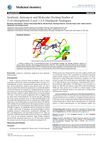
January 2013 in “Medicinal chemistry” This study reported that among 10 tested 2-(4-chlorophenyl)-5-aryl-1,3,4-oxadiazole compounds, compound 4c showed the highest activity against cancer cell lines, with a 95.37% average growth rate.
May 2025 in “Preprints.org” This review discusses the dermatological potential of olive mill wastewater as a sustainable source of high-value cosmeceutical ingredients but reports no new clinical results.
 2 citations
,
January 2021 in “Journal of Cosmetics, Dermatological Sciences and Applications”
2 citations
,
January 2021 in “Journal of Cosmetics, Dermatological Sciences and Applications” In this study, phenol-enriched olive mill wastewater extract positively influenced hair growth in vitro by promoting human dermal papilla cell proliferation, increasing insulin-like growth factor-1 secretion, and reducing reactive oxygen species, suggesting it may be beneficial for hair care.