 January 2026 in “http://isrctn.com/”
 The supplement may improve hair growth and quality in women with mild to moderate hair loss.
6 citations
,
January 2005 This study evaluated laser excision of the fibrous band for oral submucous fibrosis treatment, noting that while it offers immediate relief, long-term effects require further evaluation due to potential drawbacks.
 21 citations
,
August 1960 in “British journal of dermatology/British journal of dermatology, Supplement”
21 citations
,
August 1960 in “British journal of dermatology/British journal of dermatology, Supplement” Endoxan often causes hair loss, which usually starts in the third week of treatment.
 19 citations
,
May 2020 in “Journal of The American Academy of Dermatology”
19 citations
,
May 2020 in “Journal of The American Academy of Dermatology” This case series reports the experience of using oral minoxidil at 1.25 mg/day in 32 patients with male androgenetic alopecia, noting both therapeutic effects and potential adverse reactions.
 September 2024 in “Journal of the American Academy of Dermatology”
 This study assessed the impact of a New York Times article on consumer interest in androgenetic alopecia treatments by surveying dermatologists about practice trends and analyzing online search data related to low dose oral minoxidil and hair loss from February 2022 to February 2023.
 2 citations
,
January 2017 in “Cambridge University Press eBooks”
2 citations
,
January 2017 in “Cambridge University Press eBooks” Manage PCOS in primary care with weight loss, psychological support, medication, and monitoring for health risks.
2 citations
,
November 2025 in “Nutrition Journal” This study found that an 8-week supplementation with specific probiotic strains improved hormonal markers and oxidative stress while decreasing inflammation in women with PCOS, although clinical symptoms like acne and hirsutism showed no significant improvement compared to the placebo group.
 10 citations
,
March 2016 in “The Journal of Obstetrics and Gynecology of India”
10 citations
,
March 2016 in “The Journal of Obstetrics and Gynecology of India” This review proposes renaming polycystic ovarian syndrome to "Hyperandrogenic Persistent Ovulatory Dysfunction Syndrome" to better reflect its diagnostic criteria and promote consistency in research, but reports no new clinical findings.
 September 2025 in “International Journal of Innovative Technologies in Social Science”
 This study found that low-dose oral minoxidil (≤5 mg/day) effectively increased hair number and diameter in men and women with androgenetic alopecia, and was generally well-tolerated with mostly mild adverse effects, although serious complications were rare and associated mainly with pre-existing heart conditions.
 April 2018 in “Journal of Investigative Dermatology”
 This study identified a specific subset of macrophages as a key source of oncostatin M, maintaining hair follicle stem cell quiescence during the resting phase in mice, suggesting a potential target for treating hair disorders.
138 citations
,
August 2020 in “Frontiers in Endocrinology” This review discusses expert consensus on PCOS, emphasizing its impacts and supporting evidence-based treatments, while recommending further research into nutraceutical benefits for managing the condition; it reports no new clinical results.
 101 citations
,
March 2019 in “Cell Stem Cell”
101 citations
,
March 2019 in “Cell Stem Cell” This study found that Oncostatin M, via JAK-STAT5 signaling, keeps hair follicle stem cells inactive, and its removal leads to hair growth initiation in mice.
 November 2025 in “International Journal of Research in Medical Sciences”
 In this case study, the authors explored the management of ophiasis, a rare and challenging form of alopecia areata, in a 3-year-old boy using the Unani system of medicine, aiming to provide insights for treatment approaches.
3 citations
,
January 2025 in “Journal of Research in Medical Sciences” This study reported that among obese women with PCOS, neither early time-restricted eating (eTRE) alone nor combined with probiotics showed significant improvements in blood pressure, inflammatory markers, oxidative stress, or antioxidant capacity compared to a standard reduced-calorie diet.
 March 2026 in “Anti-Aging Eastern Europe”
 This review examines current evidence on personalized management strategies for PCOS, but does not present new clinical results; the authors advocate for treatments tailored to predominant symptoms and individual health profiles.
 April 2023 in “Tikrit journal of pharmaceutical sciences”
 This pilot study found that ginger may improve hair growth and allow for a reduction in prednisolone dosage by mitigating oxidative stress in patients with alopecia areata over 60 days.
1 citations
,
December 1971 in “PubMed” 3 citations
,
April 2019 in “Journal of the Endocrine Society” This case report describes a rare instance of Satoyoshi syndrome in a 27-year-old Asian American woman, notable for her normal ovarian function despite typical syndrome features.
 October 2021 in “Journal of pharmaceutical research international”
 This study is set to evaluate the effectiveness of yoga (Malasana) on reducing anxiety and depression in women with polycystic ovarian disease, but it reports no new results yet.
 2 citations
,
January 2014 in “Hair therapy & transplantation”
2 citations
,
January 2014 in “Hair therapy & transplantation” This study found that combining oral chelated Zinc with 5% minoxidil solution improved hair density and hair shaft diameter in women with female pattern hair loss, without reported side effects.
 June 2024 in “Molecules/Molecules online/Molecules annual”
 This study found that Platycladus orientalis flavonoids may reduce oxidative damage and slow melanin degradation in AGA-affected hair, improving its quality.
 3 citations
,
March 2018 in “Pediatric Dermatology”
3 citations
,
March 2018 in “Pediatric Dermatology” This study found that omeprazole can cause acquired generalized hypertrichosis by significantly increasing duodenal prostaglandin E2 synthesis, which is involved in hair growth regulation.
29 citations
,
January 2020 in “Frontiers in endocrinology” This paper considers fibrodysplasia ossificans progressiva as a segmental progeroid syndrome, which may help uncover mechanisms of normal aging and suggest targets for new treatments.
 February 2025 in “Iraqi Journal of Science”
 This study found that women with polycystic ovary syndrome had significantly higher serum lactate dehydrogenase levels and lower levels of cortisol, dopamine, zinc, and vitamin D3 compared to healthy controls.
 December 2024 in “Eastern Medical College Journal”
 This case study describes a 22-year-old female with acne and irregular menstrual cycles, suggesting a possible link to Polycystic Ovarian Syndrome, but reports no new clinical findings.
19 citations
,
April 2019 in “Veterinary dermatology” This study observed that oclacitinib, combined with oral glucocorticoids, achieved rapid and lasting clinical remission in four dogs with refractory juvenile-onset ischaemic dermatopathy, suggesting oclacitinib's potential as a useful immunosuppressive treatment in such cases.
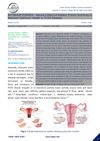 January 2020 in “Asian Journal of Basic Science & Research”
 This review discusses the role of Nutrease powder in managing hormonal disturbances in polycystic ovary syndrome and reports no new clinical results.
 January 2026 in “Nature Communications”
 This study presented a new wearable textile-based device with near-infrared OLEDs that significantly reduced cell aging markers and improved cell migration in vitro, suggesting it as a promising, non-invasive phototherapy option for hair follicle treatment and hair-loss management.
3 citations
,
October 2021 in “The Application of Clinical Genetics” This study found that certain genetic variations in the OPN gene may be linked to atopic dermatitis and a higher prevalence of asthma in Caucasians.
 2 citations
,
December 2021 in “ScienceRise”
2 citations
,
December 2021 in “ScienceRise” This study identified optimal parameters for extracting oil from Urtica dioica roots to maximize phytosterol content, using corn oil and a 1:5 raw material-extract ratio over a 6-hour maceration period.