2 citations
,
January 2014 in “Photochemical & photobiological sciences” This study suggests that the Grasp protein may play a role in regulating skin homeostasis following UVB exposure by influencing p53-mediated apoptotic responses in mice.
2 citations
,
November 2006 in “Pump Industry Analyst” This study found that pilomatricomas exhibit co-expression of hair keratin hHa5 and HOXC13 in lower transitional cells, but lack LEF1 and β-catenin co-expression necessary for canonical Wnt signaling pathway-controlled cortical differentiation.
2 citations
,
December 1973 in “Calcified tissue research” This study proposed a hypothesis for cutaneous calcinosis, suggesting that feeding DHT and subsequent epilation lead to ATP release and calcium orthophosphate formation, initiating calcification in rats.
 1 citations
,
January 2023 in “Bioscience Journal”
1 citations
,
January 2023 in “Bioscience Journal” This study found that combining sorafenib with Platycladus orientalis leaf extract effectively suppressed cervical cancer cell growth by increasing tumor suppressor gene expression and reducing anti-apoptotic gene expression, suggesting a potential rationale for further clinical trials.
1 citations
,
January 2023 in “bioRxiv (Cold Spring Harbor Laboratory)” This study found that epithelial cell metabolism exhibits distinct heterogeneity based on cell density, particularly during the pre-epithelial transition stage where clusters of high and low mitochondrial potential cells emerge.
 1 citations
,
December 2022 in “Biomolecules & therapeutics”
1 citations
,
December 2022 in “Biomolecules & therapeutics” This study found that a long-term astrocyte culture model can effectively study astrocyte senescence and suggests minoxidil as a potential candidate to regulate brain aging by normalizing dysregulated gene expression in aged astrocytes.
 1 citations
,
September 2022 in “Pharmaceutics”
1 citations
,
September 2022 in “Pharmaceutics” This study found that altering mechanical signals in mouse wounds, particularly through FAK inhibition, increased hair regeneration by modulating wound stiffness and gene expression linked to tissue regeneration.
 1 citations
,
July 2022 in “Вопросы современной педиатрии”
1 citations
,
July 2022 in “Вопросы современной педиатрии” This review discusses progeria, focusing on its pathogenesis, major symptoms, and management strategies, and includes a clinical case of a girl with the disease confirmed by genetic testing; it reports no new clinical results.
1 citations
,
January 2015 in “Journal of Arthritis” This case report describes an 18-year-old girl with systemic lupus erythematosus who developed lupus pneumonitis, initially misdiagnosed as tuberculosis, and responded dramatically to corticosteroid treatment.
 1 citations
,
January 1995 in “Journal of Investigative Dermatology”
1 citations
,
January 1995 in “Journal of Investigative Dermatology” RU58841, a substance from France, can potentially block the effects of hormones that cause hair loss and excessive hair growth, performing better than a similar substance, cyproterone acetate.
1 citations
,
January 1989 in “The Nishinihon Journal of Dermatology” In this study, minoxidil did not demonstrate any anti-aging effects on postconfluent hair follicle cells, as no difference was observed in cell proliferation or differentiation compared to controls.
August 2026 in “Scientific Reports” This study found that FAM19A5 acts as a negative regulator of wound healing by hindering keratinocyte migration and partially transitioning them between epithelial and mesenchymal states, suggesting that targeting the FAM19A5-PPARD-Snail axis could offer new therapeutic options for impaired wound repair.
 July 2026 in “bioRxiv (Cold Spring Harbor Laboratory)”
 This study identified a new FAK isoform, FAKΔe4, which is regulated by ECM stiffness and affects cell migration, invasion, and mechanosensing in human-derived data and engineered models.
July 2026 in “Italian Journal of Anatomy and Embryology” This study found that induced pluripotent stem cells derived from human keratinocytes efficiently differentiated into cardiomyocytes, forming a homogeneous population with cardiac-specific molecular and functional properties, and demonstrated significant cardiac marker expression and spontaneous contraction capabilities over 15 days of differentiation induction.
 June 2026 in “International Journal of Drug Delivery Technology”
 In this study, silver nanoparticles synthesized using Pogostemon benghalensis extract demonstrated significant antibacterial activity, antioxidant properties, and potential anticancer effects, particularly showing effectiveness against V. cholerae and A549 lung cancer cells through apoptosis.
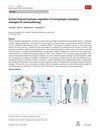
This review highlights that surface mechanical regulation can program macrophage behavior through specific mechanical cues on material surfaces, potentially advancing immunotherapies and regenerative medicine by enabling precise control over macrophage functions.
January 2026 in “Journal of Radiation Research” This study found that using human hair follicle dermal papilla cells, 53BP1 focus counting can estimate radiation doses from 50 mGy after 5 hours, and focus size analysis refines dose estimation for doses ≥ 500 mGy up to 96 hours.
 January 2026 in “International Journal of Research and Innovation in Applied Science”
 This case report details a rare instance of malignant proliferating trichilemmal tumour in a 60-year-old male, emphasizing the significance of histochemical and immunohistochemical markers for accurate diagnosis and differentiation from squamous cell carcinoma.
 October 2025 in “International journal of research and scientific innovation”
 This case report highlights the importance of considering lupus pneumonitis as a differential diagnosis for respiratory symptoms in systemic lupus erythematosus, especially in areas endemic to tuberculosis.
September 2025 in “Stem Cell Research & Therapy” This study found that TAZ promotes adipogenesis in goat adipose-derived mesenchymal stem cells by enhancing PI3K/AKT pathway activity, with overexpression boosting adipocyte formation and knockdown inhibiting it.
 June 2025 in “Current Issues in Molecular Biology”
 In this laboratory study, Cucumis melo var. makuwa leaf extract significantly reduced DHT-induced apoptosis in human dermal papilla cells by modulating androgen receptor activity and gene expression, suggesting potential as a therapy for androgenetic alopecia.
March 2025 in “Laboratory Investigation” This systematic review found that mixed epithelial and stromal tumor of the seminal vesicle (MESTSV) is characterized by abundant stromal proliferation, architectural heterogeneity, and strong immunoreactivity for ER/PR, with most being benign but warranting surveillance for possible recurrence or metastasis.
January 2025 in “Stem Cells International” This study found that exosomes from human umbilical cord mesenchymal stem cells reduced oxidative stress and inflammation in UVB-induced skin injury in cell and mouse models, suggesting their potential for treating UV-damaged skin by influencing Nrf2 and NF-κB pathways.
 November 2024 in “Malaysian Journal of Microbiology”
 In this study, researchers found varying levels of multiple autoantibody types among thyroid disorder patients, with 84.84% of those with immunological hypothyroidism reporting symptoms like weight gain and lethargy, whereas 81.81% of those with immune hyperthyroidism experienced hair loss.
 September 2024 in “Genes”
 This study found that overexpressing CRABP1 in dermal papilla cells promotes their proliferation and influences key genes in the Wnt/β-catenin signaling pathway, which may offer insights into mechanisms controlling hair follicle development.
July 2024 in “Indian Dermatology Online Journal” In this case report, a benign trichoadenoma was identified in a 42-year-old man as a skin-colored nodule on the cheek, with histopathology confirming the diagnosis and differentiating it from similar conditions like pilomatricoma and sebaceous cyst.
July 2024 in “Journal of Investigative Dermatology” A new test helps find drugs to treat head and neck cancer by targeting c-Rel.
 May 2024 in “Archives of dermatological research”
 This study found that Enz_MoriL, a compound derived from Morus alba L., promotes hair follicle cell proliferation by affecting the Wnt/β-catenin pathway and can counteract an alopecia areata-like condition by suppressing the JAK-STAT signaling in human hair follicle dermal papilla cells.
March 2024 in “Journal of functional biomaterials” This study demonstrated that a strain of lactic acid bacteria from kimchi, identified as Pediococcus inopinatus, showed antibacterial activity against certain oral pathogens and effectively bleached stained artificial teeth and inhibited biofilm formation, offering potential for addressing teeth discoloration and halitosis.
 February 2024 in “PloS one”
 This study found that certain nutraceuticals did not interfere with tamoxifen's inhibition of estrogen in breast cancer cells and may enhance its effects, suggesting potential as an adjuvant therapy for hair loss in patients undergoing endocrine therapy.