49 citations
,
February 2025 in “Science Advances” This review discusses the potential of biomimetic synthetic vesicles to advance precision diagnostics and medicine by combining the beneficial properties of naturally occurring extracellular vesicles and synthetic nanoparticles, although no new clinical results are reported.
4 citations
,
February 2023 in “Frontiers in Oncology” In this study, Nano-Pulse Stimulation Therapy successfully cleared up to 91% of melanoma tumors in mice with less skin damage compared to cryoablation, which cleared up to 66% of tumors.
July 2026 in “Pediatric Allergy and Immunology” 2 citations
,
September 2017 in “Journal of Investigative Dermatology” This study found that notch1 signaling is severely impaired in hidradenitis suppurativa patients with or without NCSTN or other gamma-secretase gene mutations, highlighting a canonical defect at the lesional tissue level.
3 citations
,
January 2025 in “Biomaterials Science” In this study, blue light-irradiated nanovesicles derived from human adipose-derived stem cells enhanced dermal fibroblast proliferation and extracellular matrix synthesis, improving skin maintenance and hair follicle regeneration, suggesting a novel therapeutic strategy for skin and hair disorders.
 November 2022 in “The journal of investigative dermatology/Journal of investigative dermatology”
 This study found that skin organoids derived from iPSCs with an HS-associated NCSTN mutation showed defects in hair follicle stem cell differentiation and increased expression of inflammatory proteins related to hidradenitis suppurativa.
January 2026 in “Case Reports in Dermatological Medicine” In this case study, a young female with aseptic and alopecic nodules of the scalp achieved full resolution without recurrence using intralesional steroids.
1 citations
,
July 2017 in “Cancer Research” This study found that overexpression of NSD3 in the mammary gland of transgenic mice led to mammary hyperplasia, dysplasia, and invasive ductal carcinoma, mirroring patterns seen in human breast cancer.
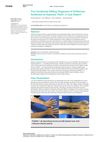
This study presents a rare instance of Netherton syndrome diagnosed incidentally in siblings of consanguineous parents, initially misdiagnosed as other skin conditions, emphasizing the need for careful evaluation in chronic skin cases to prevent misdiagnosis.
 March 2026 in “Scientific Journal”
 This case study reported a 15-year-old girl with a nevus sebaceus of Jadassohn, where a secondary neoplasm potentially developed into either pigmented trichoblastoma or pigmented basal cell carcinoma, highlighting the importance of early recognition and evaluation of such lesions for effective management.
July 2024 in “Journal of Investigative Dermatology” A new test helps find drugs to treat head and neck cancer by targeting c-Rel.
 June 2024 in “ACTA SCIENTIAE VETERINARIAE”
 This study reported a case of equine ringworm infection in a 2-year-old horse caused by Nannizzia gypsea, confirmed through culture and SYBR-Green real-time PCR techniques, demonstrating that qPCR allows specific detection of dermatophytes more rapidly than conventional methods.
78 citations
,
August 2014 in “Anais Brasileiros de Dermatologia” This article discusses a new global consensus on the classification of vitiligo, describing histopathological findings and outlining treatment strategies, but reports no new clinical results.
3 citations
,
January 2023 in “Journal of Cosmetic Dermatology” This study found that combining Fractional CO2 laser with platelet-rich plasma led to better improvement in vitiligo treatment compared to platelet-rich plasma alone, based on patient satisfaction and lesion size reduction.
 July 2026 in “International Journal of Molecular Sciences”
 This review highlights that a comprehensive approach combining pharmacological, immunomodulatory, and regenerative interventions, including phototherapy enhanced with topical treatments and JAK inhibitors, appears effective and promising in the management of vitiligo by addressing its autoimmune and melanocyte-loss aspects.
 December 2024 in “Clinical Cosmetic and Investigational Dermatology”
 This study reports that vitiligo prevalence in a Saudi cohort is similar to global figures, with stress as a common trigger, frequent lesional pruritus, and widespread thyroid issues and low vitamin D levels.
July 2024 in “Journal of Investigative Dermatology” ITK inhibitors may effectively treat alopecia areata.
 October 2021 in “QJM: An International Journal of Medicine”
 This study found increased H2O2 levels and decreased E-cadherin levels in vitiligo patients compared to controls, suggesting oxidative stress and compromised cell adhesion may impact the pigmentary system in vitiligo-affected skin.
In this case report, a 7-month-old boy with Netherton syndrome experienced significant improvement in symptoms, including reduced pruritus and increased hair growth, through a combination of intravenous immunoglobulin and dupilumab treatment, which also decreased high serum IgE levels and food-specific IgE antibodies.
March 2026 in “Journal of the European Academy of Dermatology and Venereology” This study introduced and validated the VESALT, a visual extension of the Severity of Alopecia Tool, finding it offers improved reliability and user-friendliness over SALT by incorporating pattern recognition and broader coverage, including non-scalp regions, in assessing alopecia areata severity.
2 citations
,
May 1991 in “PubMed” This article reviews naevus comedonicus, highlighting potential treatments like retinoic acid application and surgical intervention, but reports no new clinical findings.
56 citations
,
October 2010 in “Pediatric Clinics of North America” This article discusses various types of epidermal nevi and associated syndromes but presents no new research findings.
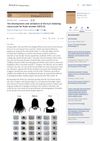 October 2023 in “The Journal of Dermatology”
 This study developed and validated the Hair-Shedding Visual Scale for Asian Women, finding it to be an effective tool for identifying FPHL and TE.
 April 2016 in “Plastic and reconstructive surgery. Global open”
 This abstract catalogs resources from the American Society of Plastic Surgeons but presents no research findings.
4 citations
,
March 1999 in “International Journal of STD & AIDS” This report details a case of severe recurrent bacterial vaginosis in a woman with Netherton's syndrome.
36 citations
,
July 2022 in “Stem Cell Research & Therapy” This study concluded that using adipose tissue-derived stromal vascular fraction significantly improved acne scars by increasing collagen content and skin thickness compared to nanofat alone.
This case report of a four-year-old girl with Nicolaides-Baraitser syndrome highlights severe atopic dermatitis and worsening alopecia, suggesting that SMARCA2 dysfunction may impact skin barrier integrity and hair health, necessitating aggressive dermatologic treatment.
March 2026 in “Zenodo (CERN European Organization for Nuclear Research)” This bibliography catalogues 335+ publications produced using the N-K Model over 13 months and reports no new scientific results.
 July 2021 in “British Journal of Dermatology”
 Laser treatment for skin conditions VEN and ILVEN is effective and liked by patients.
3 citations
,
December 2014 in “Annals of Laboratory Medicine” In this study, a somatic KRAS mutation was identified in a Korean infant with nevus sebaceus and associated extracutaneous manifestations, suggesting a diagnosis of nevus sebaceus syndrome.