 June 2022 in “International Journal of Health Sciences (IJHS)”
 This study found that a nutrition intervention was more effective than nutrition education or medication alone in reducing symptoms of PCOS, with significant improvements in body measurements and testosterone levels.
 January 2025 in “International Journal of Pharmaceutical Research and Applications”
 This review discusses the use of experimental animal models to better understand the poorly understood mechanisms behind polycystic ovarian syndrome and reports no new clinical results.
 December 2023 in “Asian Journal of Pharmaceutical Research and Development”
 This research suggests that phytoestrogen-rich herbal extracts may help reduce hyperandrogenism, insulin resistance, and ovarian weight while promoting ovulation in polycystic ovarian syndrome, indicating potential for discovering new bioactive compounds.
 28 citations
,
November 2020 in “Journal of Controlled Release”
28 citations
,
November 2020 in “Journal of Controlled Release” In this study, microneedles combined with finasteride nanostructured lipid carriers (FIN-NLC-MNs) were found to enhance skin penetration and specifically target hair follicles, promoting hair growth and gene regulation in androgenetic alopecia.
January 2018 in “Refubium (Universitätsbibliothek der Freien Universität Berlin)” This thesis developed stimuli-responsive nanocarriers, demonstrating their potential for targeted genetic material delivery with reduced toxicity and diagnostic applications, and explored pH-sensitive nanogels for effective skin drug delivery and monitoring.
November 2022 in “Cureus” This study reviews various treatment options for androgenic alopecia, emphasizing the potential use of drug-loaded nanoparticles, but reports no new research results.
 July 2023 in “CRC Press eBooks”
 This review explores plant-based pharmacological advances for treating polycystic ovary syndrome, reporting no new clinical results but highlighting potential benefits for menstrual cycle regulation and testosterone reduction.
 46 citations
,
December 2007 in “International Journal of Cardiology”
46 citations
,
December 2007 in “International Journal of Cardiology” This study found that patients with polycystic ovary syndrome have reduced heart rate recovery, an exaggerated systolic blood pressure response to exercise, and decreased heart rate variability, implying possible autonomic dysfunction.
4 citations
,
September 2020 in “Stem Cell Research & Therapy” In this study, xenobiotic-free human multipotent adult progenitor cells were found to improve wound vascularization and healing in mice, suggesting potential applicability for clinical use in humans.
 16 citations
,
September 2018 in “Journal of Molecular Liquids”
16 citations
,
September 2018 in “Journal of Molecular Liquids” This study investigated a nanostructured system using PS-b-PAA diblock copolymer for incorporating the hydrophobic photosensitizer ClAlPc, finding it effective in causing cellular damage in Caco-2 cells under light while demonstrating no cytotoxicity without light, suggesting its potential use in photodynamic therapy.
 5 citations
,
April 2013 in “Current Problems in Pediatric and Adolescent Health Care”
5 citations
,
April 2013 in “Current Problems in Pediatric and Adolescent Health Care” This review discusses the prevalence and management of polycystic ovary syndrome in women, particularly noting gaps in understanding its presence in adolescents, and reports no new clinical findings.
3 citations
,
April 2024 in “Molecular Human Reproduction” This study found that paxillin knockdown in human granulosa-derived cells and mouse models decreased androgen receptor protein levels and altered gene expression, suggesting paxillin's role in protecting against androgen excess effects, as observed in a polycystic ovary syndrome mouse model.
17 citations
,
April 1997 in “American Journal of Dermatopathology” This report provides the first microscopic description of pachyonychia congenita-associated alopecia, identifying a combination of histological features that might be unique to this condition.
 January 2019 in “Open Access Journal of Nursing”
 This study found that the self-care management process for Thai women with PCOS was centered around managing fertility, leading to lifestyle modifications to address amenorrhea and associated symptoms.
 37 citations
,
January 2009 in “The Journal of Dermatology”
37 citations
,
January 2009 in “The Journal of Dermatology” In this study, hair follicle stem cells from ND-GFP transgenic mice were observed to be pluripotent, effectively repairing peripheral nerve and spinal cord injuries in mouse models.
April 2020 in “Research Square (Research Square)” This study found that oral contraceptives containing cyproterone acetate improved the overall quality of life in PCOS patients more than those containing levonorgestrel after 6 months of treatment.
 March 2024 in “Cancer Research”
 This study found that eliminating senescent cells using senolytic drugs effectively prevented and reversed paclitaxel-induced peripheral neuropathy in mice.
 April 2015 in “Andrology”
 This special issue contains abstracts from the ASA 40th Annual Meeting, providing an overview of various studies without reporting new primary results.
 42 citations
,
January 2024 in “Frontiers in Endocrinology”
42 citations
,
January 2024 in “Frontiers in Endocrinology” This review discusses polycystic ovary syndrome treatments, focusing on the potential benefits and safety of herbs and phytochemicals, and reports no new clinical results.
 27 citations
,
April 1996 in “Baillière's clinical endocrinology and metabolism”
27 citations
,
April 1996 in “Baillière's clinical endocrinology and metabolism” This article discusses the diagnostic complexities of PCOS and emphasizes the importance of differentiating between polycystic ovaries and polycystic ovary syndrome; it presents no new experimental results.
 72 citations
,
December 2012 in “Expert Opinion on Drug Delivery”
72 citations
,
December 2012 in “Expert Opinion on Drug Delivery” This review discusses niosomes' increasing popularity in dermatology for topical drug delivery due to their ability to enhance drug penetration, provide sustained release, and carry various drugs, while reporting no new clinical findings.
 1 citations
,
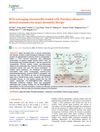
October 2025 in “Nano Research”
1 citations
,
October 2025 in “Nano Research” In this study, researchers developed a dissolvable microneedle patch combining HA-TEMPO and Portulaca oleracea L.-derived nanoparticles, which effectively reduced oxidative stress and inflammation in an atopic dermatitis model while restoring immune balance, suggesting a promising treatment strategy.
25 citations
,
February 2024 in “Pharmaceutics” This article outlines how nanotechnology strategies, including phospholipid-based nanocarriers like liposomes, could enhance the effectiveness and skin tolerability of acne treatments, aiming to reduce side effects and improve patient compliance in managing acne vulgaris.
1 citations
,
November 2022 in “Diagnostics” This case report identifies a 32-year-old woman with undiagnosed PHPT-1a who exhibited complete pseudo-anodontia and persistent patchy alopecia areata, suggesting these may be new nonclassical features of a GNAS pathogenic variant.
1947 citations
,
September 1995 in “New England journal of medicine/The New England journal of medicine” This article discusses the heterogeneity of polycystic ovary syndrome, its association with insulin resistance, and its implications for long-term health, but reports no new clinical results.
 17 citations
,
October 2016 in “Artificial Cells Nanomedicine and Biotechnology”
17 citations
,
October 2016 in “Artificial Cells Nanomedicine and Biotechnology” This study found that arginine-loaded lipidic nanoparticles improved hair follicle growth in male hamsters more effectively than an aqueous arginine solution.
 March 2026 in “Zenodo (CERN European Organization for Nuclear Research)”
 This publication presents a library of geometric medicines designed to selectively target pathogenic bacteria and fungi with high precision while minimizing ecological harm, available for free on a non-commercial basis.
February 2020 in “Journal of chemical neuroanatomy” This study suggests that five small molecules can induce hair follicle neural crest stem cells to differentiate toward motor neuron progenitor cells with a unipotent differentiation potential.
 September 2023 in “Pharmaceuticals”
 This study found that nanoparticles containing minoxidil and betamethasone improved drug delivery to hair follicles, with lipidic nanoparticles significantly enhancing minoxidil and betamethasone penetration compared to control, making them a promising option for alopecia areata treatment with reduced side effects.
19 citations
,
October 2021 in “Nano letters” In an animal study, this research explored the use of a self-therapeutic nanoparticle for treating psoriasis in mice, finding that it could prevent and treat psoriatic symptoms as effectively as standard therapies without causing side effects like hair loss and skin wrinkling.