November 2023 in “Children” In this study, valproic acid, levetiracetam, and phenytoin were the main anti-seizure medications associated with adverse drug reactions in pediatric epilepsy patients, with younger children and those on polytherapy at higher risk.
 4 citations
,
July 2023 in “Pharmaceutics (Basel)”
4 citations
,
July 2023 in “Pharmaceutics (Basel)” This study reviews various skin models and methodologies used to assess the follicular penetration of nanoparticle-based drugs, highlighting inconsistencies that complicate comparisons and aims to establish more uniform protocols for clearer study outcomes.
 4 citations
,
February 2022 in “International Journal of Molecular Sciences”
4 citations
,
February 2022 in “International Journal of Molecular Sciences” This review discusses the similarities between myotonic dystrophy and aging, highlighting the role of cellular senescence in its pathophysiology, and reports no new clinical findings; the authors note potential anti-aging therapy applications.
 8 citations
,
January 2023 in “RSC Advances”
8 citations
,
January 2023 in “RSC Advances” This article reviews advancements in carbon dots for tissue engineering and regenerative medicine, highlighting challenges and future directions without presenting new clinical findings.
 1 citations
,
March 2023 in “Nutrients”
1 citations
,
March 2023 in “Nutrients” This joint consensus statement from several Polish professional associations discusses strategies for improving obesity treatment and enhancing primary care's role in managing obesity, with no new empirical data reported.
 September 2017 in “Pediatric Dermatology”
 The document concludes that an experimental drug may help wound healing in Epidermolysis Bullosa, links Hydroa vacciniforme to EBV, discusses diagnosing hair loss disorders, finds many children with eczema have allergies, reviews the safety of a skin medication in children, notes side effects of a Duchenne's treatment, and identifies a marker for pediatric mastocytosis.
 22 citations
,
June 1980 in “International Journal of Dermatology”
22 citations
,
June 1980 in “International Journal of Dermatology” The document concludes that correct diagnosis of alopecia types is crucial, scalp biopsies are important, and more research is needed.
 14 citations
,
April 2022 in “Functional & Integrative Genomics”
14 citations
,
April 2022 in “Functional & Integrative Genomics” This study identified specific miRNAs and mRNAs involved in the development of secondary hair follicles in cashmere goats, particularly noting a targeted relationship between chi-miR-30e-5p and DLL4.
This chapter reviews recent developments in vitiligo research, highlighting the role of melanocyte stem cell differentiation and oxidative stress in its management, but reports no new clinical results.
 February 2010 in “ePrints Soton (University of Southampton)”
 This research found that androgen bioactivity plays a role in normal female sexual differentiation, suggesting females develop within a significant androgenic environment, with implications for understanding conditions like congenital adrenal hyperplasia.
 81 citations
,
June 2012 in “European journal of human genetics”
81 citations
,
June 2012 in “European journal of human genetics” This review outlines a diagnostic framework for clinicians to distinguish different types of inherited ichthyoses and suggests further testing and treatment strategies, but reports no new clinical results.
 114 citations
,
December 1951 in “Archives of Dermatology”
114 citations
,
December 1951 in “Archives of Dermatology” This article reviews the effectiveness of adrenal cortex compounds E and F in treating various connective tissue disorders and reports no new clinical findings.
 15 citations
,
May 1997 in “Annals of Internal Medicine”
15 citations
,
May 1997 in “Annals of Internal Medicine” This case report describes a patient with breast cancer who developed female androgenetic alopecia after starting tamoxifen therapy.
 3 citations
,
June 1983 in “Archives of Dermatology”
3 citations
,
June 1983 in “Archives of Dermatology” This article discusses the effectiveness of adrenal cortex compounds E and F in treating connective tissue disorders like rheumatoid arthritis and lupus erythematosus, but it reports no new clinical results.
 56 citations
,
February 2012 in “Cell Cycle”
56 citations
,
February 2012 in “Cell Cycle” This review discusses the role of miRNA/mRNA regulatory networks in skin development, epidermal homeostasis, and tissue remodeling, and suggests potential for miRNA-based therapies in treating skin conditions, but reports no new clinical results.
 47 citations
,
September 2023 in “Pharmacological Reports”
47 citations
,
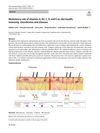
September 2023 in “Pharmacological Reports” In this review, researchers explored the roles of vitamins A, B3, C, D, and E in skin immunity, highlighting their potential as therapeutics for skin diseases due to their antioxidant, anti-inflammatory, and antimicrobial properties.
 22 citations
,
June 2013 in “International journal of molecular sciences”
22 citations
,
June 2013 in “International journal of molecular sciences” This review discusses the mechanisms governing epidermal stem and progenitor cell differentiation, emphasizing the balance necessary for maintaining skin barrier function, and reports no new experimental findings.
 21 citations
,
March 2019 in “Critical Reviews in Clinical Laboratory Sciences”
21 citations
,
March 2019 in “Critical Reviews in Clinical Laboratory Sciences” This review discusses the role of the androgen receptor in breast cancer diagnosis and treatment, and notes a lack of new research results on its therapeutic potential.
 16 citations
,
December 2019 in “Animals”
16 citations
,
December 2019 in “Animals” In this study, cashmere goats engineered to overexpress the Tβ4 gene in hair follicles produced more cashmere, indicating that Tβ4 promotes secondary hair follicle development and enhances yield.
 12 citations
,
November 2020 in “Journal of Dermatological Science”
12 citations
,
November 2020 in “Journal of Dermatological Science” In this study, miR-324-3p was found to promote differentiation and migration in cultured keratinocytes and is highlighted as a potential target for treating androgenic alopecia.
 2 citations
,
January 2019 in “Medizinische Genetik”
2 citations
,
January 2019 in “Medizinische Genetik” Among families with pediatric brain disease, this study identified over 200 novel genetic causes, revealing potential treatment points using drug repurposing or nutritional supplementation.
 June 2026 in “Discover Immunity.”
 This review discusses current advancements in mesenchymal stem cell-based therapies for skin repair and rejuvenation, focusing on therapeutic strategies, particularly highlighting the potential of neonatal and placenta-derived MSCs, and reports no new clinical results.
 April 2026 in “Research Square”
 This study found that dapagliflozin enhanced mitochondrial quality control and adaptive autophagy in human cardiomyocytes under hypoxic stress, suggesting that these mechanisms may contribute to the cardioprotective effects of sodium-glucose cotransporter 2 inhibitors in ischemic injury.
 March 2026 in “Plastic and Aesthetic Research”
 This review highlights that exosomes from adipose-derived stem cells, particularly those enriched with circ-Ash1l, can inhibit ferroptosis and reduce UVB-induced skin aging by delivering GPX4-promoting signals to damaged cells, thus offering a potential regenerative therapy for photoaged skin.
 September 2023 in “Curēus”
 This source discusses the complexity of cancer research, emphasizing that despite extensive studies, a comprehensive understanding of metastatic progression and therapeutic development remains elusive, and underscores the importance of animal models in breast cancer research.
 356 citations
,
December 1986 in “The journal of cell biology/The Journal of cell biology”
356 citations
,
December 1986 in “The journal of cell biology/The Journal of cell biology” This study found that specific human hair keratins are differentially expressed in the hair follicle, suggesting a shared pathway of epithelial differentiation between hair cortex and nail plate cells.
 126 citations
,
January 2009 in “International Journal of Trichology”
126 citations
,
January 2009 in “International Journal of Trichology” This review discusses the potential role of oxidative stress in hair graying and age-related alopecia, emphasizing the need for new strategies to counteract these effects, but reports no new results.
 45 citations
,
July 2009 in “Journal of Investigative Dermatology”
45 citations
,
July 2009 in “Journal of Investigative Dermatology” This study reported significant upregulation and release of S100A4 in psoriatic skin, which may actively contribute to psoriasis pathogenesis.
 33 citations
,
February 2016 in “Journal of Experimental Botany”
33 citations
,
February 2016 in “Journal of Experimental Botany” This study found that the receptor kinase RHS10 negatively regulates root hair growth in Arabidopsis thaliana by modulating growth duration and is associated with cell wall signal mediation, involving RNA catabolism and ROS accumulation.
 28 citations
,
August 2014 in “Journal of Assisted Reproduction and Genetics”
28 citations
,
August 2014 in “Journal of Assisted Reproduction and Genetics” This study found that the VEGF +405G/C polymorphism may be an inheritable risk factor for polycystic ovary syndrome in south Indian women.