 23 citations
,
November 2001 in “Archives of Dermatology”
23 citations
,
November 2001 in “Archives of Dermatology” This review discusses recent advances in the genetic understanding of inherited hair and nail disorders and reports no new clinical results.
December 2009 in “Faculty Opinions – Post-Publication Peer Review of the Biomedical Literature” This study found that in keratin 14-targeted transgenic mice, BMP antagonism via noggin led to the development of hair follicle tumors, mediated through alterations in Wnt and Shh signaling pathways.
 November 2022 in “Journal of Investigative Dermatology”
 This study found that the cytoplasmic dynein component Dynlt3 is essential for effective melanosome transport and transfer in mouse melanocytes, linking melanosome positioning and acidity to the Wnt/β-catenin signaling pathway.
December 2022 in “Ecological Chemistry and Engineering S” This study synthesized indole-acenaphthylene compounds using a magnetic nanocatalyst and explored their photoluminescence properties for detecting copper ions in a mixed solvent system, achieving a detection limit of 9.5 ∙ 10 –6 M.
294 citations
,
February 2011 in “Cell” Nephronectin helps attach muscle cells to hair follicles.
 37 citations
,
May 2016 in “JAAD case reports”
37 citations
,
May 2016 in “JAAD case reports” This abstract describes monilethrix, an autosomal dominant genodermatosis with symptoms like hair fragility and keratosis pilaris, and does not report new experimental results.
May 2025 in “Journal of Clinical Medicine” This study suggests that women with alopecia have decreased microcirculation oscillations, which may imply neuroinflammation as a factor in the disease's pathogenesis.
17 citations
,
January 2024 in “Journal of Materials Chemistry B” This paper reviews the current state of magneto-responsive biocomposites in wound dressings, highlighting their potential benefits in wound healing, such as remote control and enhancing tissue reconstruction, while addressing the need for more comprehensive research in this field.
 May 2026 in “Zenodo (CERN European Organization for Nuclear Research)”
 In this study, a chitosan-based minoxidil nanogel was developed and optimized for better scalp retention and targeted follicular delivery, showing sustained drug release over 48 hours and improved drug deposition compared to conventional minoxidil solutions.
January 1994 in “Ressò de Ponent: revista de l'Ateneu Popular de Ponent” This study found no overall difference in effectiveness between fractional CO2 laser and microneedling for resistant alopecia areata, although the laser group showed a statistically significant early response in terminal hair regrowth.
This study focused on developing a nanoemulsion-based gel for delivering minoxidil, aiming to enhance its contact time with the scalp and potentially improve skin absorption compared to conventional topical solutions.
July 2025 in “Journal of Drug Delivery Science and Technology” Hydrogel microneedles with special nanoparticles and growth factor improve hair growth better than minoxidil for hair loss treatment.
 5 citations
,
December 2018 in “Biological & Pharmaceutical Bulletin”
5 citations
,
December 2018 in “Biological & Pharmaceutical Bulletin” In this study, norgalanthamine was found to stimulate hair growth in cultured rat dermal papilla cells by activating the ERK 1/2, PI3K/AKT, and Wnt/β-catenin signaling pathways.
May 2026 in “Journal of the American Academy of Dermatology” This study investigated the effectiveness of combining microneedling with 2% topical minoxidil in women with mild-to-moderate androgenetic alopecia and found that adding microneedling every 2 or 4 weeks did not enhance outcomes compared to using minoxidil alone over 24 weeks.
43 citations
,
October 2005 in “Molecular and cellular endocrinology” This review discusses how the CRH/POMC systems may regulate human hair follicle pigmentation and highlights the concept of "self-similarity" in melanocortin systems at both local and systemic levels, without presenting new experimental results.

This review examines the potential of Parquetina nigrescens for managing Polyendocrine Metabolic Ovarian Syndrome, emphasizing its pharmacological activities and highlighting its promise as an affordable complementary therapy.
3 citations
,
April 2025 in “Advanced Healthcare Materials” In this study, researchers developed hyaluronic acid derivatives functionalized with nitric oxide photodonors for light-activated skin treatments, finding that the compounds released NO under blue light and enhanced keratinocyte proliferation and migration, suggesting potential for therapeutic use.
42 citations
,
June 2021 in “Pharmaceutics” This review summarizes the use of 3D printing technologies for creating microneedles and evaluates their associated benefits, challenges, and regulatory considerations, but does not present new experimental results.
January 2022 in “Indian journal of paediatric dermatology” This case report details an unusual instance of multiple eruptive milia in an otherwise healthy 3-month-old baby, characterized by widespread distribution and believed to be idiopathic due to the absence of associated genodermatoses.
 5 citations
,
June 2017 in “in Vivo”
5 citations
,
June 2017 in “in Vivo” This study found that vitamin C deficiency in SMP-30/GNL-KO mice affected gene expression related to hair growth and cell growth, resulting in delayed hair growth compared to those with adequate vitamin C.
 September 2022 in “The Egyptian Journal of Hospital Medicine”
 This review article discusses microneedling as a non-surgical treatment option in dermatology, highlighting its benefits for scar improvement through collagen induction and reporting its popularity among practitioners due to its cost-effectiveness and simplicity.
24 citations
,
February 2016 in “Journal of Animal Physiology and Animal Nutrition” The researchers reported that the net mineral requirements for weight gain in Morada Nova lambs differ from commonly recommended values by the Agricultural and Food Research Council.
July 2025 in “Materials Today Bio” This study suggests that curcumin-loaded nanoparticles, which activate autophagy and reduce oxidative stress, showed promise in promoting hair growth in an androgenetic alopecia mouse model.
 January 2023 in “Open Access Research Journal of Biology and Pharmacy”
 This review discusses the phytochemistry and pharmacological properties of Martynia annua but reports no new findings; it suggests the plant's various phytoconstituents offer scope for future research.
 8 citations
,
January 2011 in “Collection of Czechoslovak Chemical Communications”
8 citations
,
January 2011 in “Collection of Czechoslovak Chemical Communications” This study developed and validated a sensitive method using adsorptive cathodic stripping voltammetry to directly determine minoxidil in topical solutions, shampoos, and creams, achieving high recovery rates and precision.
June 2025 in “International Journal of Molecular Sciences” This review compiles current research on the role of long non-coding RNAs in regulating muscle growth and regeneration processes, particularly their influence on Duchenne muscular dystrophy, and reports no new clinical results.
 5 citations
,
January 2004 in “Analytical Sciences X-ray Structure Analysis Online”
5 citations
,
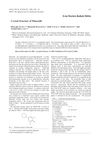
January 2004 in “Analytical Sciences X-ray Structure Analysis Online” This structural study reports on the crystal properties of a compound used for treating alopecia, revealing different conformations and nitrogen hybridization in its piperidine rings.
June 2025 in “British Journal of Dermatology” This case series highlighted three pediatric patients with congenital nail anomalies, revealing underlying developmental or genetic issues such as symbrachydactyly and potential Adams–Oliver syndrome, underscoring the critical role of dermatologists in early detection and diagnosis of these conditions.
 1 citations
,
September 2024 in “Acta Scientiarum Polonorum Hortorum Cultus”
1 citations
,
September 2024 in “Acta Scientiarum Polonorum Hortorum Cultus” This study found that spraying melon plants with 0.1 mg·L–1 molybdenum significantly improved growth, photosynthetic characteristics, carbohydrate metabolism, and fruit quality under high-temperature stress, boosting fruit weight by 27.9% and yield per plant by 20.1% compared to untreated controls.

In this study, microneedling radiofrequency followed by topical exosome application was associated with significant increases in hair density and diameter, showing promising potential as a therapy for pattern hair loss.