15 citations
,
September 2014 in “Dermatologic surgery” This study found that diode laser reduced axillary hair more effectively but with greater pain than intense pulsed light, with both methods producing lasting and safe results.
February 2022 in “INTERNATIONAL JOURNAL OF SCIENTIFIC RESEARCH” This study reviewed 44 clinical trials and found that home-based laser devices are effective for short-term hair removal and skin rejuvenation, with common side effects including erythema and edema; additional trials are needed to confirm safety and efficacy.
 April 2026 in “Biosensors”
 In this study, red-light irradiation significantly increased hair follicle numbers and ATP levels in a mouse model, highlighting low-level laser therapy's potential to enhance hair regeneration and alter the skin metabolic microenvironment.
 19 citations
,
August 2007 in “Seminars in Plastic Surgery”
19 citations
,
August 2007 in “Seminars in Plastic Surgery” This review discusses five popular resurfacing technologies for facial rejuvenation, highlighting their role in achieving smoother, healthier, and younger-looking skin, and reports no new clinical results.
15 citations
,
January 2019 in “Lasers in surgery and medicine” This review reported that home-use laser and intense pulsed light devices effectively reduce hair with significant efficacy and safety, showing 80% hair reduction one year post-treatment, although results can vary for darker skin types and compared to professional devices.
85 citations
,
November 2004 in “Journal of the American Academy of Dermatology” The 308-nm excimer laser helps hair regrowth in some alopecia areata cases but not all.
6 citations
,
April 2000 in “European journal of plastic surgery” This study found that repeated treatments with the long-pulsed ruby laser result in a small but statistically significant reduction in unwanted hair, with high patient satisfaction despite modest efficacy.
 47 citations
,
August 2011 in “Journal of The European Academy of Dermatology and Venereology”
47 citations
,
August 2011 in “Journal of The European Academy of Dermatology and Venereology” This study found that treatment with a 1550 nm fractional erbium–glass laser increased hair density and thickness in women with female pattern hair loss, suggesting it may be an effective and safe option.
39 citations
,
January 2006 in “Journal of Cosmetic and Laser Therapy” This study found that pneumatic skin flattening (PSF) significantly reduces pain and post-treatment erythema during high-energy IPL and laser hair removal while enhancing treatment efficacy.
115 citations
,
January 2002 in “American Journal of Clinical Dermatology”  January 2019 in “LASER THERAPY”
 Laser technologies improve medical treatments and outcomes.
 February 2025 in “Journal of Biophotonics”
 This study found that using dual-wavelength low-level laser therapy is more effective for hair regrowth in mice than single-wavelength treatment and significantly better than no treatment, based on 14 days of phototherapy with LED lights.

The 1540nm fractional erbium-glass laser helps treat hair loss caused by hormones.
 December 2025 in “Medical Lasers”
 This prospective study found that 1,927-nm fractionated thulium laser treatment significantly increased hair and terminal hair counts in 11 men with pattern hair loss, although it did not change average hair thickness, suggesting it may be a promising therapy for this condition.
This study found that in a rat model of alopecia, combining low-level laser therapy with Neoptide treatment resulted in better hair regrowth compared to either treatment used alone.
September 2025 in “Cuadernos de Educación y Desarrollo” This study reviewed the literature on laser and light technologies in dermatology, highlighting their varied clinical applications such as skin rejuvenation, acne scar treatment, and hair removal, alongside their potential for combining with AI to improve outcomes.
 2 citations
,
May 2010 in “Actas Dermo-Sifiliográficas”
2 citations
,
May 2010 in “Actas Dermo-Sifiliográficas” This article reviews home-use laser and intense pulsed light systems for hair removal and growth, noting limited efficacy and safety data and emphasizing the need for long-term studies.
 4 citations
,
December 2016 in “Medical lasers”
4 citations
,
December 2016 in “Medical lasers” This review article discusses the use of various laser treatments in dermatology, including excimer lasers, fractional non-ablative photothermolysis lasers, and low-level laser therapy, highlighting their applications in enhancing drug delivery and addressing different skin conditions. Results are not reported.
 June 2026 in “Lasers in Medical Science”
 This randomized trial found that diode laser achieved more favorable long-term hair removal outcomes but induced more discomfort and transient adverse effects compared to intense pulsed light in women with Fitzpatrick skin types I-IV.
 2 citations
,
January 2007 in “Journal of The American Academy of Dermatology”
2 citations
,
January 2007 in “Journal of The American Academy of Dermatology” Red and infrared light therapy improves hair growth in balding patients.
 May 2018 in “Journal of Cosmetic and Laser Therapy”
 The editorial discusses the effectiveness and safety of various laser and energy-based cosmetic treatments.
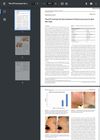 October 2023 in “Skin research and technology”
 This study evaluated the effectiveness of a 675 nm laser device on facial acne scars in patients with darker skin types, finding that 67% reported excellent improvement and 33% reported good improvement, with significant enhancements in skin texture and appearance after five treatments.
9 citations
,
June 2019 in “JAAD case reports” This report discusses laser hair removal for acne keloidalis nuchae, noting generally favorable outcomes but variability in lesion responsiveness and a need for standardized assessment criteria; it reports no new results.
 September 2025 in “PubMed”
 In this study, researchers observed significant clinical improvement and patient satisfaction in the treatment of androgenic alopecia with a 1927-nm thulium laser, noting no adverse events and minimal pain across a short-term evaluation of ten patients.
 4 citations
,
January 2015 in “Dermatology”
4 citations
,
January 2015 in “Dermatology” This study concluded that using an erbium:YAG laser for calvarium trepanation and granulation tissue induction is comparable to the rose head burr, offering a beneficial alternative method.
 15 citations
,
January 2017 in “Lasers in Surgery and Medicine”
15 citations
,
January 2017 in “Lasers in Surgery and Medicine” In this study, four male patients with extensively photodamaged scalps showed a 60-90% improvement in dyspigmentation, lentigines, and keratosis after a single treatment with the fractionated 1,927 nm thulium fiber laser, with no adverse events observed.
 September 2024 in “Pakistan Journal of Science”
 This systematic review suggests that laser treatments, especially low-level laser therapy and excimer lasers, may be effective for hair regrowth, though further large-scale studies are needed for validation.
51 citations
,
October 2002 in “Archives of dermatology” This case study of a patient with dissecting cellulitis of the scalp found that multiple medications, including isotretinoin, achieved only modest improvement, and symptoms returned after treatments were stopped.
 May 2022 in “Голова и шея.”
 In this pilot study, researchers observed that low-intensity laser radiation at 445±40 nm increased the temperature of gingival tissues in Wistar rats by 8.37°C without exceeding the safety threshold, suggesting potential for clinical trials.
April 2023 in “Journal of The American Academy of Dermatology” This letter discusses findings from an article by Sun et al. showing that neodymium doped yttrium aluminum garnet laser effectively treats prominent facial vasculature in patients with frontal fibrosing alopecia, but highlights concerns about the risk of iatrogenic scarring and suggests caution with treatment frequency.