 3 citations
,
January 1992 in “Clinical Pediatric Endocrinology”
3 citations
,
January 1992 in “Clinical Pediatric Endocrinology” This study observed wide clinical diversity among five patients with the same VDR gene mutation causing vitamin D-dependent rickets type II, suggesting involvement of a nuclear accessory factor and a nongenomic action of the vitamin.
 April 2024 in “Communications biology”
 The researchers reported that disrupting ATRA signaling by deleting RDHE genes in the hair follicle led to altered hair follicle cycles, composition, and gene expression, indicating RDHEs' role in hair follicle signaling coordination.
 April 2018 in “Journal of Investigative Dermatology”
 This study found that the RNA helicase DDX6 is essential for maintaining self-renewal in epidermal progenitor cells by promoting the translation of proliferation regulators and degrading differentiation-inducing mRNAs.
 6 citations
,
June 2018 in “Journal of pediatric endocrinology & metabolism/Journal of pediatric endocrinology and metabolism”
6 citations
,
June 2018 in “Journal of pediatric endocrinology & metabolism/Journal of pediatric endocrinology and metabolism” In this study, eight patients with hereditary vitamin D-resistant rickets who share a specific VDR mutation showed improved clinical symptoms except alopecia after up to 11 years of treatment.
 510 citations
,
August 2006 in “Endocrinology”
510 citations
,
August 2006 in “Endocrinology” This minireview discusses a proposed model of the vitamin D receptor that explains how 1alpha,25(OH)2D3 can mediate both genomic and rapid responses through different ligand shapes and cellular locations, without presenting new research findings.
5 citations
,
July 2022 in “Genes” This study found that EGR1 promotes the proliferation of dermal papilla cells, suggesting its close association with hair follicle growth and development.
 108 citations
,
July 2002 in “Molecular and cellular biology”
108 citations
,
July 2002 in “Molecular and cellular biology” This study found that overexpressing Dsg3 in the suprabasal epidermis of transgenic mice resulted in flaking skin and abnormal hair growth, supporting Dsg3's role in regulating epidermal differentiation.
 July 2023 in “bioRxiv (Cold Spring Harbor Laboratory)”
 This study found that Arabidopsis thaliana mutants with altered AtRBOHC/RHD2 enzyme function showed abnormal protein regulation linked to increased drought sensitivity due to disrupted plasma membrane protein balance and cytoskeleton changes, as revealed through proteomic analysis and advanced microscopy.
91 citations
,
December 2019 in “The EMBO Journal” This study found that the E3 ligases NEDD4 and NEDD4L regulate intestinal stem cell priming by degrading the LGR5 receptor, and their loss leads to increased Wnt activation and crypt proliferation, which in turn accelerates intestinal tumor progression in mice.
3 citations
,
July 2023 in “Cells” This study found that topical application of recombinant human MG53 protein mitigated nitrogen mustard-induced skin injuries in mice by preserving epidermal integrity and hair follicle structure.
7 citations
,
June 2020 in “npj regenerative medicine” This study found that GDNF promotes hair formation and skin wound repair by enhancing the self-renewal and differentiation of bulge stem cells in mice.
May 2021 in “bioRxiv (Cold Spring Harbor Laboratory)” This study introduced rPanglaoDB, an R package that facilitates the integration of public scRNA-seq datasets to effectively characterize rare cell types, exemplified by generating the first unbiased transcriptome profile of fibrocytes.
March 2026 in “Stem Cell Reviews and Reports”  October 2023 in “Scientific Reports”
 In this study, gene therapy using a VDR-expressing adenoviral vector promoted hair growth in Vdr-KO rats, suggesting its potential for treating alopecia associated with type II rickets.
58 citations
,
February 2013 in “Journal of Biological Chemistry” This study identifies specific molecular components involved in the intracellular trafficking of LGR5, revealing mechanisms that differ from typical GPCR recycling processes.
September 2017 in “Journal of Investigative Dermatology” RCS-01 is safe and may help rejuvenate aging skin.
215 citations
,
September 2003 in “Journal of Biological Chemistry” This study found that the hairless gene product (Hr) suppresses VDR-mediated gene activation by directly interacting with the vitamin D receptor, potentially affecting hair follicle function.
 46 citations
,
December 2001 in “Journal of Endocrinology/Journal of endocrinology”
46 citations
,
December 2001 in “Journal of Endocrinology/Journal of endocrinology” This study found that mouse FLRG protein, a secreted glycoprotein, is expressed in certain tissues and plays a role distinct from follistatin during wound healing, suggesting different functions in vivo.
12 citations
,
January 2013 in “Indian dermatology online journal” This case report details a 21-year-old woman with dermatopathia pigmentosa reticularis, presenting with generalized reticulate hyperpigmentation, diffuse noncicatricial alopecia, onychodystrophy, palmoplantar keratoderma, and poorly developed dermatoglyphics.
 14 citations
,
October 2000 in “Genomics”
14 citations
,
October 2000 in “Genomics” This study demonstrated that dermal papilla cells are molecularly distinct from fibroblasts and identified many novel molecules, including a new member of the CTGF protein family.
 10 citations
,
November 2015 in “Experimental Dermatology”
10 citations
,
November 2015 in “Experimental Dermatology” The study observed that mRAGE expression is prevalent in keratinocytes of the healthy human epidermis and may regulate inflammation and apoptosis to maintain skin homeostasis rather than responding to aging processes.
January 2022 in “SSRN Electronic Journal” This study found that lncRNA RP11-818024.3 transfection promoted hair growth in AGA mice and increased cellular proliferation in vitro, potentially involving the FGF2 and PI3K-Akt pathways.
 59 citations
,
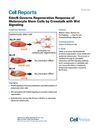
April 2016 in “Cell Reports”
59 citations
,
April 2016 in “Cell Reports” This study demonstrated that EdnrB signaling promotes melanocyte stem cell proliferation and differentiation, enhancing hair and epidermal melanocyte regeneration, especially under conditions of active Wnt signaling.

This review summarizes the proposed model that describes how different shapes of 1alpha,25(OH)2D3 ligands interact with the vitamin D receptor to mediate genomic and rapid responses in cells.
22 citations
,
October 2018 in “Molecular Medicine Reports” In this study, classic PDRN (50-1,500 kDa) was observed to improve wound healing quality in a mouse model by enhancing collagen composition and cell migration.
 6 citations
,
July 2013 in “Experimental and Therapeutic Medicine”
6 citations
,
July 2013 in “Experimental and Therapeutic Medicine” This study found that topical ginsenoside Rg1 may protect skin from UVB-induced damage in mice by reducing pathological changes and modulating cytokine mRNA expression associated with inflammation and immune response.
January 2025 in “Case Reports in Genetics” The researchers identified a pathogenic variant in the SRD5A2 gene among siblings with 46,XY disorder of sexual development, highlighting the importance of comprehensive genetic testing in diagnosis and management.
June 2023 in “bioRxiv (Cold Spring Harbor Laboratory)” This study developed new immortalized keratinocyte cell lines lacking COL7A1 using CRISPR/Cas9 technology, providing a valuable model to explore the biology and treatment options for recessive dystrophic epidermolysis bullosa.
September 2023 in “UCrea (University of Cantabria)” In this study, researchers found that mouse digits without nails could not regenerate after amputation, highlighting the necessity of nails for fingertip regeneration and suggesting a potential role for the Lmx1b gene in this process.
14 citations
,
January 2011 in “The International Journal of Developmental Biology” This study showed that coexpression of TG2 and Gbx1 in the epidermis is necessary for esophagus-like mucosal transdifferentiation, with TGF-beta2 in the dermis essential for the process through epithelial-mesenchymal interaction.