January 2017 in “Enlighten: Publications (The University of Glasgow)” This study found that in mice with deregulated β-catenin and PTEN signaling, increased follicular hyperplasia and sebaceous gland changes occur, but typical papillomas do not develop, potentially due to p21 response and reduced stem cell markers.
 July 2015 in “Actas Dermo-Sifiliográficas”
 A young woman with a rare fungal infection showed significant improvement after treatment with antifungal medication.
May 2024 in “JAAD Case Reports” This case report describes a 29-year-old man with a year-long non-itchy skin eruption and hair loss, with distinct papules and plaques across his scalp, beard, body, and suprapubic regions, but no systemic symptoms or family history of autoimmune disease.
 January 2024 in “Brazilian Journal of Veterinary Pathology”
 In this case report, veterinarians observed a 16-year-old mare with symptoms including chronic weight loss, pruritus, muscle atrophy, and lameness, which gradually progressed to neurological issues despite initial treatment.
December 2025 in “JGH Open” In this case study, a 78-year-old Japanese woman with Cronkhite-Canada syndrome experienced mesenteric lymphadenopathy, which reduced in size after treatment with the corticosteroid prednisolone. This suggests that mesenteric lymphadenopathy, though uncommon in CCS, may respond to steroid therapy.
1 citations
,
November 2022 in “International Journal of Cosmetic Science” In this study, a topical application of Lotus corniculatus seed extract significantly reduced sebum production and skin oiliness in humans through inhibition of lipid synthesis pathways.
30 citations
,
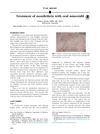
January 1994 This study found that oral administration of Lactococcus lactis subsp. cremoris H61 to aged mice was associated with reduced bone loss, fewer skin ulcers, and less hair loss compared with controls.
 37 citations
,
May 2016 in “JAAD case reports”
37 citations
,
May 2016 in “JAAD case reports” This abstract describes monilethrix, an autosomal dominant genodermatosis with symptoms like hair fragility and keratosis pilaris, and does not report new experimental results.
2 citations
,
September 2018 in “JAAD case reports” This report describes a rare case of folliculotropic and syringotropic CD8 mycosis fungoides with unusual widespread mucosal involvement.
23 citations
,
February 2003 in “British Journal of Dermatology” This case study describes a 40-year-old man diagnosed with pilotropic mycosis fungoides, a form of folliculotropic cutaneous T-cell lymphoma, characterized by lymphocytic infiltration of hair follicles and eccrine glands.

This review synthesizes current knowledge on choriogenesis, the final stage of oogenesis in insects, by exploring the role of follicle cells, regulatory mechanisms of gene expression, and the biochemical makeup of the eggshell, while also highlighting structural diversity and adaptations across insect species.
1 citations
,
April 2016 in “Journal of the American Academy of Dermatology” Autoimmune conditions can be linked to trichoepitheliomas, with treatment focusing on cosmetic concerns.
1 citations
,
July 2020 in “Iberoamerican Journal of Medicine” This study found that cicatricial alopecia predominantly affects middle-aged Libyan females, with conditions like lichen planopilaris and discoid lupus erythematosus among the most common diagnoses.
 December 2025 in “Therya notes”
 In this study, researchers documented the first instance of alopecia in bats within the Puebla region, specifically affecting two Artibeus jamaicensis and one Choeronycteris mexicana, possibly linked to environmental stress from human activities interfering with their nutrition.
November 2025 in “JPRAS Open” This study reported that age and diabetes are major factors influencing trichilemmal cyst development and size, highlighting the importance of these conditions for risk assessment and surgical planning.
April 2019 in “Faculty Opinions – Post-Publication Peer Review of the Biomedical Literature” This study identified three new genetic loci associated with PCOS and found a similar genetic structure across different diagnostic criteria, suggesting a genetic basis for shared metabolic traits and potential causal links to other conditions.
 August 2023 in “Veterinary Record Case Reports”
 This case report highlights the successful treatment of degenerative mucinotic mural folliculitis in a 1.5-year-old indoor cat using high-dose ciclosporin, resulting in the resolution of alopecia and improved general condition over a 10-month period.
6 citations
,
September 2014 in “Journal of the American Academy of Dermatology” In this report, researchers described a potential new variant of mucinous nevus, characterized by dilation of hair follicle pores and fibromucinous stroma in both the papillary and perifollicular dermis.
1 citations
,
July 2024 in “New Phytologist” In this study, researchers identified that three homologous genes—ZmSPL10, ZmSPL14, and ZmSPL26—are crucial for the development of stigmatic papilla in maize, with triple knockout mutants lacking these genes showing almost no stigmatic papilla and significantly reduced kernel setting.
3 citations
,
October 1994 in “Medical Molecular Morphology” This study observed that the lower part of vibrissa hair roots in adult Wistar rats receives a richer blood supply and structural protection, compared to the upper part.
 September 2022 in “Curēus”
 This case report describes a 61-year-old female with hyperandrogenic symptoms, where an ovarian hemangioma with stromal luteinization was identified and surgically removed, resulting in improved symptoms.
 December 2019 in “Ukrainian Journal of Veterinary and Agricultural Sciences”
 This study found that examining the microscopic and ultramicroscopic structures of donkey and horse hair can help differentiate between the species based on distinct differences in hair cuticle and brain substance patterns.
May 2013 in “Optometry and vision science” This abstract provides summaries of multiple clinical reports on topics like macular holes with posterior uveal melanoma, hemolacria, trichotillomania management with bimatoprost, Demodex identification methods, and psychological factors in contact lens discomfort, but reports no new research findings.
14 citations
,
June 2005 in “PubMed” This case report describes a 57-year-old Japanese male with a folliculosebaceous cystic hamartoma containing unusual hair shaft fragments, providing insight into its characteristic histological features.
7 citations
,
January 1990 in “Archives of Dermatological Research” Syringomas likely start in the upper dermis and form distinct luminal structures.
 5 citations
,
November 2001 in “PubMed”
5 citations
,
November 2001 in “PubMed” This case report describes an 80-year-old woman with severe androgenic alopecia linked to Leydig cell hyperplasia in an ovarian cyst, highlighting the need to investigate androgen-secreting tumors in similar cases.
December 2017 in “Canadian journal of ophthalmology” This paper reports a rare case of focal mucinosis in a 58-year-old woman's eyelid, initially resembling a nevus, successfully treated with surgical excision with no recurrence over a three-year follow-up.
39 citations
,
July 2000 in “British Journal of Dermatology” This report on identical female twins with folliculitis decalvans suggests a possible genetic component to the disease, marking the first such case in twins.
 120 citations
,
June 2008 in “American Journal of Epidemiology”
120 citations
,
June 2008 in “American Journal of Epidemiology” This study reported a 6.3% prevalence of PCOS among women in a Sri Lankan community, with most cases presenting as oligo/amenorrhea and polycystic ovaries.
 28 citations
,
January 2014 in “Indian Journal of Dermatology, Venereology and Leprology”
28 citations
,
January 2014 in “Indian Journal of Dermatology, Venereology and Leprology” This study found that dermatoscopy is useful for diagnosing and assessing primary cicatricial alopecias in Chinese patients, with alopecia mucinosa having a distinct feature of patulous follicular openings.