 13 citations
,
January 2022 in “Stem cell reviews and reports”
13 citations
,
January 2022 in “Stem cell reviews and reports” This study found that using cultured mesenchymal stem cells from mouse whisker hair follicle outer root sheath in wound healing reduced inflammation, accelerated closure, and resulted in less hypertrophic scarring in mice.
 11 citations
,
January 2013 in “Postępy Dermatologii i Alergologii”
11 citations
,
January 2013 in “Postępy Dermatologii i Alergologii” This review discusses various theories of skin aging and the importance of using professional and at-home skincare solutions, but offers no new empirical findings.
 10 citations
,
August 2024 in “Clinical Cosmetic and Investigational Dermatology”
10 citations
,
August 2024 in “Clinical Cosmetic and Investigational Dermatology” This review reports that natural compounds show promise in slowing skin photoaging by targeting cellular pathways in keratinocytes and fibroblasts. However, comprehensive clinical studies are needed to verify their efficacy and safety.
 April 2017 in “Journal of Investigative Dermatology”
 In this study, HPH-15, a newly synthesized compound, demonstrated potential in reducing skin fibrosis in a mouse model by targeting underlying pathogenic mechanisms and exhibited a good safety profile, warranting further clinical trials for fibrotic skin disorders like systemic sclerosis.

This review found that various treatments like finasteride, minoxidil, and platelet-rich plasma, combined with supplements, showed positive responses in combating androgenetic alopecia. The study specifically highlighted finasteride's effectiveness in increasing hair growth, with different dosages yielding notable improvements in both men and pre-menopausal women.
 December 2025 in “Nature Communications”
 This study demonstrated that skin organoids derived from human stem cells can model cutaneous tuberculosis, revealing that fibrosis development in Mycobacterium tuberculosis-infected organoids is linked to the PI3K-AKT and AP1 pathways in fibroblasts, and suggesting the potential for antifibrotic treatment evaluation.
 208 citations
,
January 2013 in “Lab on a Chip”
208 citations
,
January 2013 in “Lab on a Chip” The researchers described a chip-based bioreactor platform for dynamic perfusion, which may enhance in vitro skin models by introducing mechanical shear stress and extending culture periods.
 143 citations
,
September 2008 in “Experimental gerontology”
143 citations
,
September 2008 in “Experimental gerontology” This review discusses the diverse roles and characteristics of epidermal and dermal stem cells in skin regeneration and aging, highlighting their potential applications in regenerative medicine and reports no new clinical results.
 140 citations
,
August 2011 in “Biomaterials”
140 citations
,
August 2011 in “Biomaterials” This study observed that keratose, derived from human hair, integrated well in mouse tissue and remodeled with collagen, suggesting potential as a non-toxic biomaterial for regenerative applications.
 86 citations
,
March 2018 in “ACS Biomaterials Science & Engineering”
86 citations
,
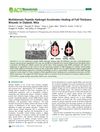
March 2018 in “ACS Biomaterials Science & Engineering” This study found that MDP hydrogel significantly accelerated wound healing and improved tissue formation in diabetic mice compared to a standard clinical hydrogel and control buffer.
 77 citations
,
July 2013 in “Best Practice & Research in Clinical Obstetrics & Gynaecology”
77 citations
,
July 2013 in “Best Practice & Research in Clinical Obstetrics & Gynaecology” This review discusses the impact of menopause-related oestrogen deficiency on skin ageing and suggests that oestrogen use may improve collagen and skin elasticity, but it reports no clinical trial results.
 36 citations
,
September 2019 in “Journal of Herbal Medicine”
36 citations
,
September 2019 in “Journal of Herbal Medicine” This review explores research on nanoformulations for enhancing the topical delivery of herbal medicines, noting potential benefits like improved bioavailability and sustained delivery, and emphasizes the need for safety and toxicity guidelines in developing these novel drug delivery systems.
 22 citations
,
September 2018 in “Medical Clinics of North America”
22 citations
,
September 2018 in “Medical Clinics of North America” This article reviews the biological causes and treatment options for facial aging but reports no new clinical findings.
 10 citations
,
May 2024 in “npj Regenerative Medicine”
10 citations
,
May 2024 in “npj Regenerative Medicine” This review discusses the role of umbilical cord-derived mesenchymal stromal cells in skin rejuvenation and reports no new clinical results; it emphasizes their potential in delaying skin aging.
 8 citations
,
June 2022 in “Frontiers in bioengineering and biotechnology”
8 citations
,
June 2022 in “Frontiers in bioengineering and biotechnology” This study found that a collagen patch made with fibroblast-derived extracellular matrix (fdECM) extracted from human lung fibroblasts enhanced wound healing by promoting wound contraction, angiogenesis, and skin remodeling in full-thickness skin wound models, including those with diabetic ulcers.
 6 citations
,
April 2022 in “Cellular and Molecular Life Sciences”
6 citations
,
April 2022 in “Cellular and Molecular Life Sciences” This study reports that a new protocol using Angio PRP improved wound healing in mice by enhancing key healing processes and regulating inflammation, suggesting potential for clinical advancements.
 6 citations
,
November 2018 in “Histochemistry and Cell Biology”
6 citations
,
November 2018 in “Histochemistry and Cell Biology” This study observed that gerbils exhibit a different wound healing mechanism compared to mice, with lower TGF-B1 expression and distinct tissue responses, yet achieve similar healing outcomes.
 4 citations
,
October 2025 in “International Journal of Medical Sciences”
4 citations
,
October 2025 in “International Journal of Medical Sciences” This review reported that tripeptides, such as GHK and KdPT, show promise in enhancing wound healing through multiple mechanisms, including promoting cell migration, collagen deposition, and angiogenesis, while offering antimicrobial and anti-inflammatory benefits for both acute and chronic wounds.
 4 citations
,
May 2019 in “Zeitschrift für Naturforschung C”
4 citations
,
May 2019 in “Zeitschrift für Naturforschung C” This study found that Ishige sinicola extract stimulated osteoblast differentiation and bone formation in MC3T3-E1 cells, suggesting potential use for osteoporosis prevention and treatment.
 2 citations
,
October 2025 in “Journal of Materials Science Materials in Medicine”
2 citations
,
October 2025 in “Journal of Materials Science Materials in Medicine” In this study, researchers developed a novel zinc oxide nanoflower-infused nanocomposite that demonstrated promising results in accelerating wound healing in a murine model, with enhanced angiogenesis, reduced inflammation, and improved collagen deposition compared to a control group.
 2 citations
,
July 2017 in “IEEE Photonics Journal”
2 citations
,
July 2017 in “IEEE Photonics Journal” This study found that combining second-harmonic generation with optical coherence tomography may effectively evaluate wound healing by monitoring collagen formation and optical signal changes in regenerated tissue.
 1 citations
,
January 2019 in “Elsevier eBooks”
1 citations
,
January 2019 in “Elsevier eBooks” This chapter reviews the use of electrospun matrices in creating tissue-engineered skin substitutes and reports no new clinical results; it emphasizes the need for a cell-friendly microenvironment.
 1 citations
,
January 2018 in “Recent clinical techniques, results, and research in wounds”
1 citations
,
January 2018 in “Recent clinical techniques, results, and research in wounds” This review discusses the similarities between wound healing and embryonic development, focusing on signaling pathways and their potential for developing new wound healing strategies, and reports no new clinical results.
 May 2026 in “The Scientific Issues of Ternopil Volodymyr Hnatiuk National Pedagogical University Series pedagogy”
 The researchers reported that integrating the naturopathic complex Detoxil into standard therapy for chronic dermatoses enhances detoxification, normalizes metabolic markers, and accelerates symptom resolution, suggesting potential benefits for managing skin conditions.
 March 2026 in “Collagen and Leather”
 This study found that a newly developed supramolecular FPC hydrogel effectively promotes wound healing through its anti-inflammatory and angiogenic properties, making it a promising material for wilderness first aid due to its storage convenience, sprayability, and ability to speed up wound recovery.

This study found that a mesenchymal stromal cell-derived regenerative extracellular matrix (rECM) significantly accelerated wound closure and improved healing in diabetic mice, also enhancing nerve and blood vessel formation compared to controls.
 November 2023 in “bioRxiv (Cold Spring Harbor Laboratory)”
 This study used a novel fluorescent tagging method in mice to observe collagen IV dynamics during hair follicle development, revealing that alterations in basement membrane turnover can influence epithelial progenitor cell behavior and organ morphology by affecting cell proliferation and movement.
 September 2023 in “bioRxiv (Cold Spring Harbor Laboratory)”
 This study describes the use of a genetically engineered mouse model, mTurquoise2-Col4a1, to fluorescently label collagen IV and observe basement membrane dynamics during skin development, revealing its stability and pliability during rapid growth phases.
 June 2020 in “The journal of investigative dermatology/Journal of investigative dermatology”
 This pilot study suggests that a new preparation of platelet-rich plasma gel may improve symptoms and tissue regeneration in patients with en coup de sabre scleroderma, though further trials are needed to clarify its role.
 April 2018 in “The journal of investigative dermatology/Journal of investigative dermatology”
 This study found that age-related changes in scalp dermal fibroblasts, including increased MMP-1 and reduced ECM components, may significantly affect the hair follicle environment and contribute to hair aging.