1 citations
,
August 2025 in “Epigenetics & Chromatin” This study explored the role of the histone modification H3K4me3 in cashmere goat dermal papilla cells, finding that increased levels enhanced cell proliferation and activated Wnt signaling genes, suggesting H3K4me3's involvement in hair follicle development through regulation of the gene RSPO3.
16 citations
,
April 2021 in “Plant Signaling & Behavior” This study found that in Arabidopsis, the MYB30-EIN3 module plays a role in adapting root hair development to phosphate deficiency, potentially enhancing phosphate uptake from soil.
 17 citations
,
October 2006 in “Molecular and Cellular Endocrinology”
17 citations
,
October 2006 in “Molecular and Cellular Endocrinology” This study found that the L457(3.43)R mutation in the human luteinizing hormone receptor increases phosphodiesterase activity, reducing hormonal response despite elevated basal cAMP levels.
8 citations
,
June 2004 in “Journal of Investigative Dermatology” Certain peptides can prevent hair loss in young rats caused by a cancer drug.
This study found that the proteins Par3, mInsc, and Gαi3 cooperate to regulate LGN polarization and promote perpendicular cell divisions during murine epidermal morphogenesis.
 July 2022 in “The journal of investigative dermatology/Journal of investigative dermatology”
 This study suggests that Myelin Protein Zero-like 3 plays a crucial role in hair follicle cycling by regulating anagen and catagen phases, mediated through mitochondrial signaling mechanisms in both human and murine hair follicles.
2 citations
,
January 2014 in “Photochemical & photobiological sciences” This study suggests that the Grasp protein may play a role in regulating skin homeostasis following UVB exposure by influencing p53-mediated apoptotic responses in mice.
January 2026 in “PLoS Biology” This study used developing mouse hair follicles to explore early epithelial bud formation, finding that the Rho GTPase regulator ARHGEF3 plays a crucial role in regulating cell fate and cadherin patterning, with knockouts showing disrupted morphology and increased straight hair follicle growth.
 April 2016 in “Journal of Investigative Dermatology”
 This study found that in mutant NRAS melanoma, MEK inhibitors led to increased AKT signaling and reduced MIG6, a change that may enhance cell migration and invasiveness.
 133 citations
,
May 2016 in “Cell Host & Microbe”
133 citations
,
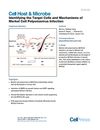
May 2016 in “Cell Host & Microbe” In this study, human dermal fibroblasts were identified as natural host cells that support productive Merkel cell polyomavirus infection, and the MEK antagonist trametinib was introduced as an effective inhibitor to control the virus.
1 citations
,
October 2022 in “Biomedicines” This study found that Prdm1 is crucial for whisker development in mice, affecting multiple signaling pathways and possibly playing a role in primates' evolutionary loss of vibrissae.
 10 citations
,
July 2021 in “Archiv für Pathologische Anatomie und Physiologie und für Klinische Medicin”
10 citations
,
July 2021 in “Archiv für Pathologische Anatomie und Physiologie und für Klinische Medicin” This study found that the expression of LRIG1 in Merkel cell carcinoma tumors was associated with improved overall and cancer-specific survival.
75 citations
,
September 2016 in “EMBO journal” This study found that PRC2 plays a crucial role in maintaining intestinal homeostasis by supporting progenitor cell proliferation and limiting secretory lineage differentiation.
 November 2022 in “Journal of Investigative Dermatology”
 In this study, rapamycin was found to increase hair follicle pigmentation and prolong anagen duration in cultured human scalp hair follicles, suggesting it could be explored as an anti-greying agent.
This article reviews the role of the hairless protein in hair cycling and gene regulation, noting the need for further understanding of its JmjC domain and subcellular localization roles.
 1 citations
,
January 2020 in “bioRxiv (Cold Spring Harbor Laboratory)”
1 citations
,
January 2020 in “bioRxiv (Cold Spring Harbor Laboratory)” This study suggests that Dicer, but not Tarbp2, plays a crucial role in regulating the growth phase of hair follicles in bulge stem cells during post-natal development in mice.
July 2025 in “Journal of Investigative Dermatology”  1 citations
,
December 2018 in “Journal of genetic medicine”
1 citations
,
December 2018 in “Journal of genetic medicine” In this case report, a 20-year-old male with tricho-rhino-phalangeal syndrome was found to have a de novo frameshift mutation in the TRPS1 gene, highlighting the challenges in diagnosing this rare disorder.
52 citations
,
July 2011 in “PubMed” This review discusses the diverse roles of the TRPS1 gene in regulating cartilage, kidney, and hair follicle development, highlighting its functions and interactions, but provides no new experimental results.
 26 citations
,
December 2020 in “Nature metabolism”
26 citations
,
December 2020 in “Nature metabolism” Martin-Perez et al. show that rapamycin's beneficial effects in a mouse model of Leigh syndrome are linked to the downregulation of protein kinase C.
 6 citations
,
September 2024 in “Frontiers in Physiology”
6 citations
,
September 2024 in “Frontiers in Physiology” This study found that overexpression of R-spondin 3 in a mice model impaired hair morphogenesis and regeneration by reducing hair matrix progenitor cell proliferation, thus disrupting the Wnt pathway's regulation of stem cells.
5 citations
,
September 2013 in “BMB Reports” In this study, the anti-wrinkle effect of bone morphogenetic protein receptor 1a extracellular domain was significantly greater than that of retinoic acid in a mouse model, suggesting potential for BMP antagonists in skin or hair treatments.
 April 2023 in “The journal of investigative dermatology/Journal of investigative dermatology”
 This study found that inhibiting the Mitochondrial Pyruvate Carrier in human hair follicles ex vivo activated the integrated stress response, affecting cell proliferation and metabolism.
 April 2026 in “Frontiers in Cell and Developmental Biology”
 This study found that PGRP-S expression in mouse epidermis is specific to certain hair follicle epithelia, depending on the skin region, and can be transiently induced in flank skin hair follicle epithelium after exposure to Staphylococcus aureus, suggesting a role in environmental surveillance.
 3 citations
,
July 2021 in “Life science alliance”
3 citations
,
July 2021 in “Life science alliance” This study observed that disrupting the Pnkp gene in adult mice resulted in a premature aging-like phenotype, suggesting PNKP's vital role in maintaining normal growth and survival of certain progenitor cell populations.
January 2026 in “Journal of Dermatological Science” This study suggests that DcR3 can reprogram macrophages towards a reparative state, enhancing wound healing and hair follicle regeneration, making it a potential target for treating chronic wounds and alopecia.
4 citations
,
December 2016 in “Blood” This study describes a case of cyclic thrombocytopenia where a novel MPL gene mutation may contribute to the disease, with gene expression changes in platelet and neutrophil genes preceding platelet count fluctuations.
April 2018 in “The journal of investigative dermatology/Journal of investigative dermatology” This commentary discusses the crucial role of the alternative splicing factor Esrp1 in maintaining skin barrier function and its association with skin diseases like atopic dermatitis and psoriasis, but reports no new clinical results.
 1 citations
,
July 2023 in “Nature communications”
1 citations
,
July 2023 in “Nature communications” This study found that deleting the Mof gene in mouse skin leads to severe defects in skin cell self-renewal, differentiation, and hair follicle growth, indicating that MOF is crucial for mitochondrial and ciliary gene expression and essential for skin development.
11 citations
,
October 2023 in “mSphere” This study reported that the PrrH sRNA in *Pseudomonas aeruginosa* may directly regulate genes involved in pyochelin siderophore biosynthesis, highlighting its role in adapting to heme availability, with light conditions influencing this gene expression.