3 citations
,
January 2011 in “生物医学研究杂志:英文版” In this study, a novel heterozygous transition mutation in the KRT86 gene was identified, which may be pathogenic for monilethrix in a Chinese family.
 43 citations
,
November 2007 in “Dermatologic Clinics”
43 citations
,
November 2007 in “Dermatologic Clinics” This article discusses various hair and nail abnormalities linked to paraneoplastic conditions and cancer treatments, emphasizing their potential role in diagnosing and managing internal malignancies and reports no new clinical findings.
23 citations
,
January 1985 in “Journal of Neuropathology & Experimental Neurology” This study found that cupric chloride treatment may partially correct delayed maturation and abnormal arborization of Purkinje cells in the cerebellum of hemizygous brindled mice, a model for Kinky hair disease.
October 2023 in “Journal of Pakistan Association of Dermatologists” This study found that yellow dots and broken hairs were the most common dermatoscopic features of alopecia areata in children, while short vellus hairs were most frequent in adults, with nail changes related to disease severity for both groups.
 6 citations
,
August 1993 in “Archives of Dermatology”
6 citations
,
August 1993 in “Archives of Dermatology” This article describes the first documented case of acquired uncombable hair syndrome in a 39-year-old woman, contributing to the understanding of this rare condition.
October 1940 in “Clinical and Experimental Optometry” In this study, adult albino rats on a vitamin A deficient diet developed ocular symptoms like xerophthalmia and photophobia within four weeks, without showing loss of dark adaptation.
3 citations
,
March 2023 in “Annals of the New York Academy of Sciences” In this study using mice, simultaneous deficiencies in claudin-1 and claudin-3 were associated with hair loss and altered hair follicle architecture during the telogen phase, suggesting a role in hair retention.
 6 citations
,
February 2016 in “American Journal of Dermatopathology”
6 citations
,
February 2016 in “American Journal of Dermatopathology” This case study reports on an 11-year-old boy with woolly hair nevus, featuring twisted hair shafts and an abnormal hair cuticle, alongside epidermal nevi on his face and back.
1 citations
,
October 2023 in “Biology” In this study, researchers observed that fasting-induced molting in laying hens led to increased thyroid hormones, which may regulate feather molting by affecting hair follicle growth through specific signaling pathways, highlighting molecular changes during induced molting.
This abstract provides contact information for Dr. Ban Kamoona at the Medical University – Sofia and contains no research findings.
 19 citations
,
May 2004 in “The American Journal of Dermatopathology”
19 citations
,
May 2004 in “The American Journal of Dermatopathology” In this study, scalp biopsies from HJMD patients revealed histological similarities to chronic telogen effluvium and highlighted the role of CDH3 mutations disrupting normal hair cycles.
 September 1998 in “JEADV. Journal of the European Academy of Dermatology and Venereology/Journal of the European Academy of Dermatology and Venereology”
 Hair changes could indicate neurological diseases and help monitor treatment.
28 citations
,
January 1985 in “Journal of the American Academy of Dermatology” This report presents a case of pili torti in a young girl with citrullinemia, a novel association not previously documented.
6 citations
,
January 2011 in “European Journal of Dermatology” This article discusses monilethrix, a rare human hair dysplasia caused by mutations in hair keratins, but reports no new clinical findings.
2 citations
,
October 1974 in “Archives of Dermatology” This case study describes a 27-year-old woman with alopecia mucinosa that persisted for 20 years despite multiple treatments, including steroids and antihistamines.
35 citations
,
November 2021 in “Journal of Animal Science and Biotechnology/Journal of animal science and biotechnology” This study identified dynamic changes in DNA methylation associated with different growth stages in Tan sheep, which may offer insights to retain their valuable curly fleece as they age.
7 citations
,
January 2008 in “Indian Journal of Dermatology” This review discusses the clinical manifestations and genetic basis of pigmentary mosaicism, highlighting its varied phenotypic expressions, but reports no new clinical results.
July 1979 in “Archives of Dermatology” This case report describes a 68-year-old woman with benign mucous membrane pemphigoid and unusual keratotic plaques on her extremities, associated with longstanding mouth and eye symptoms and phalangeal swelling.
2 citations
,
May 2020 in “Journal of the American Academy of Dermatology” Hair shaft changes may be linked to CCCA, but their role is unclear.
January 1999 in “Birkhäuser Basel eBooks” This study observed increased metallothionein expression in regenerating liver and hyperplastic mouse skin, suggesting a potential role in cellular proliferation and differentiation.
 15 citations
,
April 2007 in “Journal of child neurology”
15 citations
,
April 2007 in “Journal of child neurology” This case report describes an 11-month-old boy with Menkes disease, highlighting symptoms such as developmental delays and poor therapeutic response due to significant brain and vascular abnormalities.
May 2015 in “Journal of the American Academy of Dermatology” New hair after alopecia areata can be thinner and change color but usually keeps the same shape.
 12 citations
,
March 2018 in “Australasian Journal of Dermatology”
12 citations
,
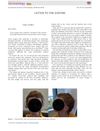
March 2018 in “Australasian Journal of Dermatology” This letter to the editor discusses the use of systemic minoxidil for loose anagen hair syndrome, noting a significant change in hair color, but reports no new study results.
158 citations
,
December 2002 in “Development” In this study, Msx2-deficient mice showed progressive hair loss due to shortened anagen phase and prolonged catagen and telogen phases, resulting in cyclic alopecia with structurally abnormal hair shafts.
October 2025 in “Indian Journal of Paediatric Dermatology” This report describes a case of halo scalp ring, a pattern of transient alopecia in infants, which resolved without treatment over 17 months.
20 citations
,
June 1964 in “Archives of Dermatology” This study described three cases of follicular mucinosis and observed that one case responded rapidly to systemic corticosteroids, suggesting a potential therapeutic effect.
9 citations
,
January 1975 in “Munich Personal RePEc Archive (Ludwig Maximilian University of Munich)” This report describes a case of Rothmund-Thomson type congenital poikiloderma, noting minor skin changes, hair loss, and slightly elevated lysine and cystine in the urine.

This study is the first to report major spontaneous diseases in aging Julia Creek dunnarts, highlighting hormonal dysregulation and lymphoid neoplasia as common conditions in this endangered species.
 29 citations
,
June 2005 in “Journal of Zoo and Wildlife Medicine”
29 citations
,
June 2005 in “Journal of Zoo and Wildlife Medicine” This study concluded that coat damage in captive rhesus macaques is unlikely caused by parasitic, bacterial, or mycotic infections but may be linked to environmental or behavioral factors affecting hair growth.