October 2025 in “Australasian Journal of Dermatology” In this case report, a 31-year-old male with refractory sycosis barbae achieved complete remission after 4 months of treatment with bimekizumab, suggesting this dual inhibitor of interleukin-17A and IL-17F may be a promising therapy for this condition.
11 citations
,
November 2019 in “The FASEB Journal” In this study, a missense mutation in the MAP2 gene was found to be associated with reduced hair follicle density, leading to the hairless phenotype in pigs.
May 2010 in “Europe PMC (PubMed Central)” This chapter discusses the synthesis and analysis of near-infrared fluorescent activity-based probes for imaging cysteine protease activity, reporting potential benefits for disease diagnosis but noting challenges in imaging specific locations with high cathepsin activity.
 April 2024 in “Iranian journal of veterinary medicine”
 This study in Mosul City, Iraq, examined mange infestation in rabbits, finding that 43.1% of 130 rabbits were infested, with Sarcoptes scabiei var. cuniculi being most prevalent, and noted no significant gender differences but age-related variations in infestation rates.
 14 citations
,
January 2017 in “Annals of Dermatology”
14 citations
,
January 2017 in “Annals of Dermatology” In this retrospective study, low-dose methotrexate was observed to be effective and well-tolerated in treating recalcitrant alopecia areata multiplex, achieving complete or near-complete hair regrowth in about 90% of patients despite some experiencing elevated liver enzymes and gastrointestinal discomfort.
 12 citations
,
February 2010 in “Tetrahedron Letters”
12 citations
,
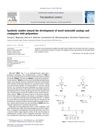
February 2010 in “Tetrahedron Letters” This article describes the synthesis of novel polyamine-modified minoxidil analogs and conjugates to potentially enhance minoxidil's biological activity, selectivity, and water solubility, but reports no new biological results.
July 2026 in “Journal of Enzyme Inhibition and Medicinal Chemistry” This review discusses the evolution of Cereblon ligands in PROTAC technology, highlighting chemical innovations that may enhance drug-likeness and applicability in protein degradation, while noting challenges and future research directions.
1 citations
,
February 2025 in “International Journal of Molecular Sciences” This study found that supplementing Liaoning cashmere goats with HMBi increased cashmere length while decreasing its diameter, attributed to changes in Met-related metabolites and elevated expression of genes related to the Met cycle and cell differentiation pathways such as Wnt and MAPK.
 January 2025 in “Epsilon Archive for Student Projects (University of Southampton)”
 In this study investigating goat herds in Zambia, both mange and orf were detected, but with low occurrence linked to diagnostic challenges and mild clinical signs; further research, especially in conditions favoring mange mites, is recommended to better understand and manage these diseases.
![Verification of the Major Metabolic Oxidation Path for the Naphthoyl Group in Chemoattractant Receptor-Homologous Molecule Expressed on Th2 Cells (CRTh2) Antagonist 2-(2-(1-Naphthoyl)-8-fluoro-3,4-dihydro-1H-pyrido[4,3-b]indol-5(2H)-yl)acetic Acid (Setipiprant/ACT-129968)](/images/assets/d743d32f-3115-48ff-9697-2f2d56130701/small/14175.jpg) 6 citations
,
September 2015 in “Journal of Medicinal Chemistry”
6 citations
,
September 2015 in “Journal of Medicinal Chemistry” This study synthesized and verified the structures of Setipiprant's major and minor metabolites, confirming their regio- and enantioselectivity from earlier proposals in a clinical study.
 February 1999 in “Analytical Sciences”
 A new antiandrogen compound was made and its detailed three-dimensional shape was described.
May 2026 in “Jurnal Pendidikan Kimia Fisika dan Biologi” This study found that rebonding hair straightening treatments visibly damage the hair cuticle, causing surface erosion and cracks, as shown through Scanning Electron Microscopy analysis.
 12 citations
,
June 2017 in “Cell Cycle”
12 citations
,
June 2017 in “Cell Cycle” This study observed that 5% minoxidil topical foam alters gene expression and signaling pathways in the scalp, providing insights into its mechanism of action in men with androgenetic alopecia.
43 citations
,
May 1999 in “Journal of Biological Chemistry” This study found that full-length Agouti protein modulates melanocortin receptor signaling through a dual mechanism involving competitive antagonism and receptor down-regulation, whereas the carboxyl-terminal fragment acts solely as a competitive antagonist.
 August 2020 in “Egyptian Veterinary Medical Society of Parasitology Journal (EVMSPJ)”
 In this study, 10.5% of sheep examined in Ismailia, Egypt, were infested with Sarcoptes scabiei, showing specific molecular and skin alterations.
 January 2025 in “The Analyst”
 In this study, researchers identified a novel biomarker of oxalate metabolism, which plays a crucial role in conditions like hyperoxaluria and kidney stones, marking the first time this detection has been reported.
 March 2024 in “Frontiers in endocrinology”
 This study reports the first case of mandibuloacral dysplasia syndrome associated with MTX2 gene mutation in the Chinese population, expanding the known spectrum of MTX2 mutations.
 6 citations
,
February 2025 in “Scientific Reports”
6 citations
,
February 2025 in “Scientific Reports” This study found that MEGA PROTAC improved the prediction of ternary structures with higher maximum DockQ scores compared to the BOTCP method in 16 out of 22 test cases.
 January 2026 in “Nanoscale Advances”
 In this study, a biocompatible zinc oxide nanocomposite loaded with the anticancer drug 9-Br-Nos demonstrated effective drug delivery and cytotoxicity against lung cancer cells in vitro, while also proving non-toxic to healthy cells, suggesting its potential for targeted lung cancer treatment.
1 citations
,
December 2011 in “Arzneimittelforschung” This study found that the compound 9,11-dehydrocortexolone 17alpha-butyrate (CB-03-04) showed strong local antiandrogenic activity in animal models, suggesting potential for treating prostate conditions.
 19 citations
,
May 2020 in “Journal of The American Academy of Dermatology”
19 citations
,
May 2020 in “Journal of The American Academy of Dermatology” This case series reports the experience of using oral minoxidil at 1.25 mg/day in 32 patients with male androgenetic alopecia, noting both therapeutic effects and potential adverse reactions.
January 2023 in “International Journal of Trichology” This study found that bicalutamide mesotherapy resulted in subtle hair density improvements and was well tolerated by premenopausal women with androgenetic alopecia.
46 citations
,
November 2019 in “Journal of Integrative Plant Biology” This study found that calmodulin 7 (CaM7) inhibits the calcium channel CNGC14 in root hairs, affecting their polar growth by controlling calcium signaling.
 September 2013 in “Neurodegenerative disease management”
 This review discusses teriflunomide as a disease-modifying therapy for multiple sclerosis and highlights its effectiveness and safety in clinical trials, but reports no new clinical results.
26 citations
,
November 2019 in “Medical Science Monitor” This study found that photobiomodulation via LED light at 630 nm and 810 nm increased proliferation and mineralization in osteoblast-like cells, with comparable effects between the two wavelengths.
August 2026 in “Cosmoderma” This case series evaluated the use of oral bicalutamide with low-dose oral minoxidil in women with female pattern hair loss who didn't respond to minoxidil alone, finding that 96.6% showed improvement after six months without adverse effects.
10 citations
,
April 2020 in “Journal of Mind and Medical Sciences” Excimer laser therapy can be an alternative for treating superficial morphea when topical steroids don't work.
September 2025 in “Plants” In this study, the wood essential oil of *Juniperus morrisonicola* exhibited significant anti-inflammatory activity, notably inhibiting nitric oxide production in stimulated macrophages, and showed cytotoxic effects against liver cancer cells, suggesting its potential for drug development and eco-friendly applications.
 4 citations
,
May 2014 in “PubMed”
4 citations
,
May 2014 in “PubMed” This study found that monoethanolamine-based hair color formulations caused significantly more damage to hair than ammonia-based formulations, especially at high concentrations.
17 citations
,
May 1969 in “American Journal of Physical Anthropology” This study describes unique anatomical characteristics of the skin and hair structures in the silver marmoset, including features such as thin epidermis, specialized nerve end-organs, and distinctive gland compositions.