7 citations
,
September 2013 in “Tissue engineering. Part A” This study suggests that nestin-expressing hair follicle stem cells, when transplanted into transgenic mice with sciatic nerve injury, can differentiate into motor neurons and reduce muscle atrophy.
 48 citations
,
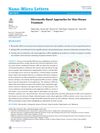
February 2025 in “Nano-Micro Letters”
48 citations
,
February 2025 in “Nano-Micro Letters” This review summarizes the application of microneedles in treating various skin diseases and highlights challenges like low drug loading, noting no new clinical results are reported.
 February 2026 in “Scientific Reports”
 This preclinical study found that Mesenchymal Stem Cell-derived Conditioned Media formulations were safe and effective in rat and mouse models for treating chemotherapy- and radiation-induced oral mucositis, demonstrating improved tissue regeneration and healing, most notably at higher concentrations.
 25 citations
,
April 2012 in “Acta Biomaterialia”
25 citations
,
April 2012 in “Acta Biomaterialia” This study observed that NSPC predominantly differentiated into neurons when exposed to serum fractions with molecules under 100 kDa, particularly with biomaterial and fibronectin, in the presence of basic fibroblast growth factor.
10 citations
,
May 2020 in “Advances in Polymer Technology” This study found that melatonin-loaded nanoparticles improved antidepressant effects and HPA axis regulation in pinealectomized rats, compared to free melatonin, through controlled-release properties.
 November 2023 in “Global Medical Genetics”
 This case report describes a 1-month-old male infant with Netherton syndrome, characterized by severe hypernatremia, skin and scalp issues, highlighting the syndrome's complications, including growth retardation and infection risks in early life.
 July 2025 in “New Phytologist”
 This study demonstrated that the FER/MLO signaling module regulates calcium dynamics and ROS accumulation in root hair growth, with the constitutively active MLO (faNTA) able to restore normal development and signaling in specific mutant genotypes, highlighting MLO15's role in root hair tip growth regulation.
February 2024 in “Pharmaceutics” This review discusses the applications and potential of microneedles loaded with extracellular vesicles for tissue regenerative repair and disease diagnosis, but does not report new experimental findings.
 December 2025 in “Meditsinskiy sovet = Medical Council”
 This case study highlights the importance of an integrated diagnostic and treatment approach for children with rare genetic disorders, as demonstrated in a 10-year-old girl with CNOT3 syndrome, characterized by symptoms like mental retardation, gastrointestinal issues, and unique facial features.
 10 citations
,
October 2016 in “Journal of Biomolecular NMR”
10 citations
,
October 2016 in “Journal of Biomolecular NMR” This study reported that using 2D solid-state NMR techniques on extensively labeled mouse fur improves resolution in detecting chemical shifts and secondary structure features, potentially aiding the analysis of the effects of commercial or therapeutic treatments on specific amino acids.
5 citations
,
May 2022 in “Clinical & Experimental Metastasis” This study found that minoxidil and ranolazine, individually and in combination, reduced cellular invasiveness in hypoxic triple-negative breast cancer cell lines, suggesting potential anti-metastatic effects at clinically relevant doses.
34 citations
,
December 1984 in “Journal of Cutaneous Pathology” This study observed that the thinning and structural abnormalities in monilethrix-affected hair occur at the internodes due to possible periodic dysfunction of the hair matrix, particularly in the cortex.
14 citations
,
July 2015 in “International Journal of Molecular Sciences” This study found that S-Methylmethionine sulfonium (SMMS) enhances cell survival and reduces damage from UVB irradiation in skin cells, suggesting its potential as a cosmetic ingredient for UV protection.
July 2025 in “Clinical Case Reports” In this case report, a 17-year-old male with a specific TRPS1 gene mutation presented with sparse, soft hair, short thumbs and toes, misaligned teeth, and distinctive bone abnormalities in the fingers and toes as observed through X-ray analysis.
June 2026 in “Journal of Dermatological Science” This study found that a topical formulation containing DMG-Na significantly improved hair loss parameters in people experiencing hair loss, suggesting its potential effectiveness for such conditions.
3 citations
,
December 2023 in “Pain Medicine” This case report described how peripheral nerve stimulation provided significant pain relief and reversal of dermatological symptoms for a female patient with complex regional pain syndrome after conventional treatments failed.
10 citations
,
November 2009 in “Pigment cell & melanoma research” This study by Pérez-Oliva et al. explored how Mahogunin Ring Finger-1 (MGRN1) affects melanocortin-1 receptor (MC1R) signaling, suggesting that MGRN1 competitively inhibits Gαs binding to MC1R, influencing pigment production.
3 citations
,
November 2024 in “Electrochimica Acta” A new, quick method accurately detects minoxidil in drugs and cosmetics.
March 2024 in “DOAJ (DOAJ: Directory of Open Access Journals)” This study found that minoxidil nanoparticles significantly increased hair growth in mice compared to commercial minoxidil and rosemary extract, demonstrating improved delivery and follicular uptake.
March 2016 in “The Korean Society of Beauty and Art” This study found that using a hair-hardener improved hair thickness, amino acid content, surface condition, tensile strength, and wave efficiency without causing any allergic reactions in participants.
December 2025 in “Clinical Case Reports” In this study, researchers reported that dermoscopic examination of eyebrow hairs can help in the early diagnosis of Netherton syndrome in children by detecting trichorrhexis invaginata, facilitating prompt counseling and care while awaiting genetic test results.
9 citations
,
July 2021 in “Frontiers in genetics” This study found that continuous implantation of melatonin in cashmere goats advanced the growth cycle of cashmere by inducing secondary hair follicle development and altering gene expression.
10 citations
,
December 2023 in “International Journal of Nanomedicine” This study reviewed the challenges of delivering nucleic acids for gene therapy, highlighting the limitations of non-viral vehicles and exploring bioinspired strategies using cell membrane camouflage for improved delivery efficacy.

In this study, microneedling radiofrequency followed by topical exosome application was associated with significant increases in hair density and diameter, showing promising potential as a therapy for pattern hair loss.
15 citations
,
May 2009 in “Chemical Physics Letters” This study demonstrated that a metric based on rotational echo intensity in 2H magic-angle spinning NMR can derive kinetic information for conformational exchange without complex modelling, achieving activation barriers consistent with prior findings.
 January 2025 in “HemaSphere”
 This review discusses the implications of renaming myelodysplastic syndromes as "myelodysplastic neoplasms" and argues that the "low-risk" label may misrepresent patient experiences and hinder research.
This study found that the transcription factor Meis2 regulates the maturation and innervation of sensory neurons in mice, affecting their response to light touch.
 June 2023 in “British Journal of Dermatology”
 In this case report, researchers described a female child with total alopecia due to a mutation in the SNRPE gene, emphasizing the need for updated genetic testing as knowledge advances to avoid diagnostic delays in hereditary nonsyndromic hypotrichosis.
37 citations
,
December 1995 in “Journal of Cell Science” This study found that nexin 1 mRNA, a potent protease inhibitor, is prevalent in rat follicular papilla cells and may play a role in regulating hair follicular growth.
44 citations
,
January 1999 in “Dermatology” This article reviews different perspectives on nevus comedonicus, discussing its classification and potential associations with systemic findings, but it reports no new results.