 14 citations
,
March 2022 in “Macromolecular Rapid Communications”
14 citations
,
March 2022 in “Macromolecular Rapid Communications” This review discusses the current state and potential future of polymer-based microneedles for transdermal drug delivery, without reporting new empirical results; it highlights their applications and existing challenges.
 28 citations
,
November 2013 in “The FASEB journal”
28 citations
,
November 2013 in “The FASEB journal” In this study, a low-methionine diet significantly improved the health and physical traits of cystathionine β-synthase-deficient mice, contrasting with negative effects on mice with partial deficiency.
 March 2025 in “Stem Cell Research & Therapy”
 This study found that microneedles containing magnetic intracellular vesicles and tremella polysaccharide improved the hair microenvironment and accelerated hair regeneration in mice with androgenic alopecia.
 January 2024 in “Regenerative Biomaterials”
 In this study, researchers developed a biodegradable microneedle made of hyaluronic acid, intended to enhance drug delivery through the skin's stratum corneum and potentially promote hair growth by overcoming the skin's barrier function in alopecia treatment.
 10 citations
,
June 2005 in “Small ruminant research”
10 citations
,
June 2005 in “Small ruminant research” This study found that melatonin combined with bromocryptine treatment in Spanish goats increased secondary hair follicle numbers and extended the cashmere growth phase during spring.
 July 2022 in “Research Square (Research Square)”
 This study found that miR-23b and miR-133 significantly reduce mRNA and protein levels of specific target genes involved in Merino sheep hair follicle development, providing insight into molecular breeding for fine wool production.
 1 citations
,
June 2023 in “Chemical engineering journal”
1 citations
,
June 2023 in “Chemical engineering journal” In this laboratory study, a novel minoxidil-loaded microneedle patch demonstrated potential for treating alopecia areata by promoting slow drug release and reducing application frequency, while exhibiting antibacterial properties to prevent infection during use.
122 citations
,
June 1998 in “PubMed” This study found that sensory and sympathetic innervation in the mystacial pads of mice is governed by a balance of neurotrophin signaling, highlighting the roles of NGF/trkA and NT-3/trkC pathways.
August 2009 in “Mechanisms of Development” 13 citations
,
August 2023 in “Developmental Cell” In this study, researchers observed that mechanosensory neurons initially develop similar morphologies across different skin regions but diverge post-natally, adapting to the type of skin they innervate, with bone morphogenetic protein signaling crucial for forming Meissner corpuscles in glabrous skin.
 1 citations
,
October 2010 in “Series in cosmetic and laser therapy”
1 citations
,
October 2010 in “Series in cosmetic and laser therapy” Mesotherapy is a minimally invasive treatment with potential benefits and risks, requiring standardized practices and further investigation.
9 citations
,
November 2007 in “Blood” This study found that a mutation in the Tmprss6 gene disrupts hepcidin regulation, leading to iron deficiency and alopecia in mice, highlighting TMPRSS6's vital role in iron absorption.
 25 citations
,
September 2018 in “Scientific Reports”
25 citations
,
September 2018 in “Scientific Reports” This study found that morroniside enhanced hair follicle growth and transition through the Wnt/β-catenin signaling pathway in a mouse model, suggesting its potential as a treatment for hair loss.
 July 2022 in “The journal of investigative dermatology/Journal of investigative dermatology”
 This case study reports that a 26-year-old woman with epidermolysis bullosa prurogompsa also presented with unique findings of co-existing muscular dystrophy and immune-based myasthenia gravis, with significant improvement following steroid treatment.
 May 2024 in “The journal of investigative dermatology/Journal of investigative dermatology”
 In this study, it was observed that topical application of N,N-Dimethylglycine Sodium Salt significantly increased skin microcirculation and blood flow in human subjects, suggesting potential benefits for skin health and conditions like dermatitis.
10 citations
,
June 2021 in “Journal of Investigative Dermatology” GNPTAB gene is crucial for normal hair color in humans and mice.
This case study reports that early genetic testing and targeted therapies, such as secukinumab, can significantly improve skin barrier function in patients with Netherton syndrome, despite persistent symptoms.
38 citations
,
March 2015 in “Journal of controlled release” This study found that transfollicular delivery using surfactant-based nanoparticles significantly enhanced antigen stability and immune response compared to other delivery methods, especially when combined with an adjuvant.
 March 1998 in “Journal of dermatological science”
 Protease Nexin-1 is found in human hair growth cells and is affected by male hormones.
2 citations
,
July 2022 in “Frontiers in Medicine” This study found that combining topical minoxidil with microneedling improved hair density more than either minoxidil alone or with spironolactone for women with mild-to-moderate female pattern hair loss.
26 citations
,
April 2011 in “British Journal of Dermatology” This study identified novel mutations in the DSG4 gene in a Japanese patient with monilethrix, affecting protein interactions that may disrupt hair shaft structure.
1 citations
,
January 2025 in “Regenerative Biomaterials” In this study, researchers found that exosomes derived from Pinctada martensii mucus can effectively inhibit melanin production in melanoma cells and zebrafish without adverse effects, potentially offering a promising therapeutic strategy for treating pigmentary disorders by modulating the NF-κB signaling pathway.

This study found that finite element analysis-guided design improved bubble microneedles' controlled tip separation and insertion strength, supporting effective transdermal and sublingual drug delivery.
 48 citations
,
December 2013 in “Drug Delivery and Translational Research”
48 citations
,
December 2013 in “Drug Delivery and Translational Research” This study found that minoxidil-loaded niosomes with a Span 60 and cholesterol ratio of 1:2 significantly increased skin retention of minoxidil compared to control gel.
January 2016 in “Frontiers in Neurology” This study reported that a clinical nutrition program improved sensory loss and maintained symptom improvements in a 60-year-old man with anti-MAG neuropathy over the course of one year.
39 citations
,
November 2007 in “Journal of Histochemistry & Cytochemistry” This study found that in neonatal mice, the absence of the NG2 proteoglycan leads to reduced epidermal thickness and delayed subcutis thickening due to impaired proliferation and adipocyte deficiencies.
 21 citations
,
January 2018 in “Anticancer Research”
21 citations
,
January 2018 in “Anticancer Research” This study suggests that NBCCS and BFHS may be the same genetic condition, which could help improve identification and management of misdiagnosed cases with specific surveillance strategies.
 4 citations
,
January 2022 in “Current pharmaceutical design”
4 citations
,
January 2022 in “Current pharmaceutical design” This review discusses the benefits and applications of microsponges delivery systems in drug delivery, particularly for topical treatments, and reports no new clinical findings.
7 citations
,
September 2013 in “Tissue engineering. Part A” This study suggests that nestin-expressing hair follicle stem cells, when transplanted into transgenic mice with sciatic nerve injury, can differentiate into motor neurons and reduce muscle atrophy.
 48 citations
,
February 2025 in “Nano-Micro Letters”
48 citations
,
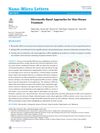
February 2025 in “Nano-Micro Letters” This review summarizes the application of microneedles in treating various skin diseases and highlights challenges like low drug loading, noting no new clinical results are reported.