 15 citations
,
May 2017 in “Lasers in Medical Science”
15 citations
,
May 2017 in “Lasers in Medical Science” This study found that low-level laser treatment may promote hair regrowth in mice by activating the Wnt10b/ß-catenin pathway and inducing the anagen phase of hair follicles.
 93 citations
,
November 2018 in “Carbohydrate Polymers”
93 citations
,
November 2018 in “Carbohydrate Polymers” This study demonstrated that modified montmorillonites combined with bacterial cellulose enhanced antimicrobial, wound healing, and tissue regenerative activities in a burn mice model, suggesting potential as an artificial skin substitute for burn patients.
17 citations
,
August 2015 in “Journal of Animal Science” In this study, researchers found that specific SNPs in the MTR gene are significantly associated with wool production and quality traits in Chinese Merino sheep, suggesting the gene's potential for sheep breeding.
 March 2025 in “Research Square (Research Square)”
 This study explored the potential of the lysate and lipoteichoic acid from Lactiplantibacillus plantarum APsulloc 331261 to improve scalp seborrheic dermatitis by modulating inflammatory and lipogenesis pathways in vitro, suggesting potential as a natural treatment option.
 6 citations
,
July 2015 in “European Journal of Dermatology”
6 citations
,
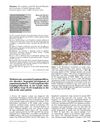
July 2015 in “European Journal of Dermatology” Stopping methotrexate might reverse lymphoma-like conditions in some patients.
 7 citations
,
February 2010 in “British Journal of Dermatology”
7 citations
,
February 2010 in “British Journal of Dermatology” A woman with a rare autoimmune disorder had a blister on her eye and unique immune reaction, which was effectively treated with medication.
 January 2025 in “Journal of Dermatological Treatment”
 This systematic review and meta-analysis found that adding low-level laser therapy to minoxidil treatment for androgenic alopecia does not significantly enhance hair count or diameter compared to using minoxidil alone.
 January 2009 in “Elsevier eBooks”
 Low level laser therapy may help with hair loss.
 January 2026 in “International Journal of Research and Innovation in Applied Science”
 This case report details a rare instance of malignant proliferating trichilemmal tumour in a 60-year-old male, emphasizing the significance of histochemical and immunohistochemical markers for accurate diagnosis and differentiation from squamous cell carcinoma.
 May 2022 in “Hair transplant forum international”
 This article reviews non-surgical hair loss treatments and procedures, highlighting options like minoxidil, DHT inhibitors, and laser light therapy, and reports no new clinical findings.
 51 citations
,
January 2004 in “Domestic animal endocrinology”
51 citations
,
January 2004 in “Domestic animal endocrinology” This study concluded that an endogenous circannual rhythm of prolactin secretion in mouflon influences their seasonal hair growth and moulting cycle, which varies under different photoperiodic and melatonin treatments.
February 2023 in “Medicine in novel technology and devices” This study found that microneedle delivery of Polygonum multiflorum extract led to earlier pigmentation and hair regrowth in mice with androgenetic alopecia.
May 2024 in “International journal of medicine and psychology.” This study examined monoclonal antibodies LT-1, LT-2, and LT-7, finding they can effectively detect certain antigens on T and B cells involved in various lymphoproliferative diseases, aiding in the diagnosis of both acute and chronic lymphoid neoplasias.
 4 citations
,
May 2021 in “Lasers in Surgery and Medicine”
4 citations
,
May 2021 in “Lasers in Surgery and Medicine” This study observed that adding low-level light therapy with the GentleWaves® device to Minoxidil significantly boosted hair regrowth in men with androgenetic alopecia by reducing scalp inflammation.
 February 2025 in “Journal of Biophotonics”
 This study found that using dual-wavelength low-level laser therapy is more effective for hair regrowth in mice than single-wavelength treatment and significantly better than no treatment, based on 14 days of phototherapy with LED lights.
 May 2024 in “Journal of biomaterials science. Polymer ed.”
 This study found that three-layer dissolving microneedles for delivering Minoxidil showed improved skin drug penetration and reduced irritation risk compared to traditional Minoxidil cream, suggesting a promising alternative for alopecia areata treatment.
October 2013 in “CRC Press eBooks” This review outlines current and potential cosmetic and dermatological applications of low-level light therapy, like photorejuvenation and hair regrowth, and reports no new clinical findings.
1 citations
,
August 2019 in “Chinese Medical Journal” This case report describes a 43-year-old man who developed lupus miliaris disseminatus faciei after discontinuation of cyclosporine A post-stem cell transplantation, successfully treated with oral isotretinoin and topical tacrolimus.
 January 2025 in “Dermatologic Therapy”
 This study found that adding low-dose oral minoxidil to standard treatment for lichen planopilaris was safe but did not significantly improve hair density or thickness, although minor hair regrowth was observed in some scarring areas.
 3 citations
,
May 2025 in “Cell Death and Disease”
3 citations
,
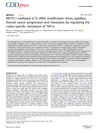
May 2025 in “Cell Death and Disease” This study found that METTL1 is upregulated in papillary thyroid cancer tissues and promotes cancer cell proliferation and metastasis through its tRNA methyltransferase activity.
January 2012 in “Hacettepe University Institutional Repository (hacettepe.edu.tr)” This study found that using a contrast agent in Microbeam Radiation Therapy simulations increased the target dose but concluded that using a linear accelerator as an X-ray source did not preserve MRT advantages.
 January 2019 in “LASER THERAPY”
 Laser technologies improve medical treatments and outcomes.
4 citations
,
July 2013 in “The Journal of Dermatology” This article reports a case of lupus miliaris disseminatus faciei affecting the scalp, which led to scarring hair loss, but it provides no new experimental findings.
 December 2025 in “Frontiers in Veterinary Science”
 This study found that PT-LCG extends hair follicle activity and promotes continuous cashmere growth by enhancing lipid synthesis, remodeling the extracellular matrix, and modulating inflammatory signaling, offering insights into improving cashmere yield and quality through molecular breeding.
 July 2024 in “Scholars Journal of Medical Case Reports”
 This study highlights examples of successful hair growth using combined laser therapy and autologous exosome therapy, suggesting a synergistic effect that may enhance beauty treatments and other therapeutic applications.

In this study, women in their 40s with hair loss showed significant improvements in hair properties such as pore density and hair thickness when treated with a caffeine-based scalp ampoule and Microneedle Therapy System, compared to a caffeine-free control.
2 citations
,
January 2022 in “Indian dermatology online journal” This case report details the dermoscopic features of bilateral cutaneous larva migrans in an adult male, noting similarities with lymphangioma circumscriptum but highlights that typical dermoscopy magnification may be insufficient for diagnosis.
 11 citations
,
August 2010 in “Pediatric dermatology”
11 citations
,
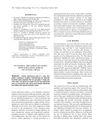
August 2010 in “Pediatric dermatology” This report details two cases of Lichen spinulosus in the submental area, treated effectively and safely with topical tacalcitol cream.
5 citations
,
February 2016 in “Hanbang an i bi inhu pibugwa hakoeji/Hanbang an'i'bi'in'hu pibu'gwa haghoeji” This study found that HRHDT combined with microneedle therapy improved hair growth in a mouse model of alopecia more effectively than microneedle therapy alone.
13 citations
,
March 2008 in “Journal of the European Academy of Dermatology and Venereology” This article reports a case of linear lichen planus developing along the lines of Blaschko during intramuscular triamcinolone acetonide therapy for alopecia areata multiplex.