323 citations
,
November 2017 in “Bioanalysis” This commentary discusses the challenges of matrix effects in LC–MS analysis and introduces the concept of a matrix effect factor using stable isotopically labeled internal standards to improve analysis reliability.
1 citations
,
September 2020 in “Journal of dermatology” This study identified a novel mutation and confirmed a previous mutation in the LIPH gene in a woman with autosomal recessive woolly hair, expanding the mutation spectrum for this condition.
 28 citations
,
October 2004 in “Differentiation”
28 citations
,
October 2004 in “Differentiation” This study identified a large deletion in the desmoglein 4 gene as the genetic basis of the Iffa Credo "hairless" rat's skin phenotype, linking it to lanceolate hair mutations.
May 2026 in “Microchemical Journal” May 2023 in “bioRxiv (Cold Spring Harbor Laboratory)” This study reported the first comprehensive transcriptome atlas of the extraorbital lacrimal gland in mice, identifying over 41 cell subclasses and revealing significant cell-cell communication networks, particularly among innate lymphoid cells.
3 citations
,
May 2025 in “Lasers in Surgery and Medicine” This study suggested that MRF may support skin regeneration and rejuvenation by promoting collagen synthesis and regulating factors involved in fibroblast activation and ECM remodeling, with preliminary findings indicating ADSCs might aid these processes.
 November 2023 in “bioRxiv (Cold Spring Harbor Laboratory)”
 This study used a novel fluorescent tagging method in mice to observe collagen IV dynamics during hair follicle development, revealing that alterations in basement membrane turnover can influence epithelial progenitor cell behavior and organ morphology by affecting cell proliferation and movement.
 December 2024 in “Livers”
 This case report highlights a female patient with familial partial lipodystrophy who showed significant improvement in liver stiffness after starting leptin replacement therapy.
8 citations
,
October 2022 in “International Journal of Molecular Sciences” This study found that CLD-hFGF2 hydrogels improved healing in deep second-degree burn wounds more effectively than hydrogels alone or direct administration of CLD-hFGF2.
1 citations
,
August 2021 in “Journal of Investigative Dermatology” ASLAN004 was safe and well-tolerated, supporting further development for treating certain diseases.
1 citations
,
July 2024 in “Journal of lasers in medical sciences” This case study reports that treating a female patient with facial partial unilateral lentiginosis using a 532-nm Nd:YAG fractional picosecond laser resulted in significant improvement in pigmentation without notable side effects, indicating it may be an effective and well-tolerated treatment option.
 1 citations
,
April 2017 in “Journal of Investigative Dermatology”
1 citations
,
April 2017 in “Journal of Investigative Dermatology” This study found that the novel IPC analog SIG-1451 may inhibit inflammatory cytokine release in cell-based assays relevant to allergic dermatitis.
November 2025 in “Journal of Investigative Dermatology” IMG-007 helps regrow hair and reduce scalp inflammation in severe alopecia areata.
November 2012 in “Experimental and Clinical Endocrinology & Diabetes” This case report describes a 46,XY female patient with a novel homozygous nonsense mutation in the LHCGR gene, highlighting the need for molecular analysis in disorders of sexual development.
 January 2021 in “Hair transplant forum international”
 This article describes a new T-Fast multi-implanter that potentially reduces operating costs and surgical time by implanting two follicular unit excision grafts simultaneously, which may encourage clinics to adopt this technique.
This paper offers detailed tables of genotypic and phenotypic data on horses, including markers, variants, and haplotypes, but reports no new research results.
1 citations
,
October 2019 in “PubMed” This study successfully created a mouse model with conditional knockout of the p75 neurotrophin receptor gene in epidermis cells, with no significant changes in skin histomorphology observed.
33 citations
,
February 2021 in “Journal of Medicinal Chemistry” This study found that novel MPC inhibitor analogues with specific chemical modifications promoted significant hair growth in shaved mice when applied topically.
15 citations
,
April 2011 in “The journal of investigative dermatology/Journal of investigative dermatology” This study found that A(3)B(5) downregulates melanin production and suppresses melanoma cell growth by promoting proteasomal degradation of TRP-2.
36 citations
,
July 1996 in “The journal of investigative dermatology/Journal of investigative dermatology” This research reports a new autosomal recessive mutation in mice, 'lanceolate hair', causing generalized alopecia and hair shaft abnormalities, which may serve as a model for Netherton's syndrome in humans.
3 citations
,
December 2024 in “Iraqi Journal of Pharmaceutical Sciences ( P-ISSN 1683 - 3597 E-ISSN 2521 - 3512)” This study reported that meloxicam-loaded spanlastics, created using the ethanol injection method, demonstrated potential as a drug delivery system with sustained release and effective entrapment efficiency.
15 citations
,
January 2024 in “Chemical Engineering Journal” June 2025 in “British Journal of Dermatology” This study found that an ML model incorporating factors like Breslow thickness and age improved cutaneous malignant melanoma prognosis predictions compared to TNM staging, with a C-index of 80% versus 66.6% for TNM alone, suggesting ML's potential for personalized prognostication.
 April 2023 in “The journal of investigative dermatology/Journal of investigative dermatology”
 In this study, researchers used single-cell RNA sequencing to define and locate three distinct cell states of melanocytes in mouse skin development, potentially aiding the understanding of abnormal melanocyte differentiation.
15 citations
,
June 2012 in “British Journal of Dermatology” This study identified a novel KRT86 mutation associated with autosomal dominant monilethrix, expanding understanding of its genetic basis beyond known motifs.
June 2020 in “Zenodo (CERN European Organization for Nuclear Research)” This study suggests that the DNMT3B -579 G>T polymorphism may be a genetic risk factor for colorectal cancer in the Azerbaijani population.
 1 citations
,
March 2015 in “Journal of the European Academy of Dermatology and Venereology”
1 citations
,
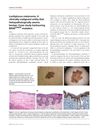
March 2015 in “Journal of the European Academy of Dermatology and Venereology” This letter to the editor shares a case study of lentiginous melanoma that appears clinically malignant but histopathologically benign, involving the BRAFV600R mutation.
 January 2025 in “Dermatology Reports”
 This case report describes a 61-year-old Italian man with a rare, localized variant of junctional epidermolysis bullosa linked to the R795X mutation in the COL17A1 gene, highlighting the importance of precise diagnosis for effective management of rare genetic disorders.
1 citations
,
October 2024 in “Canine Medicine and Genetics” This study suggests a potential genetic component in CFA among Ridgeback dogs, but MLPH genotyping did not identify the MLPH gene as a contributing factor.
 4 citations
,
February 2016 in “Clinical Pharmacology & Therapeutics”
4 citations
,
February 2016 in “Clinical Pharmacology & Therapeutics” Hair follicle samples effectively show how well the drug MK-0752 targets and engages with the Notch pathway.