
This study discovered that androgenetic alopecia disrupts the scalp microbiome balance across the whole scalp, not just areas with hair loss, and introduced a microbial index for early detection and severity prediction.
 November 2024 in “Journal of Scientific Agriculture”
 This paper reviews the benefits of using silk proteins as natural ingredients in cosmetics, highlighting their potential for improving skin and hair health due to properties like antimicrobial activity, UV resistance, and enhanced moisture absorption.
 July 2021 in “Journal of emerging technologies and innovative research”
 This article discusses Ayurvedic perspectives on acne vulgaris and outlines potential natural remedies, but it presents no new clinical findings.
 March 2021 in “Actas Dermo-Sifiliográficas”
 This review discusses the scalp microbiome's unique features and its potential role in hair disorders, suggesting that microbiome-targeted treatments could offer new therapeutic options, though no clinical results are reported.
 September 2020 in “Journal of Investigative Medicine”
 This article discusses the role of the microbiome in different forms of alopecia and highlights the importance of Omics approaches for future research, but it provides no new clinical results.

This paper highlights the role of the skin microbiome in influencing skin and hair conditions, suggesting that understanding these microbial communities could aid in developing new probiotic or antibiotic treatments for disorders like alopecia and skin diseases.
 September 2018 in “International Journal of Advanced Community Medicine”
 This source describes the development of a new cream combining salicylic acid and retinol, assessed for its potential to alleviate itching in dermatitis and treat acne vulgaris, with stability and patch testing indicating no irritation or allergic reactions.
 3 citations
,
January 2021 in “Actas Dermo-Sifiliográficas”
3 citations
,
January 2021 in “Actas Dermo-Sifiliográficas” This review discusses the scalp and follicular microbiome's potential role in hair diseases and the emerging interest in microbiome-targeted therapies, but reports no new clinical findings.
 26 citations
,
October 2017 in “Clinical Reviews in Allergy & Immunology”
26 citations
,
October 2017 in “Clinical Reviews in Allergy & Immunology” This review explores skin manifestations associated with autoimmune liver diseases and highlights known and probable links, such as vitiligo's strong association with autoimmune hepatitis.
 2 citations
,
January 2023 in “Pharmaceuticals”
2 citations
,
January 2023 in “Pharmaceuticals” This study found that in male mice, microglial changes due to a Parkinson's-like lesion were influenced by sex hormones, with dutasteride treatment preventing some effects.
 47 citations
,
September 2023 in “Pharmacological Reports”
47 citations
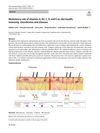
,
September 2023 in “Pharmacological Reports” In this review, researchers explored the roles of vitamins A, B3, C, D, and E in skin immunity, highlighting their potential as therapeutics for skin diseases due to their antioxidant, anti-inflammatory, and antimicrobial properties.
 21 citations
,
February 2012 in “Journal of the European Academy of Dermatology and Venereology”
21 citations
,
February 2012 in “Journal of the European Academy of Dermatology and Venereology” This study found that late-onset alopecia areata is more common in women and tends to present with milder symptoms, with some patients achieving complete hair regrowth in mild cases.
 11 citations
,
January 2023 in “BioMed Research International”
11 citations
,
January 2023 in “BioMed Research International” This review discusses the use of microbial biosurfactants as a safer alternative to chemical surfactants in cosmetics due to their antibacterial, moisturizing, and low toxicity properties, but it reports no new clinical findings.
 9 citations
,
April 2023 in “Frontiers in immunology”
9 citations
,
April 2023 in “Frontiers in immunology” This review discusses the current and emerging methods for profiling skin microbes to advance our understanding of the microbiome in skin disease, but it reports no new clinical findings.
 3 citations
,
October 2021 in “International Journal of Research in Ayurveda and Pharmacy”
3 citations
,
October 2021 in “International Journal of Research in Ayurveda and Pharmacy” This study reviewed the pharmacological properties of Priyaladi lepa, an Ayurvedic formulation, and reported its potential anti-dandruff benefits due to anti-inflammatory, anti-fungal, anti-microbial, anti-pruritic, antioxidant, and exfoliation effects, warranting further research for managing Darunaka (dandruff).
 April 2026 in “Frontiers in Cell and Developmental Biology”
 This study found that PGRP-S expression in mouse epidermis is specific to certain hair follicle epithelia, depending on the skin region, and can be transiently induced in flank skin hair follicle epithelium after exposure to Staphylococcus aureus, suggesting a role in environmental surveillance.
 November 2025 in “Journal of Pioneering Medical Science”
 This systematic review reported that probiotics, prebiotics, synbiotics, postbiotics, and dietary supplements may improve hair density and reduce dandruff severity in individuals with scalp disorders, potentially by modifying inflammation, oxidative stress, and microbiota composition; however, variability across studies limits the strength of these conclusions.
October 2025 in “Burns & Trauma” This review highlights recent advancements in engineered probiotics for wound healing, reporting that genetically engineered strains of Lactobacillus reuteri and Lactococcus cremoris have shown promise in promoting faster wound healing in pre-clinical and clinical settings, particularly for diabetic foot ulcers.
 April 2024 in “Frontiers in cellular and infection microbiology”
 This review highlights evidence supporting the potential of blue light therapy as a non-invasive treatment for managing skin and hair conditions by modulating interactions between the skin microbiome and its host.
 April 2017 in “Journal of Investigative Dermatology”
 Applying pseudoceramide improved skin and hair health.
 November 2016 in “Universiti Putra Malaysia Institutional Repository (Universiti Putra Malaysia)”
 This study found that Dendrobium sabin flower extracts, especially the methanolic one, demonstrated strong antioxidant and anti-aging properties without significant toxicity, suggesting its potential in treating photo-induced skin aging.
65 citations
,
May 2006 in “Journal of Structural Biology” This study concluded that the curliness of human hair, regardless of ethnicity, originates from the inhomogeneous internal nanostructure due to differences in the distribution of two types of cortices.
15 citations
,
October 2024 in “Nutrients” In this study, consuming a healthy, plant-based diet was associated with reduced skin inflammation and improved overall skin health, while the potential benefits of probiotics, synbiotics, and postbiotics for skin inflammation and tissue regeneration require further investigation.
7 citations
,
January 2025 in “Current Issues in Molecular Biology” This study found that PDRN derived from Lactobacillus rhamnosus showed superior antioxidant and wound-healing properties compared to salmon-derived PDRN, while also offering potential benefits in immune modulation and bioavailability.
 April 2024 in “Frontiers in pharmacology”
 This review of Cynoglossum amabile, a traditional Chinese and ethnomedicine, provides insights into its uses, chemical components, biological activities, and toxicity. Highlighting its market potential, the study underscores the importance of indigenous knowledge in drug development despite noted hepatotoxic risk linked to its pyrrolizidine alkaloids.
 August 2023 in “Processes”
 This study found that fermenting Dendrobium officinale with Lactiplantibacillus plantarum CCFM8661 and other strains increased polysaccharide yields and skin care activity, particularly with CCFM8631, which showed significant improvements in skin cell protection and inflammation reduction in both cell cultures and mouse models.
8 citations
,
October 2013 in “Chemistry Central Journal” This study found that microbial transformation of dihydrotestosterone with two types of fungi produced eight metabolites, among which metabolites 5–7 were significant inhibitors of butyrylcholinesterase, suggesting potential in Alzheimer's disease management.
September 2025 in “International Journal of Molecular Sciences” This study found that Hashimoto's thyroiditis and alopecia areata show distinct gut microbial patterns, with specific microbes like Bacteroides fragilis and Microbacterium sp. T32 potentially linked to autoimmune activity.
8 citations
,
March 2023 in “Polymers” This study suggests that a chitosan-coated omeprazole-loaded nanoemulgel formulation may effectively treat certain skin infections due to its demonstrated antimicrobial properties and enhanced antibacterial activity.
35 citations
,
August 2016 in “Experimental Dermatology” This viewpoint essay discusses the potential of fullerene C60 derivatives as novel treatment agents in dermatology, highlighting their ability to act as both radical scavengers and oxygen radical generators.