 64 citations
,
July 2016 in “Journal of Immunology”
64 citations
,
July 2016 in “Journal of Immunology” In this study, blocking the CXCR3 receptor in mice prevented the development of alopecia areata by inhibiting the accumulation of specific T cells in the skin, suggesting a potential therapeutic approach for humans.
 62 citations
,
February 2016 in “ACS Applied Materials & Interfaces”
62 citations
,
February 2016 in “ACS Applied Materials & Interfaces” This study found that 3D microtissue models of dermal papilla cells can enhance the ability to induce hair-follicle neogenesis in vivo, offering potential for controlled cell production in follicle regeneration.
 61 citations
,
January 2008 in “Cold Spring Harbor Symposia on Quantitative Biology”
61 citations
,
January 2008 in “Cold Spring Harbor Symposia on Quantitative Biology” This review examines beta-catenin's role in stem cell renewal, lineage selection, and tumor formation in the epidermis and reports no new experimental findings.
 60 citations
,
November 2020 in “International Journal of Medical Sciences”
60 citations
,
November 2020 in “International Journal of Medical Sciences” This review highlights the potential of near-infrared light therapy to improve metabolic, antioxidant, and cognitive functions without adverse effects, and supports its use for visual and neurological conditions through molecular and cellular mechanisms, as reported in this source.
 60 citations
,
December 2015 in “Lasers in Medical Science”
60 citations
,
December 2015 in “Lasers in Medical Science” This review concluded that FDA-cleared low-level laser therapy devices are safe and effective for patients with male and female pattern hair loss who do not respond to or tolerate standard treatments.
 60 citations
,
September 2015 in “Expert Review of Clinical Immunology”
60 citations
,
September 2015 in “Expert Review of Clinical Immunology” This study suggests that CD8+ cytotoxic T lymphocytes play a crucial role in the development of alopecia areata, based on observations in rodent models that mimic human autoimmune disease.
 59 citations
,
June 2023 in “Nature Aging”
59 citations
,
June 2023 in “Nature Aging” This study observed that in aged mouse skin, there was an increase in IL-17-expressing T helper cells, γδ T cells, and innate lymphoid cells, and blocking IL-17 signaling reduced skin inflammation and delayed age-related changes, suggesting it as a potential target to mitigate skin aging.
 59 citations
,
November 2015 in “International Journal of Cosmetic Science”
59 citations
,
November 2015 in “International Journal of Cosmetic Science” This review considers oxidative stress effects on hair aging and emphasizes the need for dermatologists to recognize and treat factors affecting scalp and hair health, but it provides no new clinical findings.
 59 citations
,
May 2014 in “Expert Opinion on Therapeutic Targets”
59 citations
,
May 2014 in “Expert Opinion on Therapeutic Targets” This review discusses current therapeutic targets and treatments for androgenic alopecia but reports no clinical results; the authors highlight the challenge of developing multi-target drugs for effective treatment.
 58 citations
,
October 2016 in “Journal of Investigative Dermatology”
58 citations
,
October 2016 in “Journal of Investigative Dermatology” This study found that activating Nrf2 in human hair follicles significantly reduced oxidative stress, lipid peroxidation, and protected against hair growth inhibition, suggesting a protective role for Nrf2 against redox insult in this context.
 58 citations
,
June 2006 in “Plastic and Reconstructive Surgery”
58 citations
,
June 2006 in “Plastic and Reconstructive Surgery” This study successfully developed a reproducible mouse model demonstrating fetal scarless wound healing, which may provide insights for minimizing scarring in adults.
 57 citations
,
February 2013 in “Journal of Dermatological Science”
57 citations
,
February 2013 in “Journal of Dermatological Science” This article reviews methods to enhance epithelial–mesenchymal interactions for hair follicle bioengineering but does not present new experimental results; it emphasizes optimizing combinations for successful regeneration.
 56 citations
,
May 2017 in “Nature Cell Biology”
56 citations
,
May 2017 in “Nature Cell Biology” Hair can regrow after certain stem cells are lost because other stem cells can take over their role.
 56 citations
,
April 2015 in “American journal of medical genetics. Part A”
56 citations
,
April 2015 in “American journal of medical genetics. Part A” This study reports on eight previously unpublished cases of Bohring-Opitz syndrome with ASXL1 mutations, suggesting the importance of screening for Wilms tumors in these patients.
 56 citations
,
March 2015 in “Cell death and differentiation”
56 citations
,
March 2015 in “Cell death and differentiation” This study found that H-Ras activation in aged mouse skin leads to increased dysplasia and progression to in situ squamous cell carcinoma, highlighting an age-linked connection between immune changes, senescence, and cancer risk.
 56 citations
,
February 2012 in “Cell Cycle”
56 citations
,
February 2012 in “Cell Cycle” This review discusses the role of miRNA/mRNA regulatory networks in skin development, epidermal homeostasis, and tissue remodeling, and suggests potential for miRNA-based therapies in treating skin conditions, but reports no new clinical results.
 56 citations
,
February 2006 in “American journal of physiology. Cell physiology”
56 citations
,
February 2006 in “American journal of physiology. Cell physiology” This study observed that in hormone-starved prostate cancer cells, the androgen 5alpha-dihydrotestosterone rapidly induces matriptase activation and shedding, which involves androgen receptor signaling and requires both transcription and protein synthesis.
 55 citations
,
September 2014 in “Development”
55 citations
,
September 2014 in “Development” In this study, mouse sweat gland development relied on a regulatory sequence initiated by Wnt/β-catenin signaling, and disruptions in Wnt, Eda, or Shh pathways led to distinct developmental failures.
 55 citations
,
June 2014 in “Nature Communications”
55 citations
,
June 2014 in “Nature Communications” This study found that overexpression of the transcription factor Tcf3 accelerates keratinocyte migration and skin wound healing in mice, highlighting its potential as a therapeutic target for wound repair.
 53 citations
,
April 2021 in “Cell Host & Microbe”
53 citations
,
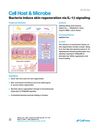
April 2021 in “Cell Host & Microbe” This study found that skin microbiota, particularly in wild-type mice, promotes wound-induced hair follicle neogenesis and wound healing, highlighting the potential downsides of routine antibiotic use on skin regeneration.
 53 citations
,
March 2014 in “Cold Spring Harbor Perspectives in Medicine”
53 citations
,
March 2014 in “Cold Spring Harbor Perspectives in Medicine” The document explains different types of hair loss, their causes, and treatments, and suggests future research areas.
 53 citations
,
January 2009 in “Journal of Investigative Dermatology”
53 citations
,
January 2009 in “Journal of Investigative Dermatology” In this study, UVB irradiation of organ-cultured human anagen hair follicles in vitro reduced hair elongation and increased cell death, affecting hair growth and regulatory processes.
 52 citations
,
May 2015 in “PLOS Genetics”
52 citations
,
May 2015 in “PLOS Genetics” This study found that the microRNA miR-22 is a key regulator of the hair cycle, influencing hair loss by promoting the transition from growth to rest phases and repressing keratinocyte differentiation.
 51 citations
,
January 2006 in “Wound Repair and Regeneration”
51 citations
,
January 2006 in “Wound Repair and Regeneration” This study found that MRL/MpJ mouse dorsal skin wounds heal with similar scar formation and collagen deposition as C57bl/6 and Balb/c mice.
 50 citations
,
July 2021 in “Nature Communications”
50 citations
,
July 2021 in “Nature Communications” This study found that the antiandrogen drug enzalutamide reduced TMPRSS2 levels and significantly decreased SARS-CoV-2 entry and infection in lung cells, supporting further clinical trials for COVID-19 treatment.
 50 citations
,
January 2016 in “The Journal of Clinical Endocrinology and Metabolism”
50 citations
,
January 2016 in “The Journal of Clinical Endocrinology and Metabolism” This study found that miRNA expression profiles in follicular fluid are altered in women with PCOS, with certain miRNAs potentially useful for distinguishing patient subtypes and contributing to understanding PCOS heterogeneity.
 50 citations
,
April 2014 in “Nature Communications”
50 citations
,
April 2014 in “Nature Communications” This study analyzed skin from 538 knockout mouse mutants and identified 50 with epidermal phenotypes, providing valuable insights into genetic conditions and systemic effects related to skin abnormalities.
 50 citations
,
November 2010 in “Plastic and Reconstructive Surgery”
50 citations
,
November 2010 in “Plastic and Reconstructive Surgery” This study suggests that Botox injections may increase hair count and reduce hair loss in men with androgenetic alopecia, potentially through increased blood flow and oxygen to the scalp.
 49 citations
,
April 2016 in “International journal of molecular sciences”
49 citations
,
April 2016 in “International journal of molecular sciences” This study found that shift nurses exhibited lower circadian variations compared to daytime nurses, indicating an adjustment of their biological clocks to continuous shift schedules.
 48 citations
,
May 2015 in “PLOS ONE”
48 citations
,
May 2015 in “PLOS ONE” This study found that a genetic test using 5 to 20 SNPs can predict male pattern baldness with variable accuracy in European men, especially those aged 50 and older.