March 2023 in “Chinese Journal of Dermatology” Protecting hair and scalp from sunlight may help prevent hair loss.
 June 2025 in “International Journal of Applied Pharmaceutics”
 This study developed a testosterone-induced androgenetic alopecia model in BALB/c mice, finding that a 0.075 ml testosterone injection best replicated the dermal and hair follicle conditions of AGA patients, providing a promising tool for future drug testing and research into AGA therapies.
 April 2016 in “Journal of The American Academy of Dermatology”
 AGA patients have a lower quality of life than AA patients.
April 2026 in “Clinical Cosmetic and Investigational Dermatology” This study found that androgenetic alopecia involves fungal dysbiosis, with significant depletion of the commensal yeast Malassezia and enrichment of opportunistic microbes, affected by host factors and geography.
August 2026 in “Revista Ibero-Americana de Humanidades, Ciências e Educação” This narrative review suggests that the association between weight-loss medications and telogen effluvium is primarily due to metabolic changes from rapid weight loss, rather than a direct pharmacological effect on hair follicles.
 1 citations
,
January 2015 in “Springer eBooks”
1 citations
,
January 2015 in “Springer eBooks” AGA is a common hair loss disorder, and early diagnosis and treatment with minoxidil or finasteride can help reduce emotional distress.
 32 citations
,
July 2020 in “Journal of The American Academy of Dermatology”
32 citations
,
July 2020 in “Journal of The American Academy of Dermatology” This study noted that among hospitalized COVID-19 patients, androgenetic alopecia was prevalent, and severe cases were associated with adverse outcomes such as respiratory failure, highlighting a possible link with androgen sensitivity.
 July 2023 in “Institutional Repositories DataBase (IRDB)”
 Malassezia species may contribute to hair loss in AGA patients.
 January 2002 in “Anais Brasileiros De Dermatologia”
 This article reviews androgen metabolism-related skin conditions like acne and androgenic alopecia, the evaluation of these conditions, and established dermatological therapies, without providing new clinical results.
September 2021 in “Eureka: Health Sciences” This study found that female androgenetic alopecia is linked to oxidative stress, microinflammation, and fibrosis, suggesting these could be key targets for treatment improvements.
 February 2024 in “Benha Journal of Applied Sciences”
 This article reviews the current understanding, clinical features, diagnostic tests, and treatment options for androgenetic alopecia and reports no new clinical results.
 January 2023 in “Brazilian Journals Editora eBooks”
 Surgery to fix a broken upper arm bone can sometimes lead to nerve damage.
This review discusses the genetic and hormonal factors involved in androgenetic alopecia but reports no new research findings.
July 2026 in “Skin Appendage Disorders” This study observed that plant-derived extracellular vesicles delivered through a microneedling technique showed favorable tolerance and subjective improvement in androgenetic alopecia patients, with 95% reporting perceived improvement and 85% experiencing no adverse effects after six sessions.
January 2023 in “Brazilian Journals Editora eBooks”  September 2022 in “Anais Brasileiros de Dermatologia”
 This case study reports a female adult patient with annular elastolytic giant cell granuloma on the scalp, observed through dermoscopy showing multiple yellowish/orange follicular dots against an erythemato-whitish background.

This study detailed a comprehensive hair therapy regimen for a 22-year-old male with androgenetic alopecia, observing significant improvements in scalp health and hair density over four months, though benefits regressed after stopping treatment, emphasizing the need for continuous adherence and multidisciplinary support.
8 citations
,
October 2013 in “Der Hautarzt” This article discusses approaches to diagnosing and treating androgenetic alopecia but reports no new clinical results.
 1 citations
,
September 2022 in “JAAD international”
1 citations
,
September 2022 in “JAAD international” This study analyzed social media posts on alopecia areata treatments and found that while most reported perceived improvement, many treatments, particularly dexamethasone, were associated with underlying negative emotions.
 June 2025 in “International Journal of Computational Intelligence Systems”
 This study introduces a novel computational model using fuzzy logic and multi-criteria decision-making techniques to create a triage system for androgenetic alopecia management, stratifying patients into seven severity levels and aiding in resource allocation and treatment planning.
July 2026 in “Skin Appendage Disorders” This study found that public sentiment towards androgenetic alopecia treatments is generally negative, with over-the-counter therapies perceived more positively than prescription options despite weaker clinical evidence.
 August 2025 in “BMJ Open”
 In this randomized controlled trial, researchers are assessing the efficacy and safety of acupoint catgut embedding combined with topical 5% minoxidil in treating androgenetic alopecia among 70 men, with primary outcomes focusing on changes in hair count after 24 weeks of treatment.
 November 1999 in “Journal of Cutaneous Medicine and Surgery”
 Treatments for hair loss include hormone modifiers, minoxidil, and hair transplant surgery.
 37 citations
,
February 2017 in “Anais Brasileiros De Dermatologia”
37 citations
,
February 2017 in “Anais Brasileiros De Dermatologia” In this study, researchers found that the prevalence of androgenetic alopecia was higher in their sample compared to other studies in Asian and Caucasian populations, and it was linked with age-related severity.
June 2026 in “Mendeley Data” This dataset provides additional exposure data and comprehensive analyses for a study on the long-term effects of particulate matter on androgenetic alopecia, but it presents no new findings.
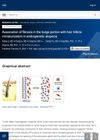 February 2021 in “Journal of The American Academy of Dermatology”
 This study observed that fibrosis occurs in the bulge region of hair follicles affected by androgenetic alopecia and is correlated with the hair miniaturization process.
 June 2023 in “Brazilian Journal of Health Review”
 In this integrative review, the researchers found that hair transplantation can significantly improve psychosocial outcomes for male patients with androgenetic alopecia, enhancing their appearance, self-esteem, social functioning, and overall quality of life.
 November 2021 in “Research, Society and Development”
 This review covers different treatment options for alopecia areata and androgenetic alopecia and emphasizes individualized treatment plans, combining pharmacological therapy with psychological support; no new clinical results are reported.
1 citations
,
November 2025 in “Journal of Health Psychology” This study found that individuals with Alopecia Areata experience significantly higher social appearance anxiety compared to healthy controls, driven more by appearance-related concerns than by general anxiety or depression, highlighting the importance of targeted psychosocial assessments in their routine care.
 May 2026 in “Revista fisio&terapia.”
 This narrative literature review found that combined therapies such as minoxidil, microneedling, and platelet-rich plasma are more effective than isolated treatments for androgenetic alopecia, improving hair density and quality. The study highlights the role of pharmaceutical intervention in enhancing treatment adherence and clinical outcomes.