
In this case report, a woman's Majocchi's granuloma, linked to her pet guinea pig infected with Trichophyton mentagrophytes, improved significantly with a combination of terbinafine and ketoconazole cream.
 January 2026 in “The mycota”
 This study explores the growing use of fungal-based ingredients in haircare products, emphasizing their eco-friendly production and benefits for scalp health, including moisturizing, hair strengthening, and addressing dandruff and fungal infections.

In this study, the combination of binahong leaf and lemongrass extracts was found to effectively inhibit the growth of the dandruff-causing fungus Pityrosporum ovale, with the strongest fungal growth inhibition observed at a 50% concentration of each extract.
 39 citations
,
January 2019 in “Journal of Dermatological Treatment”
39 citations
,
January 2019 in “Journal of Dermatological Treatment” This review found topical ketoconazole to be highly effective against Malassezia-related skin conditions, though other treatments may outperform it for Tinea and Candida infections.
65 citations
,
April 1999 in “Journal of Parasitology” This study found that all lesions in mice treated with a new topical formulation, WR 279,396, healed completely without relapse, outperforming other formulations and showing no toxicity.
22 citations
,
September 2024 in “Chemical Engineering Journal” A new microneedle patch effectively and safely treats alopecia areata.
1 citations
,
January 2002 in “PubMed” The researchers reported that both finasteride and PM-9 competitively inhibit the 5 alpha-reductase enzyme in P. crustosum broth.
January 2026 in “Dermatologic Therapy” This review discusses folliculotropic mycosis fungoides, highlighting its diagnostic criteria and therapeutic strategies based on disease staging, but does not report new clinical findings.
 9 citations
,
June 2019 in “Mycopathologia”
9 citations
,
June 2019 in “Mycopathologia” This study found that the presence of Malassezia fungi in the scalp's hairy roots was more pronounced in individuals with androgenetic alopecia than in healthy controls, suggesting a potential link to the condition.
1 citations
,
August 2022 in “American Journal of Tropical Medicine and Hygiene” This case report describes a 29-year-old man who developed scalp abscesses due to Mycobacterium abscessus infection after receiving scalp injections for hair loss, successfully treated with antibiotics.
21 citations
,
August 2002 in “British Journal of Ophthalmology” This report notes that while surgical excision is typically curative for squamous cell carcinoma, the authors suggest considering the intralesional use of cidofovir for its potential success without systemic toxicity.
 3 citations
,
January 2015 in “Journal of clinical and diagnostic research”
3 citations
,
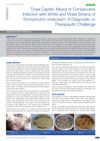
January 2015 in “Journal of clinical and diagnostic research” This case report described a seven-year-old with tinea capitis, which improved clinically after six weeks of griseofulvin treatment, changing the fungal strain from Trichophyton violaceum white variant to violet strain.
January 1983 in “Archives of Dermatology” This case report suggests that a Penicillium species might have been the causative agent of tinea capitis in a 3-year-old boy.
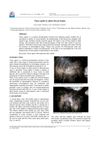
This report presents the first known case of tinea capitis caused by Microsporum canis in an adult female in the authors' locality, responsive to oral fluconazole treatment.
 33 citations
,
April 2017 in “American journal of clinical dermatology”
33 citations
,
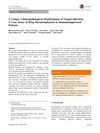
April 2017 in “American journal of clinical dermatology” This study suggests that deep dermatophytosis is a distinct condition occurring in immunocompromised patients, characterized by nodules, an indolent course, and absence of follicular invasion, which resolves completely with systemic antifungal treatment.
 6 citations
,
November 2017 in “Dermatologic Therapy”
6 citations
,
November 2017 in “Dermatologic Therapy” In this study, researchers found that applying mometasone furoate 0.1% cream combined with adapalene 0.1% gel resulted in significantly greater hair regrowth over 12 weeks compared to mometasone furoate cream alone in patients with alopecia areata.
May 2022 in “Journal of Cutaneous Immunology and Allergy” This case report highlights that asymptomatic domestic cats can transmit Microsporum canis, leading to tinea capitis in humans, as seen in a four-year-old girl in the study.
This case report documents the first instance of Microsporum canis infection in a red fox, successfully treated with ketoconazole, highlighting asymptomatic cats as possible carriers of this pathogen.
March 2020 in “Case medical research” This website listing states that casemedicalresearch.com is available for purchase and aims to offer comprehensive information on various topics, highlighting it as a potential resource.
July 2024 in “Journal of Controlled Release” In this study, researchers developed topical tofacitinib-loaded cationic lipid nanoparticles, which improved absorption and targeted hair follicles in an ex vivo pig ear model, showing promise in treating alopecia areata by reducing symptoms through the JAK/STAT pathway.
August 2025 in “Skin Appendage Disorders” This study reported that the combination of tacrolimus, clobetasol, and minoxidil improved hair measurements and stabilized inflammation in primary cicatricial alopecia patients, with most tolerating the treatment well.
1 citations
,
November 2020 in “International journal of infectious diseases” This case report describes a 6-month-old girl in China who experienced complete remission of tinea capitis after 8 weeks of treatment with oral fluconazole and ketoconazole cream.
 December 2024 in “PubMed”
 This study reports a case where cyclosporine effectively treated a 51-year-old woman with idiopathic follicular mucinosis resistant to other therapies, suggesting its potential as an option for refractory cases.
17 citations
,
September 2022 in “Biomaterials Research” This study found that the film-trigger applicator system enhanced drug delivery efficiency and skin penetration of dissolving microneedles compared to traditional patch systems in both lab and animal models.
 October 2016 in “International journal of medical research and review”
 This case report describes a 32-year-old male who developed acneiform eruptions one month after starting Minoxidil/Aminexil solution and Finasteride treatment for androgenic alopecia.
 October 2025 in “International Journal of Cell and Biomedical Science”
 In this study, the application of human umbilical cord mesenchymal stem cell secretome significantly increased hair follicle count in fluconazole-induced alopecia in rats, although changes in epidermal thickness were not significant, suggesting a novel approach for hair restoration.
6 citations
,
February 2019 in “Journal of dermatology” This report details a rare case of favus in Japan, identifying Trichophyton schoenleinii in a 63-year-old woman through DNA sequencing, who was successfully treated with oral terbinafine and topical luliconazole.
 September 2025 in “Cermin Dunia Kedokteran”
 This research reports that onychomycosis, a common nail fungal infection often caused by Candida yeast, requires laboratory testing like direct preparations, fungal cultures, and molecular tests for accurate diagnosis due to its diverse etiology and differential diagnosis, improving therapy effectiveness and efficiency.
 2 citations
,
June 2019 in “Boletín médico del Hospital Infantil de México”
2 citations
,
June 2019 in “Boletín médico del Hospital Infantil de México” This study in Mexican adolescents with severe alopecia areata reported that oral tofacitinib treatment resulted in hair growth and reduced alopecia severity without serious adverse effects.
July 2025 in “International Journal of Biological Macromolecules” A new microneedle system effectively delivers finasteride to treat hair loss.