 December 2022 in “Small methods”
 This study developed dissolving microneedles incorporating a new AR degrader for treating androgenetic alopecia, showing that a single application leads to superior hair regeneration compared to daily minoxidil, without systemic toxicity or androgen-related issues.
 February 2026 in “Zenodo (CERN European Organization for Nuclear Research)”
 This review discusses the epidemiology, pathophysiology, diagnosis, and management of male androgenetic alopecia, noting that combination treatments, including FDA-approved and emerging therapies, may improve outcomes without added side effects.
3 citations
,
April 2010 in “The FASEB Journal” This study found that estrogen, through estrogen receptors, can regulate the expression of the HOXC13 gene involved in hair follicle development, with MLL3 histone methylase playing a collaborative role.
April 2023 in “Journal of Investigative Dermatology” This study found that multidisciplinary group medical visits for patients with alopecia areata improved patient satisfaction, knowledge, and access to care at Lahey Hospital and Medical Center.
 May 2024 in “Journal of biomaterials science. Polymer ed.”
 This study found that three-layer dissolving microneedles for delivering Minoxidil showed improved skin drug penetration and reduced irritation risk compared to traditional Minoxidil cream, suggesting a promising alternative for alopecia areata treatment.
February 2026 in “Figshare” February 2026 in “Figshare” 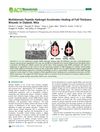 86 citations
,
March 2018 in “ACS Biomaterials Science & Engineering”
86 citations
,
March 2018 in “ACS Biomaterials Science & Engineering” This study found that MDP hydrogel significantly accelerated wound healing and improved tissue formation in diabetic mice compared to a standard clinical hydrogel and control buffer.
September 2026 in “Advanced Materials Technologies” In a mouse model study, researchers developed a methacrylated hyaluronic acid-based hydrogel microneedle patch co-loaded with finasteride and a carbon monoxide-releasing molecule for androgenetic alopecia, which showed better hair regrowth and safety compared to traditional treatments, offering an innovative approach with minimized systemic side effects.
February 2020 in “Benha Journal of Applied Sciences” This study found that higher levels of Galectin-3 and HOMA-IR are independent predictors of androgenetic alopecia severity in both male and female patients.
December 2025 in “Medical dosimetry” April 2020 in “Rice Research Repository (Rice University)” This study suggests that MultiDomain Peptide hydrogels may support wound healing in diabetic mice by accelerating closure and promoting tissue regeneration, though they did not inhibit bacterial growth in infected wounds as expected.
6 citations
,
March 1991 in “Journal of Radioanalytical and Nuclear Chemistry” Manganese levels in hair may be linked to multiple sclerosis.
July 2025 in “Journal of Investigative Dermatology” M1 homeopathic complex may help slow melanoma cell growth.
 April 2015 in “Journal of Nutritional Therapeutics”
 This study found that a more liberal intake of restricted amino acids in patients with methylmalonic acidemia resulted in improved growth and fewer illness episodes.
 February 2026 in “Figshare”
 This study found that a newly developed biocompatible hydrogel, responsive to reactive oxygen species, enabled targeted delivery of miR-665, significantly promoting hair regeneration and reducing T-cell infiltration in a mouse model of alopecia areata, suggesting a promising strategy for treating this condition.
13 citations
,
March 2014 in “Journal of Clinical Laboratory Analysis” This study found that patients with alopecia areata had significantly higher serum MIF levels compared to healthy controls, which correlated with greater disease severity and duration.
December 2022 in “Biochemical and Biophysical Research Communications” This study found that HtrA2 inactivation in mnd2 mice is associated with delayed hair cycle phases and growth retardation of adipocytes, suggesting HtrA2's role in regulating adipogenesis-related hair growth.
 December 2023 in “International journal of research in dermatology”
 In this study, adding intralesional platelet rich plasma to topical mometasone proved more effective and showed earlier improvement in treating alopecia areata compared to using topical mometasone alone.
 29 citations
,
November 2014 in “Experimental Dermatology”
29 citations
,
November 2014 in “Experimental Dermatology” This study found that α-MSH administration before skin wounding in adult mice reduced inflammation and scar area, suggesting a potential pathway to more regenerative healing.
April 2023 in “Journal of Investigative Dermatology” 3D ultrasound can detect hair follicle changes and disease phases in alopecia areata.
 December 2024 in “http://isrctn.com/”
 MpowerTM may improve hair growth and satisfaction more than plain minoxidil, with mild side effects.
79 citations
,
March 2005 in “Journal of Medical Genetics” This study identified a novel heterozygous missense mutation in the hHb3 gene associated with monilethrix, highlighting its role in this hair disorder.
 4 citations
,
February 2012 in “Chinese Science Bulletin”
4 citations
,
February 2012 in “Chinese Science Bulletin” In this study, overexpression of the MtAnn3 gene in Medicago truncatula roots was associated with altered root hair growth polarity in a calcium-free environment.
14 citations
,
June 2016 in “Biomaterials” This study observed that MAA beads improved vascularization in non-diabetic male mice by modulating the Shh signaling pathway in wound granulation tissue, but showed no such effects in females.
 2 citations
,
March 2021 in “Journal of Cosmetic Dermatology”
2 citations
,
March 2021 in “Journal of Cosmetic Dermatology” This pilot study found that among male androgenetic alopecia patients, 2.5 mg oral minoxidil with platelet-rich plasma led to higher patient satisfaction than 1.25 mg, though hair count improvements were not statistically significant.
January 2019 in “Archives of dermatology and skin care” This preclinical study reported that the mix of biomimetic peptides, MGF, promoted hair growth and increased cell proliferation in cultured human hair follicles from AGA subjects.
 12 citations
,
June 2016 in “Clinical and Molecular Hepatology”
12 citations
,
June 2016 in “Clinical and Molecular Hepatology” This case report describes an autoimmune hepatitis patient who achieved remission with mycophenolate mofetil and corticosteroids after intolerance to azathioprine-based therapy.
 July 2022 in “The journal of investigative dermatology/Journal of investigative dermatology”
 This study suggests that Myelin Protein Zero-like 3 plays a crucial role in hair follicle cycling by regulating anagen and catagen phases, mediated through mitochondrial signaling mechanisms in both human and murine hair follicles.
 13 citations
,
February 2020 in “Journal of the American Academy of Dermatology”
13 citations
,
February 2020 in “Journal of the American Academy of Dermatology” This study found that both oral tranexamic acid and microneedling improve melasma treatment outcomes when added to standard therapy, with microneedling showing a more sustained remission.