 September 2024 in “Archives of Dermatological Research”
 This study found that both red and green LED therapies combined with a microneedling patch significantly improved hair density and diameter in androgenetic alopecia patients over 24 weeks, with no serious side effects and similar efficacy between the two light wavelengths.
August 2021 in “Journal of Investigative Dermatology” In this study, activated PRP injections appeared to promote hair growth in AGA-affected scalp skin transplanted onto mice, compared to non-activated PRP.
21 citations
,
December 1997 in “The Journal of Dermatology” In this case report, a 57-year-old Japanese woman with alopecia areata, associated with myasthenia gravis and thymoma, showed significant improvement after undergoing thymectomy and receiving high doses of glucocorticosteroids.
January 2001 in “Chinese Journal of Medical Aesthetics and Cosmetology” In this study, the use of micrografts for male pattern hair loss led to natural hair growth and patient satisfaction, despite low hair density and the potential need for multiple procedures.
1 citations
,
January 2021 in “Journal of Cutaneous and Aesthetic Surgery” This review indicates that low-level laser therapy may stimulate hair growth in both men and women with androgenetic alopecia, showing similar efficacy to minoxidil in some studies, but requires more robust evidence.
April 2020 in “DOAJ (DOAJ: Directory of Open Access Journals)” This study established a mouse model of atopic dermatitis with overgrowth of Malassezia globosa using olive oil as a vehicle, which caused severe lesions and hair follicle damage.
 September 2024 in “Journal of Cosmetic Dermatology”
 In this study, seven patients with refractory alopecia areata treated with concentrated growth factor and microneedling-assisted betamethasone experienced significant hair regrowth, with one achieving over 50% regrowth and six showing complete recovery, without adverse effects.
 47 citations
,
April 2016 in “Lasers in Surgery and Medicine”
47 citations
,
April 2016 in “Lasers in Surgery and Medicine” This review found that low-level laser therapy appears promising in improving hair regrowth and patient satisfaction in androgenetic alopecia, though results should be interpreted cautiously.
 November 2023 in “International Journal of Pharmaceutics”
 This study found that a new transdermal drug delivery system using globefish skin collagen peptides and dissolving microneedles effectively promoted hair regrowth in mice with androgenetic alopecia by reducing inflammation and enhancing vascularization.
 19 citations
,
May 2020 in “Journal of The American Academy of Dermatology”
19 citations
,
May 2020 in “Journal of The American Academy of Dermatology” This case series reports the experience of using oral minoxidil at 1.25 mg/day in 32 patients with male androgenetic alopecia, noting both therapeutic effects and potential adverse reactions.
1 citations
,
February 2026 in “ACS Nano” This study developed the TLMG hydrogel, a seamless in situ biointerface platform, demonstrating robust adhesion, high conductivity, and therapeutic effects for intelligent wound management in complex animal models and human tests, indicating its promise for integrated bioelectronic medicine.
 February 2026 in “Nano Research”
 This study developed a dissolvable microneedle system delivering specific molecules to remodel lymphatic networks and normalize metabolic processes, which accelerated hair growth and activated hair follicle stem cells in a mouse model of androgenetic alopecia.
 1 citations
,
June 2017 in “Journal of The American Academy of Dermatology”
1 citations
,
June 2017 in “Journal of The American Academy of Dermatology” Topical treatment SM04554 safely promotes hair growth in male baldness.
 October 2025 in “Journal of Molecular Structure”
 Hyaluronic acid microneedles help deliver minoxidil derivatives effectively for hair regrowth.
 September 2023 in “SKIN The Journal of Cutaneous Medicine”
 This case report documented a 74-year-old female with alopecic patches and other skin issues during talquetamab therapy for multiple myeloma, suggesting that the drug may cause skin-related adverse effects due to reactivity to GPRC5D-expressing structures.
 1 citations
,
April 2020 in “Magnetic Resonance in Medical Sciences”
1 citations
,
April 2020 in “Magnetic Resonance in Medical Sciences” This study aimed to determine if MRI can assess anatomical changes in the scalp caused by androgenetic alopecia, but it reports no new clinical results.
January 2026 in “International Journal of Biological Macromolecules” The hydrogel improves hair growth treatment by enhancing drug delivery and promoting follicle repair.
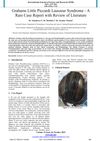 October 2023 in “International Journal of Science and Research (IJSR)”
 This paper describes Grahams Little Piccardi Lassueur Syndrome, a rare type of Lichen Planopilaris that causes different types of alopecia and distinctive skin papules, primarily affecting females aged 40 to 70, and notes the current challenges in treatment options, particularly once scarring occurs.
 6 citations
,
September 2018 in “Journal of Dermatological Treatment”
6 citations
,
September 2018 in “Journal of Dermatological Treatment” This review examines the FDA's 510(k) approval process for low-level laser therapy devices used in treating androgenetic alopecia and reports no new clinical findings.
 October 2022 in “JAAD case reports”
 This case report identifies necrolytic migratory erythema associated with a glucagonoma in a 40-year-old man, presenting with distinct skin lesions, weight loss, and diarrhea.
 1 citations
,
April 2019 in “The journal of investigative dermatology/Journal of investigative dermatology”
1 citations
,
April 2019 in “The journal of investigative dermatology/Journal of investigative dermatology” This study found that anagen stage protein homogenates and specific epitopes from melanogenesis proteins activated CD8 T cells, suggesting alopecia areata is an anagen-specific disease.
December 2025 in “Journal of Drug Delivery Science and Technology” In mouse studies, this research found that combining ginsenoside Rg3 and glycyrrhizic acid with minoxidil improved treatment outcomes for androgen alopecia by addressing both symptoms and root causes, notably activating the Wnt/β-catenin pathway and promoting hair follicle cell proliferation.
July 2025 in “The Egyptian Journal of Hospital Medicine” This study found that intralesional methotrexate and triamcinolone acetonide have similar efficacy for localized alopecia areata in adults, but differ in safety profiles, with methotrexate associated with hyperpigmentation and triamcinolone with atrophy.
 February 2026 in “Skin Appendage Disorders”
 This study found that scalp microinfusion with dutasteride using microneedling and tattoo devices appears safe and shows promise as a treatment for male androgenetic alopecia, resulting in stabilization or improvement in 96.7% of patients, although further controlled studies are needed.
 April 2020 in “Journal of The American Academy of Dermatology”
 In this study, to address long wait times for alopecia specialists, researchers implemented shared medical appointments for women with female pattern hair loss, modeled on formats previously used for conditions like acne and vitiligo.
 18 citations
,
May 2017 in “Experimental Dermatology”
18 citations
,
May 2017 in “Experimental Dermatology” This article discusses a potential link between adipocyte-myofibroblast transition and androgenetic alopecia, suggesting AMT may play a role in fibrosis associated with the condition but presents no new results.
 12 citations
,
June 2017 in “Cell Cycle”
12 citations
,
June 2017 in “Cell Cycle” This study observed that 5% minoxidil topical foam alters gene expression and signaling pathways in the scalp, providing insights into its mechanism of action in men with androgenetic alopecia.
July 2025 in “Skin Appendage Disorders” In this study, researchers found that microinfusion of dutasteride using the MMP® technique did not show a statistical difference compared to placebo in clinical assessments for male androgenetic alopecia, though patients reported improvements in the vertex area.
February 2026 in “Biomedicine & Pharmacotherapy” In this study, researchers developed EPO-derived peptides that enhanced hair growth by stimulating dermal papilla cells and increasing IGF-1 expression without triggering systemic erythropoietic effects in tested models, indicating a promising approach for treating hair loss.
 July 2022 in “http://isrctn.com/”
 Adding a cosmetic gel with caffeine, taurine, and growth factors to standard hair loss treatments could improve results.