 1 citations
,
March 2019 in “Journal of AOAC INTERNATIONAL”
1 citations
,
March 2019 in “Journal of AOAC INTERNATIONAL” New method quickly and accurately measures dexpanthenol in hair products.
 1 citations
,
October 2017 in “Food Additives & Contaminants: Part A”
1 citations
,
October 2017 in “Food Additives & Contaminants: Part A” This study identified a new minoxidil analogue called triaminodil in an illegal hair-growth supplement, but no data on its chemical, toxicological, or pharmacological properties are available yet.
 September 2025 in “Animal Bioscience”
 This study found that triglyceride and energy metabolic pathways are crucial factors influencing wool fiber diameter in fine-wool Alpine Merino sheep, providing insights for enhancing wool quality.
 August 2025 in “Animal Bioscience”
 In this study, researchers examined the methylation patterns in the skin tissues of Alpine Merino sheep with varying wool fiber diameters, finding that specific methylated RNAs linked to the Wnt, Notch, and TGF-ẞ signaling pathways may influence fiber diameter and potentially improve wool quality.
 February 2022 in “Research Square (Research Square)”
 This study identified candidate genes related to hair follicle development in Merino sheep, providing insights for improving sheep wool quality and potentially understanding human hair growth mechanisms.
 April 2015 in “Andrology”
 This special issue contains abstracts from the ASA 40th Annual Meeting, providing an overview of various studies without reporting new primary results.
 March 2026 in “Korean Journal of Clinical Pharmacy”
 In this review, researchers discuss 50 novel drugs approved by the FDA in 2024, highlighting key agents like vadadustat for anemia in chronic kidney disease and donanemab for Alzheimer’s, and focusing on their roles in pharmacy education and clinical decision-making.
 December 2025 in “International Journal of Pharmacology”
 This review highlights that iPSC-derived artificial platelets offer a promising alternative to platelet-rich plasma for regenerative medicine, with standardized manufacturing and reproducible pharmacological properties, addressing variability issues associated with donor-derived platelets and showing therapeutic potential in preclinical models of osteoarthritis.
 August 2025 in “Journal of the Korean Society of Cosmetology”
 This study found that the perception of hair loss symptom relief shampoos has increased across various demographics, and that satisfaction with these products is linked to features like scalp anti-aging and hair root strengthening, indicating a consumer preference for specialized functional shampoos.
 March 2025 in “Asian Journal of Beauty and Cosmetology”
 This study found that microspicule cosmetics with low-molecular-weight peptide complexes significantly improved skin whitening, pore condition, and skin barrier function over four weeks compared to a non-microspicule formulation.
 June 2020 in “Applied sciences”
 This study introduced a semi-automatic hair follicle implanter that can reduce surgery time and fatigue for both patients and surgeons, with effectiveness demonstrated in animal and clinical trials.
 January 2019 in “Analytical Science and Technology”
 This study developed a rapid method using advanced chromatography and mass spectrometry to detect hair-growth enhancing compounds, discovering synthetic drugs in about 21% of tested supplements.
 October 2023 in “bioRxiv (Cold Spring Harbor Laboratory)”
 This study demonstrated that disrupting EGFR signaling in mice leads to immune sensitivity compromising the hair follicle's protective environment, but JAK1/2 inhibition can restore this immune privilege and stimulate hair growth, suggesting a potential therapy for scarring hair loss diseases like cicatricial alopecia.
23 citations
,
February 2025 in “Advanced Materials” This study found that a new autonomous, moisture-driven flexible electrogenerative dressing significantly accelerated chronic wound healing in a diabetic mouse model compared to the control group.
 32 citations
,
March 2014 in “PLOS ONE”
32 citations
,
March 2014 in “PLOS ONE” This study demonstrates that FMOD deficiency in mice alters TGF-β ligand and receptor expression during wound healing stages, leading to delayed wound closure and increased scar size.
 April 2023 in “The journal of investigative dermatology/Journal of investigative dermatology”
 This study revealed distinct cellular and transcriptomic differences among various subtypes of cutaneous T-cell lymphoma, particularly highlighting characteristics unique to folliculotropic mycosis fungoides.
17 citations
,
September 2022 in “Biomaterials Research” This study found that the film-trigger applicator system enhanced drug delivery efficiency and skin penetration of dissolving microneedles compared to traditional patch systems in both lab and animal models.
 1 citations
,
February 2017 in “The American journal of dermatopathology/American journal of dermatopathology”
1 citations
,
February 2017 in “The American journal of dermatopathology/American journal of dermatopathology” This case report presented a 52-year-old man with cutaneous focal mucinosis, exhibiting rare follicular induction of the epidermis, underscoring the importance of recognizing this association in differential diagnoses.
39 citations
,
February 2024 in “Small” This review discusses the evolution and development of smart and multifunctional microneedles, highlighting their potential future importance in medical applications, but it reports no new experimental results.
 March 2005 in “Journal of The American Academy of Dermatology”
 Mycophenolate mofetil improved skin condition in a man with nephrogenic fibrosing dermopathy.
3 citations
,
May 2025 in “Lasers in Surgery and Medicine” This study suggested that MRF may support skin regeneration and rejuvenation by promoting collagen synthesis and regulating factors involved in fibroblast activation and ECM remodeling, with preliminary findings indicating ADSCs might aid these processes.
 35 citations
,
October 2017 in “Signal Transduction and Targeted Therapy”
35 citations
,
October 2017 in “Signal Transduction and Targeted Therapy” This study found that fibromodulin significantly reduces scar formation and boosts scar strength in rodent and porcine models, suggesting potential for FMOD-based therapies in cutaneous wound repair.

This study found that the FER/MLO signaling module plays a crucial role in calcium oscillations and ROS production in root hair tip growth, with the MLO15 protein regulating these processes and restoring disrupted growth and signaling in fer mutant root hairs.
January 2026 in “Dermatologic Therapy” This review discusses folliculotropic mycosis fungoides, highlighting its diagnostic criteria and therapeutic strategies based on disease staging, but does not report new clinical findings.
 1 citations
,
October 2023 in “Journal of the Pakistan Medical Association”
1 citations
,
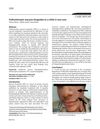
October 2023 in “Journal of the Pakistan Medical Association” This source describes a case of a 12-year-old male diagnosed with folliculotropic mycosis fungoides, presenting with an asymptomatic, erythematous plaque. Histology and immunohistochemistry confirmed FMF, which is typically rare in children and marked by follicular infiltration by CD4+ lymphocytes.
5 citations
,
April 2024 in “Science China Materials”  1 citations
,
May 2024 in “Advanced Functional Materials”
1 citations
,
May 2024 in “Advanced Functional Materials” This study reports that a multifunctional artificial skin using photothermal-triggered drug delivery improved full-thickness wound healing and skin appendage regeneration by coordinating the release of several therapeutic agents.
 20 citations
,
May 2013 in “International Journal of Molecular Medicine”
20 citations
,
May 2013 in “International Journal of Molecular Medicine” This study identified a novel missense MAFB variant in a family with some unaffected members, suggesting incomplete penetrance and the potential influence of modifier genes, epigenetic mechanisms, or environmental factors on MCTO phenotype.
 August 2021 in “Acta Haematologica Polonica”
 This paper discusses the diagnostic challenges and treatment options for folliculotropic mycosis fungoides, emphasizing the differing prognoses between its indolent and aggressive subtypes and reporting no new clinical results.
 November 2022 in “bioRxiv (Cold Spring Harbor Laboratory)”
 This study found that conditional deletion of Mof in mice resulted in severe defects in skin development, including compromised epidermal differentiation and hair growth, leading to perinatal lethality.