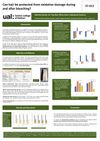
 September 2018 in “University of the Arts London Research Online (University of the Arts London)”
 This study assessed three materials—L-arginine, hydrolysed keratin, and cystine-silanol copolymer—ex vivo for their potential to reduce undesirable effects of hair bleaching, such as damage to hair proteins.
 August 2018 in “Journal of The American Academy of Dermatology”
 A 90-year-old woman's hand lesion was a rare, aggressive skin cancer treated successfully with surgery.
 May 2018 in “International journal of cell science & molecular biology”
 This article discusses the biology of cosmetic aging and the chemical pathways involved, emphasizing research advancements that aid clinicians in rejuvenating skin and increasing scalp hair density, but it provides no new results.
 April 2018 in “The journal of investigative dermatology/Journal of investigative dermatology”
 This study found that electrical epilation in organ-cultured human scalp skin perturbs hair follicles by causing inflammation, impairing melanin production, and possibly inhibiting post-epilation hair re-growth.
 April 2018 in “Journal of Investigative Dermatology”
 This study found that ERBB2 mutations and amplifications are likely key drivers of extramammary Paget disease, suggesting potential for targeted therapies and cancer immunotherapy due to the moderately high mutational load observed.
 April 2018 in “Journal of Investigative Dermatology”
 This study found that Basonuclin 1 knockdown in human primary keratinocytes significantly reduces cell proliferation and affects migration, indicating its role in coordinating the re-epithelization phase of wound healing.
 August 2017 in “International Journal of Research in Dermatology”
 This study found no significant association between metabolic syndrome and lichen planus, but hypertension, triglycerides, and low HDLC levels were significantly associated with lichen planus.
January 2017 in “대한미용학회지” This study observed that hair follicle cuticular cells undergoing keratinization were significantly thicker than those in a normal hair shaft, due to incomplete loss of cytosol.
 August 2016 in “Journal of Investigative Dermatology”
 This study suggests that enhancing endocannabinoid tone with an EMT-inhibitor may have anti-inflammatory effects and slightly increase sebaceous lipid production, which could be beneficial for dry skin conditions.
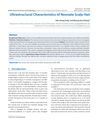 July 2016 in “Indian journal of science and technology”
 In this study, researchers found that neonate hairs have a distinct microstructure with no medulla and smaller hair follicles compared to adult hairs.
April 2016 in “The journal of investigative dermatology/Journal of investigative dermatology” This study reports that cannabinoid receptor type 1 may influence psoriasis development by modulating laminin-511 expression, suggesting a potential target for treatment.
January 2016 in “UNESP Institutional Repository (São Paulo State University)” This study suggests that the phenotype of melasma in women is influenced by structural and cellular changes across the epidermal-melanin unit, not just melanocyte hypertrophy, highlighting potential roles for dermal damage repair and fibroblast senescence.
 March 2013 in “Hair transplant forum international”
 This article discusses the role of inflammation in causing various types of alopecia but reports no clinical results; the author notes an ongoing interest in the topic.
January 2013 in “Journal of Tissue Engineering and Reconstructive Surgery” This study found that inserting isolated hair follicle units into engineered dermis promoted differentiation and maturation of tissue-engineered skin, maintaining hair follicle morphology and generating skin appendages like sebaceous glands.
This study found that chronic administration of finasteride in rats led to significant alterations in the epididymis and compromised sperm quality, effects that persisted even after 30 days of treatment cessation.
December 2011 in “URMIA MEDICAL JOURNAL” This study concluded that the expression of specific glycoconjugate terminal sugars is developmentally regulated during rat hair follicle morphogenesis.
October 2010 in “eCommons (Cornell University)” This study found that mouse hair follicle stem cells use symmetric cell division for maintenance and fate determination, and identified Gata6 as a crucial factor for their differentiation.
February 2010 in “Journal of the American Academy of Dermatology” Activating cAMP and ATP improves hair growth and strength.
January 2008 in “中山醫學大學醫學研究所學位論文” This study found that Danthron induced apoptosis in a human malignant melanoma cell line through mitochondrial, endoplasmic reticulum, and death receptor pathways.
 September 2004 in “Experimental dermatology”
 This study found that normal murine hair follicles are direct targets for melatonin bioregulation, expressing receptors that are regulated in a hair cycle-dependent manner, influencing keratinocyte apoptosis.
In this study, patients with systemic lupus erythematosus and generalized non-scarring alopecia exhibited hair loss similar to telogen effluvium, with significant changes observed in the cuticle of telogen hairs.
August 1989 in “Proceedings ... annual meeting, Electron Microscopy Society of America/Proceedings, annual meeting, Electron Microscopy Society of America” This microscopy study examined the non-keratinous regions of human hair fibers, revealing detailed morphology that could help understand how external influences affect hair structure.

This study suggests that holes found in mature hair fibers may be linked to daily hair care actions and the removal of extractable substances.

This study reported that dandelion herb-derived carbon dots significantly enhanced wound healing in mice with Staphylococcus aureus infections, outperforming a commercial wound healing spray through their antibacterial and dual ROS-modulating capabilities.
August 2023 in “Journal of Investigative Dermatology” Skin organoids can regenerate hair by forming specific cell units with certain signals.
 September 2022 in “British Dental Journal”
 Platelet-rich fibrin is becoming popular for medical and cosmetic uses like hair growth and natural fillers.
 December 2004 in “Medicine”
 This article outlines a detailed framework for taking dermatological history and examination, emphasizing the importance of considering various factors like medication and occupational history; it reports no new clinical findings.
 September 1998 in “Journal of The European Academy of Dermatology and Venereology”
 This review summarizes the clinical characteristics of Behcet's disease, noting that ocular manifestations are a major cause of morbidity due to their potential to lead to severe vision loss or blindness.
February 1990 in “PubMed” This study suggests that human hair follicle cells and epidermal keratinocytes differ in their degree of keratinization and other characteristics when cultured on mixed collagen membranes.
1 citations
,
December 2001 in “Linchuang pifuke zazhi” In this study, certain Chinese herbal medicines were found to significantly stimulate or inhibit hair growth in an in vitro organ culture model of mouse vibrissa follicles.