 1 citations
,
May 2017 in “Journal of Stem Cell Research & Therapeutics”
1 citations
,
May 2017 in “Journal of Stem Cell Research & Therapeutics” This review discusses current and potential approaches using stem cells for treating hypopigmentation disorders like vitiligo but does not present new clinical findings.
In this study, researchers developed a novel bio-patch from decellularized freeze-dried tumor tissues and hair melanin nanoparticles, which demonstrated enhanced wound healing in vivo by reducing oxidative stress, suppressing inflammation, and promoting angiogenesis.
November 2025 in “Journal of Investigative Dermatology” TEC kinases may help cause inflammation in vitiligo and could be targeted for treatment.
5 citations
,
June 2012 in “Journal of Investigative Dermatology” Harris et al. describe a new mouse model for vitiligo, where interfollicular melanocytes are retained and melanocyte-targeting immune responses are simulated, aiding the development of immunomodulatory therapies.
2 citations
,
August 1987 in “Archives of Dermatology” In this study, researchers concluded that Langerhans' cells are likely uninvolved in depigmentation during vitiligo in C57Bl/Ler-vit vit mice, as their numbers were normal during depigmentation and increased afterward.
60 citations
,
August 2005 in “Endocrinology” This study suggests that αMSH may play a regulatory role in human dermal papilla cells, potentially influencing immune and inflammatory responses in hair follicles, which could contribute to inflammatory alopecia.
28 citations
,
December 2020 in “Journal of Ginseng Research” This study found that ginsenoside Rf from Panax ginseng may serve as an effective anti-pigmentation agent by inhibiting the CREB/MITF pathway, reducing melanogenesis in melanocytes and UV-irradiated human skin.
119 citations
,
May 1987 in “The Journal of Dermatologic Surgery and Oncology” This study found that pigmentation following sclerotherapy is likely caused by hemosiderin deposition from red blood cells rather than post-inflammatory hyperpigmentation, with most cases resolving spontaneously within 6–24 months.
4 citations
,
October 2013 in “PLoS ONE” This study found that Vemurafenib led to a broad range of cutaneous side effects in nearly all patients with advanced melanoma, highlighting the need for regular dermatologic management and UV protection.
1 citations
,
April 2015 in “InTech eBooks” RAGE is a potential target for melanoma treatment, but its effectiveness is uncertain due to variable expression levels.
17 citations
,
May 1969 in “American Journal of Physical Anthropology” This study describes unique anatomical characteristics of the skin and hair structures in the silver marmoset, including features such as thin epidermis, specialized nerve end-organs, and distinctive gland compositions.
160 citations
,
July 2008 in “Experimental dermatology” This review discusses the protective effects and mechanisms of melatonin in skin and suggests potential therapeutic applications in cutaneous medicine, reporting no new clinical findings.
3 citations
,
December 1989 in “PubMed” 9 citations
,
April 2010 in “The Journal of Dermatology” This study suggests that nestin is an important marker for identifying HMB-45-negative cells in nodular melanomas, particularly in the dermal parts.
 59 citations
,
April 2016 in “Cell Reports”
59 citations
,
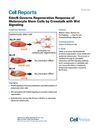
April 2016 in “Cell Reports” This study demonstrated that EdnrB signaling promotes melanocyte stem cell proliferation and differentiation, enhancing hair and epidermal melanocyte regeneration, especially under conditions of active Wnt signaling.
 122 citations
,
July 2005 in “The FASEB journal”
122 citations
,
July 2005 in “The FASEB journal” This study found that hair follicles in both mice and humans may serve as an important site for melatonin synthesis and signaling, potentially influencing hair cycle regulation by modulating keratinocyte apoptosis.
June 2026 in “Indian Dermatology Online Journal” In this case report, a 20-year-old man with a birthmark was identified as having a supernumerary nipple, a developmental anomaly, using dermoscopy to distinguish it from other pigmented skin lesions such as melanocytic nevus or basal cell carcinoma.
12 citations
,
May 2019 in “Journal of cosmetic dermatology” This review explores the factors contributing to premature graying of hair, highlighting the role of genetic and environmental influences such as oxidative stress, and discusses potential interventions like diet and herbal remedies, while noting the limitations of common treatments like hair dyes.
 January 2016 in “Experimental Dermatology”
 This article in Experimental Dermatology does not include an abstract or any new research findings.
This review explores differences in the expression of skin diseases between pigmented and nonpigmented skin, discussing existing knowledge without presenting new clinical findings.
110 citations
,
August 2011 in “Journal of Visualized Experiments” This research highlights the use of 3D human skin model reconstructs as a promising method to study human skin biology, showing that these models replicate natural melanocyte and melanoma behaviors accurately.
 August 2018 in “Pediatric Dermatology”
 This case report describes a unique instance of an otherwise healthy infant with phylloid terminal hair nevus, a form of hypomelanosis without extracutaneous abnormalities.
17 citations
,
May 2018 in “Journal of Biomedical Optics” This review discusses how the optical properties of human hair might contribute to melanoma development but reports no new experimental findings, suggesting further research is needed to support this hypothesis.
 February 2026 in “Clinical Cosmetic and Investigational Dermatology”
 This study highlights how combining genetic and environmental risk assessments could advance early screening and personalized prevention for vitiligo, given its genetic complexity and environmental interactions.
221 citations
,
July 2012 in “Proceedings of the National Academy of Sciences of the United States of America” This study found that the circadian clock in mouse skin regulates cell proliferation and affects sensitivity to UVB-induced DNA damage, with potential implications for understanding human skin cancer risk.
January 1999 in “Journal of Investigative Dermatology”  4 citations
,
March 2018 in “PloS one”
4 citations
,
March 2018 in “PloS one” This study found that among men over 70, certain genetic variants associated with skin pigmentation affect serum PSA levels, with implications for how sun sensitivity and exposure may influence prostate cancer risk.
 43 citations
,
November 2019 in “PLoS ONE”
43 citations
,
November 2019 in “PLoS ONE” This study revealed that differential gene and protein expression in the "Yufen I" H line chicken breed is crucial for Columbian plumage coloration, particularly in the melanogenesis pathway.
1 citations
,
August 2022 in “Pigment Cell & Melanoma Research” This study presents two new mouse models using the CreER T2-loxP system to target and study melanocytic cells, with implications for melanoma research.
 June 2023 in “JAAD Case Reports”
 This article reviews the epidemiology of desmoplastic melanoma and reports no new clinical findings, emphasizing higher risks in chronically sun-exposed older males.