April 2019 in “The journal of investigative dermatology/Journal of investigative dermatology” This study in mice suggests that defects in hair follicles with mesenchymal TSC2 disruption may result from an impaired TGFβ1 response, indicating a potential novel treatment approach for tuberous sclerosis complex.
1036 citations
,
August 2019 in “Cells” This article provides an overview of mesenchymal stem cells, highlighting their extraction methods, differentiation potential, and applications in regenerative medicine, but reports no new clinical findings.
 September 2023 in “Stem cell reviews and reports”
 This study introduces a new method to isolate stem cells from the hair follicle outer root sheath of equine skin, demonstrating that these cells, named eMSCORS, proliferate efficiently and can differentiate similarly to adipose tissue-derived MSCs, offering a promising alternative for equine veterinary applications.
 12 citations
,
September 2021 in “Stem Cell Reviews and Reports”
12 citations
,
September 2021 in “Stem Cell Reviews and Reports” This study suggests that StemMACS MSC Expansion Media is more suitable than PowerStem MSC1 media for expanding therapeutic adipose-derived mesenchymal stem cells, with less expression of negative markers and better chromosomal stability.
3 citations
,
January 2022 in “Burns & Trauma” This study found that CTHRC1 is crucial for sweat gland function and vascular network integrity in mice, and its administration improved sweat gland performance by reconstructing nearby blood vessels.
January 2026 in “Microsystems & Nanoengineering” This review discusses advancements in skin microphysiological systems, such as 3D bioprinting, skin organoids, and skin-on-a-chip, and their effectiveness in emulating human skin functions for research and preclinical applications, highlighting the potential for replacing animal testing with these innovative technologies.
 8 citations
,
January 2008 in “PubMed”
8 citations
,
January 2008 in “PubMed” This study reports that mesotherapy can lead to serious complications, such as multifocal scalp abscesses and subcutaneous fat necrosis, requiring extensive surgical repair.
6 citations
,
January 2016 in “Open journal of regenerative medicine” This study found that macrophages treated with keratin in vitro were more similar to anti-inflammatory M2 macrophages and reduced astrocyte reactivity, potentially limiting secondary inflammatory damage after spinal cord injury.
February 2026 in “ACS Omega” This study developed a multifunctional hydrogel, QTMP-Gel, which significantly accelerated wound healing in an oral mucositis hamster model by providing antioxidant and antibacterial effects, reducing inflammation, and controlling infection.
 December 2021 in “Research Square (Research Square)”
 This study found that dermal injection of M-CSF stimulated CD11b + myeloid cells can induce alopecia areata in mice by potentially activating B lymphocytes, offering insight into the disease's pathogenesis.
November 2025 in “Informatica” This study introduces a novel image enhancement method that significantly improves the visual quality of low-light sports images by utilizing improved bilateral filtering and the CLAHE algorithm, achieving a 65.24% improvement in color and edge detail preservation compared to state-of-the-art methods on the LOL dataset.
31 citations
,
June 2022 in “Stem Cell Research & Therapy” This study found that umbilical cord-derived CD146+ MSCs showed a stronger ability to improve ovarian function and modulate immune responses in a mouse model of premature ovarian failure compared to CD146- MSCs, though both subpopulations effectively repaired reproductive ability.
 12 citations
,
February 2025 in “Scientific Reports”
12 citations
,
February 2025 in “Scientific Reports” This study found that extracellular vesicles derived from mesenchymal stem cells and umbilical cord blood plasma enhanced wound healing and reduced scar formation in mice, suggesting their potential as therapeutic agents for skin repair.
323 citations
,
November 2017 in “Bioanalysis” This commentary discusses the challenges of matrix effects in LC–MS analysis and introduces the concept of a matrix effect factor using stable isotopically labeled internal standards to improve analysis reliability.
 January 2026 in “Drug Delivery and Translational Research”
 This study investigated the integration of crystal engineering and microneedle technology for androgenetic alopecia treatment, finding that microneedles loaded with newly developed Kopexil multicomponent crystals reduced drug diffusion rates in vitro compared to standard formulations.
18 citations
,
February 2001 in “Der Hautarzt” This case study of a 50-year-old woman with myotonic dystrophy and multiple basal cell carcinomas suggests there could be a genetic predisposition for certain cutaneous tumors in such patients.
9 citations
,
April 2025 in “Stem Cell Research & Therapy” This review suggests that MSC-derived conditioned media hold promise in dermatology, with studies indicating enhanced therapeutic effects when used alongside treatments like laser therapy and microneedling, leading to improved dermatological outcomes.
14 citations
,
February 2011 in “Experimental dermatology” This study identifies cartilage oligomeric matrix protein (COMP) as a key extracellular matrix component in human hair follicle cycling, potentially regulated by TGFβ signaling, and suggests its importance in normal hair follicle biology.
June 2024 in “Annals of Medicine and Surgery” Surgeons should know about pilomatricoma for accurate diagnosis, even though it's rare.
 3 citations
,
February 2012 in “The American Journal of Dermatopathology”
3 citations
,
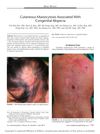
February 2012 in “The American Journal of Dermatopathology” This report documents the first known case of cutaneous mastocytosis associated with congenital alopecia areata in a young Korean girl, confirmed through histopathological examination.
 October 2025 in “Plastic & Reconstructive Surgery”
 This study evaluated the safety and effectiveness of MNC-QQ cell therapy in five men with androgenic alopecia, reporting no adverse effects and improvements in hair growth, hair density, and quality of life over six months.
 December 2024 in “Kırıkkale Üniversitesi Tıp Fakültesi Dergisi”
 This study found that chromosomal microarray analysis identified copy number variations in 12% of patients with dysmorphic features and congenital anomalies, demonstrating its potential as a diagnostic tool, especially for rare CNVs and immune deficiency linked to the deletion of CTLA4.
 June 2023 in “British journal of dermatology/British journal of dermatology, Supplement”
 In this case study, a 19-month-old infant with palmoplantar keratoderma and nail dystrophy was found to have a desmoplakin gene mutation, leading to cardiomyopathy by age 7, illustrating diagnostic challenges and the potential link between skin, dental, and cardiac anomalies.
21 citations
,
August 2017 in “Journal of veterinary internal medicine” The authors reported that a combination of amino acid and stem cell therapy may have extended survival in a dog with hepatocutaneous syndrome to 32 months post-diagnosis.
23 citations
,
February 2025 in “Advanced Materials” This study found that a new autonomous, moisture-driven flexible electrogenerative dressing significantly accelerated chronic wound healing in a diabetic mouse model compared to the control group.
 January 2024 in “LA Referencia (Red Federada de Repositorios Institucionales de Publicaciones Científicas)”
 This study found that Carbon Quantum Dots effectively detected and quantified Co²⁺ ions and methylcobalamin in tap water with high sensitivity and recovery rates between 95% and 105%.
49 citations
,
March 1996 in “Experimental Brain Research”  9 citations
,
September 2011 in “Cutaneous and Ocular Toxicology”
9 citations
,
September 2011 in “Cutaneous and Ocular Toxicology” This article presents a case of central serous chorioretinopathy occurring after the use of topical minoxidil solution, but reports no clinical study findings.
 October 2025 in “DOAJ (DOAJ: Directory of Open Access Journals)”
 This study highlighted the significant role of VSM in cochlear aging, suggesting that changes in its structure and composition may contribute to the development of various pathologies, including congenital hearing disorders, while also identifying the need for further research on VCM-associated molecules.
 December 2023 in “bioRxiv (Cold Spring Harbor Laboratory)”
 This study found that targeting connective tissue sheath contraction with an MLCK inhibitor may improve hair growth in androgenetic alopecia by reducing premature hair regression caused by ectopic apoptosis of hair follicle progenitor cells.