 September 2023 in “International Journal of Applied Pharmaceutics”
 This study found that a topical gel containing Minoxidil and Tofacitinib citrate showed promise for treating alopecia areata, with formulation F5 demonstrating effective drug release and stability in evaluations.
 September 2025 in “Tạp chí Da liễu học Việt Nam”
 This study found that both 2.5 mg/mL and 5 mg/mL concentrations of intralesional triamcinolone acetonide are effective for treating patchy alopecia areata, but the higher concentration promoted greater hair regrowth and density with more side effects.

This study found that 1′S-1′-acetoxychavicol acetate from Alpinia galanga inhibits Nox isozymes and suppresses testosterone-induced hair loss in a mouse model of androgenetic alopecia.
 March 2014 in “Journal of The American Academy of Dermatology”
 Cortexolone 17a-propionate may be an effective new treatment for hair loss.
 9 citations
,
January 2006 in “Cutaneous and ocular toxicology”
9 citations
,
January 2006 in “Cutaneous and ocular toxicology” This study found that L-cystine, D-pantothenat, and miliacin can enhance the metabolic capacity and proliferation of human keratinocytes, with a combination of these additives potentially providing synergistic benefits in growth media.
11 citations
,
April 2017 in “Journal of research in pharmacy practice” This study found that the combination of zinc sulfate and calcium pantothenate improved hair density and participant satisfaction in women with hair loss, suggesting its potential as an initial treatment option.
2 citations
,
January 2010 in “Side effects of drugs annual” This review discusses the adverse effects of dermatological drugs, topical agents, and cosmetics, reporting no new clinical findings; the authors highlight several concerns such as cancer risk from hair dyes and systemic absorption issues with minoxidil.
![Distribution of 1,25-Dihydroxyvitamin D3[22-Oxa] In Vivo Receptor Binding in Adult and Developing Skin](/images/assets/d9b990e6-6243-4abe-b868-68801a5844f7/small/35023.jpg) 15 citations
,
January 1995 in “Archives of dermatological research”
15 citations
,
January 1995 in “Archives of dermatological research” In this study, OCT showed strong nuclear binding in certain skin cells, suggesting similar genomic effects to vitamin D with potential therapeutic benefits due to its lower calcaemic effect.
 13 citations
,
March 2020 in “Frontiers in cell and developmental biology”
13 citations
,
March 2020 in “Frontiers in cell and developmental biology” This study suggests that 3,4,5-tri-O-caffeoylquinic acid activates β-catenin to enhance pigmentation in mouse hair follicles, human melanocytes, and melanoma cells during the hair cycle's growth phase.
 23 citations
,
September 2019 in “Journal of The American Academy of Dermatology”
23 citations
,
September 2019 in “Journal of The American Academy of Dermatology” In this retrospective analysis, combination therapy with tofacitinib and oral minoxidil led to significant scalp hair regrowth in patients with severe alopecia areata, with 67% achieving at least 75% regrowth, although the small sample size limits the findings.
 9 citations
,
March 1968 in “The BMJ”
9 citations
,
March 1968 in “The BMJ” In their 1957 study, Neuman and Neuman suggested that magnesium deficiency may inhibit the ion exchange process required for calcium ions to enter extracellular fluid, potentially affecting calcium mobilization.
 3 citations
,
November 2017 in “International Journal of Pharmacy and Pharmaceutical Sciences”
3 citations
,
November 2017 in “International Journal of Pharmacy and Pharmaceutical Sciences” This study identified new oxidative derivatives of finasteride, including a newly discovered metabolite, by using the fungus Macrophomina phaseolina.
16 citations
,
March 2015 in “Clinical and experimental dermatology” This study found that mycophenolic acid promotes dermal papilla cell proliferation and anagen hair follicle induction in mice, suggesting potential as a treatment for hair-loss disorders.
1 citations
,
January 2024 in “Dermatologic Therapy” This study found that combining excimer light at 308 nm with tacrolimus 0.1% was more effective in treating alopecia areata of the scalp compared to excimer light alone, as indicated by a greater reduction in the SALT score and better improvement in Treg function.
 April 2025 in “JAAD Case Reports”
 This review discusses central centrifugal cicatricial alopecia in adult women of African descent and reports no clinical results; the authors highlight traditional treatments and their impact on quality of life.
January 2008 in “Journal of Clinical Dermatology” This study found that a new topical agent, Scalp medⓇ, significantly improved hair count and thickness in men with androgenetic alopecia after 24 weeks of treatment.
 41 citations
,
December 2015 in “JAMA Dermatology”
41 citations
,
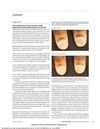
December 2015 in “JAMA Dermatology” Tofacitinib citrate improved nail dystrophy and pain in patients with alopecia universalis without causing side effects.
January 1995 in “Revista de arqueología” In this study, the vitamin D analogues 1 alpha,25-dihydroxy-vitamin D3 and calcipotriol were found to thin the living cell layer and affect differentiation marker expression in organotypic cultures of human outer root sheath cells.
 October 2025 in “Journal of Molecular Structure”
 Hyaluronic acid microneedles help deliver minoxidil derivatives effectively for hair regrowth.
13 citations
,
January 2017 in “Annals of dermatology/Annals of Dermatology” In this study, simvastatin/ezetimibe treatment led to partial hair regrowth in about 29% of patients with recalcitrant alopecia areata, suggesting it may be a viable alternative therapy for this condition.
 1 citations
,
October 2020 in “Journal of Cosmetic Dermatology”
1 citations
,
October 2020 in “Journal of Cosmetic Dermatology” This study presents a case of treatment-resistant alopecia universalis that successfully responded to a combination of tofacitinib and oral minoxidil, highlighting a potential therapeutic approach for challenging cases of alopecia areata.
 March 2025 in “Drug Development Research”
 In this study, researchers developed a novel topical gel combining minoxidil and JAK inhibitor tofacitinib, which effectively enhanced hair follicle growth and reduced local inflammation in mice with alopecia areata, suggesting a new approach for treating this condition.
1 citations
,
January 2020 in “IRIS UNIMORE (University of Modena and Reggio Emilia)” This study found that Aminexil clinical 5 significantly reduced hair loss in men and women with mild alopecia and was well tolerated with high subject satisfaction.
 33 citations
,
January 2002
33 citations
,
January 2002 This study found that daily topical application of 500 microg/ml latanoprost led to moderate to marked hair regrowth in a macaque model of androgenetic alopecia.
 6 citations
,
July 2005 in “Farmaco”
6 citations
,
July 2005 in “Farmaco” This study developed a micellar electrokinetic capillary chromatography method for determining minoxidil in Rogaine and generic products, offering a simple and efficient alternative to HPLC.
February 2023 in “PLOS ONE” In this study, Caizhixuan hair tonic was found to promote hair growth in androgenetic alopecia mice by regulating the PI3K/Akt and apoptosis pathways.

In this study, 1'-S-1'-acetoxychavicol acetate (ACA) from Alpinia galanga showed potential in suppressing testosterone-induced hair loss by inhibiting Nox isozymes in a mouse model of androgenetic alopecia.
January 2015 in “Zurich Open Repository and Archive (University of Zurich)” This study found no significant difference in anagen rate improvement between the CYP-based dietary supplement and placebo in women over 60 with telogen effluvium, possibly due to variable patient inclusion related to hair growth seasonality.
 11 citations
,
September 2014 in “International Journal of Molecular Sciences”
11 citations
,
September 2014 in “International Journal of Molecular Sciences” This study found that mycophenolate may stabilize β-catenin and counteract interferon-γ-induced catagen changes in human dermal papilla cells, which could promote hair growth.
3 citations
,
December 1990 in “Acta Medica et Biologica”