 23 citations
,
January 2017 in “Journal of Oleo Science”
23 citations
,
January 2017 in “Journal of Oleo Science” This review discusses the use of supercritical carbon dioxide for extracting rice bran oil, noting its advantages over conventional methods for preserving nutrients and antioxidants, but provides no new experimental results.
 184 citations
,
October 2007 in “Proceedings of the National Academy of Sciences of the United States of America”
184 citations
,
October 2007 in “Proceedings of the National Academy of Sciences of the United States of America” This study found that sulforaphane-rich broccoli sprout extracts reduced UV-induced erythema by 37.7% in humans, suggesting a protective strategy against UVR damage.
50 citations
,
November 2015 in “Journal of pharmacological sciences” This study found that applying α-mangostin-loaded nanoparticles significantly improved acne vulgaris in patients, with no notable skin irritation reported in human volunteers.
 133 citations
,
May 2016 in “Cell Host & Microbe”
133 citations
,
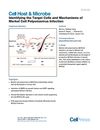
May 2016 in “Cell Host & Microbe” In this study, human dermal fibroblasts were identified as natural host cells that support productive Merkel cell polyomavirus infection, and the MEK antagonist trametinib was introduced as an effective inhibitor to control the virus.
 13 citations
,
June 2020 in “BMC genomics”
13 citations
,
June 2020 in “BMC genomics” This study found that chi-miR-30b-5p was more expressed in the telogen phase than in the anagen phase and inhibited dermal papilla cell proliferation by targeting CaMKIIδ.
8 citations
,
November 2020 in “Journal of Cosmetic Dermatology” This preclinical study observed that a nanoencapsulated ingredient complex, AcPi, may prevent hair follicle aging and hair loss by reducing oxidative stress, enhancing mitochondrial activity and WNT/β-catenin signaling, and controlling androgenic metabolism when tested on human scalp cultures.
 June 2023 in “Current Issues in Molecular Biology”
 In this study, the alcoholic extract DN106212 from Centipeda minima was shown to be more effective in promoting hair growth in C57BL/6 mice compared to dimethyl sulfoxide and tofacitinib, suggesting its potential as a natural hair growth agent.
2 citations
,
January 2018 in “Biomolecules & therapeutics” This study found that polyamidoamine dendrimers can permeate skin's current conducting pores and alter the magnitude and direction of electroosmotic flow, affecting drug flux during iontophoresis.
3 citations
,
December 2020 in “Skin Appendage Disorders” This case report highlights a family member with a confirmed diagnosis of hypotrichosis with juvenile macular dystrophy due to a CDH3 gene mutation, emphasizing the importance of genetic testing for accurate counseling.
 March 2024 in “ACS Applied Materials & Interfaces”
 This study developed a delivery platform using hyaluronic acid-based dissolvable microneedles with nanoliposomes containing kopexil and kopyrrol, which showed improved hair regeneration for treating androgenetic alopecia in vivo at lower dosages compared to minoxidil.
 October 2013 in “Journal of Investigative Dermatology”
 Collagen VII helps skin heal and stay strong, sirolimus may lower skin cancer risk in kidney transplant patients, high-molecular-mass hyaluronan helps naked mole rats resist cancer, dermal γδ T cells aid in hair growth in rodents, and overexpression of IL-33 in mouse skin causes itchiness, offering a model for studying allergic inflammation treatments.
33 citations
,
May 2017 in “Journal of Clinical Oncology” This phase I study reported that ETC-159, targeting Wnt signalling, showed tolerable safety profiles at doses that inhibit its pathway, though bone turnover markers increased, warranting early and regular monitoring. No tumor responses were observed, but two patients achieved stable disease for several cycles.
December 2024 in “Food Bioscience” In a depilation mouse model, this study found that Limosilactobacillus fermentum MF10 promoted hair growth and increased follicle size by activating skin Wnt/β-catenin signaling and modulating gut microbiota, with effects comparable to the positive control finasteride.
April 2025 in “Journal of Biophotonics” This study found that 808 nm laser photobiomodulation altered mitochondrial respiration and enhanced osteogenic protein expression in human dental pulp stem cells, with the effects being dose-specific and more pronounced at 15 J/cm².
 11 citations
,
May 2010 in “Journal of Medicinal Chemistry”
11 citations
,
May 2010 in “Journal of Medicinal Chemistry” This study introduced a novel nonsteroidal androgen receptor antagonist that effectively controls sebum production in the golden Syrian hamster ear model through targeted follicular delivery.
 6 citations
,
April 2017 in “Frontiers in Pharmacology”
6 citations
,
April 2017 in “Frontiers in Pharmacology” This study found that several compounds from Yangxue Shengfa capsule may promote hair growth by enhancing cell proliferation in vitro, suggesting potential use in treating androgenetic alopecia.
 April 2016 in “Journal of Investigative Dermatology”
 This study found that a newly developed peptide, FOL-005, significantly inhibited hair growth and counteracted minoxidil's effects in organ-cultured human male scalp skin and mouse models, without apparent toxicity.
5 citations
,
March 2025 in “Tissue Engineering and Regenerative Medicine”  October 2021 in “Journal of Investigative Dermatology”
 In this research, investigators used in vitro models to study the Merkel cell-neurite complex and reported that mechanical stimulation, similar to gentle touch, can induce molecular changes that are potentially relevant to hair growth, thus contributing to the understanding of its underlying mechanisms.
June 2025 in “Formosa Journal of Sustainable Research” In this study, the NADES extract of mangkokan leaves (Polyscias scutellaria) demonstrated antibacterial activity against Escherichia coli and Staphylococcus aureus, with a total flavonoid content measured at 4.944 mgEQ/gSimplisia using the disc diffusion method.
July 2024 in “Reactions Weekly”  3 citations
,
October 2014 in “Pharmaceutical Development and Technology”
3 citations
,
October 2014 in “Pharmaceutical Development and Technology” This study found that an optimized microemulsion for minoxidil with high solubility, permeation flux, and skin deposition can be achieved with specific low and high levels of certain surfactants and co-solvents.
 December 2025 in “Fullerene Journal of Chemistry”
 This study investigated the potential of nutmeg-derived phytochemicals as anti-alopecia agents using molecular docking and simulations, finding that geranylgeraniol exhibited significant binding stability and potential efficacy against androgenetic alopecia comparable to finasteride and superior to minoxidil.
 September 2014 in “Aktuelle Dermatologie”
 This symposium review highlights past, present, and future developments in skin research, celebrating the work of Prof. Johanna Brandner and Dr. Peter Arne Gerber, without reporting new clinical results.

This research found that liposome drug delivery systems, particularly with targeted modifications, show promise for improving effectiveness and reducing toxicity in combination cancer therapies.
 7 citations
,
January 2023 in “Biofabrication”
7 citations
,
January 2023 in “Biofabrication” This study developed microfluidic-assisted GelMA-MSC/HAD-EPC microspheres that efficiently generated hair follicles in nude mice, suggesting a promising strategy for advancing hair-regenerative medicine.

This study found that the Padina arborescens extract and its component MOGG may prevent hair loss by inhibiting 5α-reductase activity, promoting cell proliferation, opening the KATP channel, and increasing PGE2 production in laboratory settings.
6 citations
,
October 2023 in “Animal Biotechnology” This study found that a 22-bp InDel polymorphism in the FGF7 gene was significantly associated with growth traits in goats, with genotypes ID and/or II linked to better growth compared to genotype DD, indicating its potential as a molecular marker in breeding programs.
 March 2010 in “Hair transplant forum international”
 This announcement promotes the upcoming 18th Annual Scientific Meeting of the International Society of Hair Restoration Surgery in Boston, providing no clinical or research results.
 33 citations
,
January 2002
33 citations
,
January 2002 This study found that daily topical application of 500 microg/ml latanoprost led to moderate to marked hair regrowth in a macaque model of androgenetic alopecia.