February 2021 in “European Chemical Bulletin” This study developed and validated a reverse phase liquid chromatography method to accurately and reliably measure Minoxidil and Finasteride in bulk and marketed formulations.
42 citations
,
May 2009 in “Contraception” This study found that the combined oral contraceptive containing ethinyl estradiol and chlormadinone acetate was effective in reducing moderate papulopustular acne and other androgen-related skin disorders compared to placebo.

In this study, researchers reported that hardshell capsules using the DiluCap® line of excipients demonstrated varying dissolution profiles under gastrointestinal-simulating conditions, with minoxidil and finasteride showing rapid release and melatonin and naltrexone displaying controlled release, indicating their suitability for different applications in compounding pharmacies.
2 citations
,
January 2023 In a mouse model, this study found that nano-sized molybdenum accelerated hair growth and reduced oxidative stress markers, with enhancements observed when combined with minoxidil. It suggests potential for this combination as a novel topical treatment for hair loss, pending further clinical validation.
 May 2024 in “Journal of biomaterials science. Polymer ed.”
 This study found that three-layer dissolving microneedles for delivering Minoxidil showed improved skin drug penetration and reduced irritation risk compared to traditional Minoxidil cream, suggesting a promising alternative for alopecia areata treatment.
January 2018 in “Journal of analytical, bioanalytical and separation techniques” 
This study found that finite element analysis-guided design improved bubble microneedles' controlled tip separation and insertion strength, supporting effective transdermal and sublingual drug delivery.
 September 2025 in “The Professional Medical Journal”
 In this study, 5mg oral minoxidil given daily for 24 weeks significantly increased hair thickness and scalp appearance among 27 male patients with androgenetic alopecia, although some experienced side effects like hypertrichosis and mild headaches.
 43 citations
,
July 2018 in “Journal of The European Academy of Dermatology and Venereology”
43 citations
,
July 2018 in “Journal of The European Academy of Dermatology and Venereology” This study found that a topical solution combining 0.25% finasteride with 3% minoxidil significantly improved hair growth, as measured by hair density, diameter, and global assessment, in men with androgenetic alopecia, compared to 3% minoxidil alone, over 24 weeks without systemic adverse effects reported.
15 citations
,
May 2009 in “Chemical Physics Letters” This study demonstrated that a metric based on rotational echo intensity in 2H magic-angle spinning NMR can derive kinetic information for conformational exchange without complex modelling, achieving activation barriers consistent with prior findings.
 1 citations
,
March 2015 in “Oriental Journal of Chemistry/Oriental journal of chemistry”
1 citations
,
March 2015 in “Oriental Journal of Chemistry/Oriental journal of chemistry” This study developed and validated a precise RP-HPLC method for simultaneously estimating minoxidil and aminexil in pharmaceutical formulations with good accuracy and specificity.
 August 2022 in “Yakugaku zasshi”
 In this study, pre-treatment with steam towel, l-menthol, and CA-carpronium enhanced the absorption of minoxidil nanoparticles in mice, potentially increasing therapeutic efficiency without side effects.
 14 citations
,
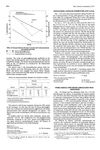
October 1977 in “The Lancet”
14 citations
,
October 1977 in “The Lancet”  April 2018 in “Journal of Investigative Dermatology”
 This study found that twice-daily application of 5% Minoxidil did not significantly impact hair growth in Sinclair minipigs over 27 days.
December 2014 in “대한미용학회지” In this study, 3% peppermint oil promoted hair regrowth faster than 3% minoxidil in mice and showed strong antibacterial activity against P. ovale.
 39 citations
,
January 2015 in “Journal of Electroanalytical Chemistry”
39 citations
,
January 2015 in “Journal of Electroanalytical Chemistry” In this study, a novel electrochemical sensor using a molecularly imprinted polymer was developed for the sensitive detection of minoxidil, successfully measuring its concentration in real samples.
 December 2023 in “The journal of cell biology/The Journal of cell biology”
 This study developed the mTurquoise2-Col4a1 mouse model and used fluorescent tagging of collagen IV to offer new insights into basement membrane dynamics during hair follicle budding, revealing that basement membranes are flexible and stable structures in developing skin tissue.
 29 citations
,
September 1990 in “Biochemical Journal”
29 citations
,
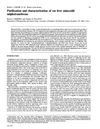
September 1990 in “Biochemical Journal” This study reports the purification of a specific sulphotransferase from rat liver that catalyzes the sulphation of minoxidil, potentially implicating it in minoxidil's bioactivation.
January 2014 in “Journal of Central South University(Science and Technology)” This study found that poly(propylene carbonate maleate) microspheres can successfully prolong finasteride release over 42 days, showing potential for long-term sustained drug delivery.
 21 citations
,
September 1977 in “Journal of Pharmaceutical Sciences”
21 citations
,
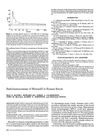
September 1977 in “Journal of Pharmaceutical Sciences” This study developed a specific radioimmunoassay to measure minoxidil levels in human serum directly from a single oral dose.
November 2025 in “Journal of Investigative Dermatology” IMG-007 helps regrow hair and reduce scalp inflammation in severe alopecia areata.
1 citations
,
April 2025 in “Drug Delivery and Translational Research”  October 2022 in “Journal of Kermanshah University of Medical Sciences”
 The researchers reported that caprylic acid effectively enhances the permeability and diffusion of minoxidil through rat skin compared to other penetration enhancers.
July 2026 in “Mendeley Data”  3 citations
,
October 2021 in “Research Square (Research Square)”
3 citations
,
October 2021 in “Research Square (Research Square)” This study used in vivo confocal microscopy and a ResNet34 deep learning model to classify meibomian gland images with an AUROC greater than 0.95, indicating its potential for automatic diagnosis and screening of meibomian gland dysfunction.
January 2006 in “Fudan University Journal of Medical Sciences” This study found that oral finasteride was more effective than topical 3% minoxidil Co. for treating androgenetic alopecia in Chinese men over a six-month period.
4 citations
,
November 2024 in “Journal of Advanced Research” In this study, the researchers reported that NMMHC IIA dissociates from PAR1 and activates the CREB3/ARF4 pathway, worsening thrombin-induced blood-brain barrier damage, suggesting it as a potential therapeutic target for blood-brain barrier-related diseases.

In this randomized, controlled trial, the researchers observed that sub-lingual minoxidil at doses of 1.35 mg and 4.05 mg, but not 0.45 mg, significantly increased hair fibre diameter in men with male androgenetic alopecia over 24 weeks, suggesting a dose-dependent reversal of follicle miniaturization.
 December 2023 in “Azerbaijan Pharmaceutical and Pharmacotherapy J”
 This study formulated a minoxidil-loaded submicron emulsion-based topical gel, which demonstrated effective in vitro release, ex vivo permeation, and stability, suggesting it may offer a targeted treatment approach for alopecia compared to traditional methods.