January 2025 in “International journal of research studies in biosciences” This abstract discusses the prevalence and forms of lichen planopilaris, a type of scarring hair loss, but reports no new clinical findings.
 April 2018 in “The journal of investigative dermatology/Journal of investigative dermatology”
 This study suggests that mitochondrial dysfunction might contribute to the pathogenesis of Lichen planopilaris by triggering a metabolic shift that leads to chronic inflammation and hair follicle damage.
December 2025 in “Microscopy and Microanalysis” This study found that administering lycopene to rats provided significant protection against the testicular damage caused by finasteride, as indicated by improved sperm parameters, and reduced oxidative stress and apoptosis markers.
January 2026 in “Case Reports in Dermatological Medicine” This report identified a family of Iranian siblings with diverse clinical forms of Lichen Planus, suggesting potential genetic and environmental involvement in its pathogenesis.
 33 citations
,
January 2021 in “Aesthetic Surgery Journal”
33 citations
,
January 2021 in “Aesthetic Surgery Journal” This review suggested that low-level light therapy using red/near-infrared light could be a safe and effective treatment for various skin and hair conditions, though more robust trials are needed to solidify its clinical utility.
 June 2022 in “Authorea (Authorea)”
 This case report describes a 59-year-old Afro-American woman diagnosed with lipedematous alopecia, a rare scalp condition of unknown cause.
30 citations
,
May 1980 in “Journal of the American Academy of Dermatology” In this study, three patients with alopecia areata exhibited spotty absence of the whiteness of their nail lunulae, potentially due to defects in the matrical epithelium.
 1 citations
,
January 2015 in “Actas dermo-sifiliográficas/Actas dermo-sifiliográficas”
1 citations
,
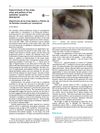
January 2015 in “Actas dermo-sifiliográficas/Actas dermo-sifiliográficas” Latanoprost eye drops caused excessive cheek hair growth and eyelash whitening in a woman.
 106 citations
,
April 2013 in “Dermatologic Surgery”
106 citations
,
April 2013 in “Dermatologic Surgery” This study found that low-level light therapy significantly increased hair density and diameter in androgenetic alopecia patients compared to a sham device, suggesting it could be an effective treatment option.
 May 2026 in “AAPS PharmSciTech”
 This study found that PEGylated LUT-Aspasomes significantly improved neuroprotective effects in stressed rats, enhancing spatial memory, reducing depressive-like behavior, and preserving hippocampal architecture better than free luteolin. Additionally, it increased brain delivery and stability, suggesting potential for treating stress-related neurobehavioral disorders.
 23 citations
,
April 2004 in “American Journal of Ophthalmology”
23 citations
,
April 2004 in “American Journal of Ophthalmology” This case report found that topical bimatoprost usage in a female Hispanic patient with open-angle glaucoma was associated with hypertrichosis and increased pigmentation of vellus hairs on the malar region.
 9 citations
,
August 2007 in “Journal of animal science/Journal of animal science ... and ASAS reference compendium”
9 citations
,
August 2007 in “Journal of animal science/Journal of animal science ... and ASAS reference compendium” This study observed that amino acid uptake into wool follicles varies significantly, with cysteine showing the highest uptake rate, suggesting specialized transport systems that may influence wool growth.
 January 2012 in “Human health handbooks”
 This review discusses the application of low-level light therapy for hair loss treatment, particularly androgenetic alopecia, and reports no new clinical results; the authors suggest consideration of light source characteristics and potential pros and cons.
1 citations
,
August 2016 in “Pan Stanford Publishing Pte. Ltd. eBooks” This chapter reviews low-level light therapy for hair growth and loss prevention but reports no new clinical results, providing an overview of mechanisms, treatments, and future perspectives.
 December 2024 in “Journal of Biophotonics”
 In this study, researchers observed that red and red-orange LED light therapy stimulates nitric oxide production and decreases dihydrotestosterone synthesis in cell models, suggesting a potential mechanism for using light therapy to treat androgenetic alopecia.
July 2026 in “Indian Journal of Dermatology Venereology and Leprology” 1 citations
,
December 2015 in “TURKDERM” This study found that treatment improved symptoms and stopped disease progression for 75% of lichen planopilaris patients whose follow-up data were available.
3 citations
,
August 2024 in “Skin Research and Technology” In this study, LC-OCT imaging was found to noninvasively identify specific features of cicatricial alopecia due to lupus erythematosus, such as hyperreflective collagen fibers, which may aid in distinguishing it from other types of scarring alopecia.
January 2020 in “프로그램북(구 초록집)” This study found that using a low-level light therapy helmet device daily for 24 weeks improved hair density and thickness among participants, though it did not significantly impact sebum secretion or erythema index.
 1 citations
,
May 2024 in “Cureus”
1 citations
,
May 2024 in “Cureus” This case series describes five patients with rare facial lichen planopilaris, detailing the clinical presentation and treatment of their pigmentary changes and scarring alopecia.
37 citations
,
November 2019 in “Journal of Microbiology and Biotechnology” This study found that loliolide enhanced hair growth-related functions in 3D dermal papilla spheroids by activating AKT/β-catenin signaling pathways, with increased expression of related growth factors and genes.
 8 citations
,
September 2002 in “Genes to Cells”
8 citations
,
September 2002 in “Genes to Cells” This study suggests that label-retaining cells in the hair follicle contribute to follicular renewal, indicating a specific role in the hair cycle by proliferating during the late telogen phase.
 September 2022 in “Journal of the American Academy of Dermatology”
 This study compares the prevalence of vitamin D deficiency in patients with lichen planopilaris/frontal fibrosing alopecia to the general US population, highlighting an area not well-explored in existing research.
January 2025 in “Indian Journal of Dermatopathology and Diagnostic Dermatology” In this case report, a rare instance of Graham–Little–Piccardi–Lassueur syndrome coexisting with linear lichen planus was identified in a 35-year-old male, highlighting the condition's rarity in males, with dermoscopy aiding diagnosis through distinctive scalp and trunk lesion features.
2 citations
,
July 2016 in “Veterinary dermatology” This study reports that hyperaesthetic leucotrichia primarily affects Arabian and American paint horses, occurring mainly in summer, with histological differences from erythema multiforme despite some shared features.
7 citations
,
February 2011 in “Journal of dermatology” This study identified a specific LIPH gene mutation (736T>A) as common in Japanese patients with autosomal recessive woolly hair/hypotrichosis, potentially indicating its role in the condition's manifestation within this population.
 April 2026 in “The National Medical Journal of India”
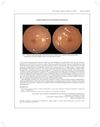
 This case report highlights a 42-year-old woman with systemic lupus erythematosus who exhibited fundus changes indicating retinal vasculitis, underlining the importance of regular ocular fundus examinations for early detection of severe disease complications.
1 citations
,
June 2022 in “Zenodo (CERN European Organization for Nuclear Research)” This study reports a rare case of alopecia areata on the scalp that was successfully treated with Sunetics Laser therapy, resulting in hair regrowth and repigmentation in areas of previous hair loss.
37 citations
,
December 2001 in “Journal of the American Academy of Dermatology” This case report details significant hair regrowth in a patient with lichen planopilaris after treatment with thalidomide, suggesting its potential as a treatment option for this condition.
3 citations
,
January 2021 in “touchREVIEWS in Endocrinology” This case report describes how a 68-year-old woman's hyperandrogenic symptoms improved and testosterone levels normalized after the surgical removal of an occult Leydig cell tumour.