2 citations
,
June 2016 in “Oral Surgery Oral Medicine Oral Pathology and Oral Radiology” This study reports the first known case of oral lichen planus preceding lichen planopilaris in a patient, highlighting a possible sequential relationship between the conditions.
 9 citations
,
September 2016 in “Dermatologic Surgery”
9 citations
,
September 2016 in “Dermatologic Surgery” This study identified a new subtype of lichen planopilaris that mimics androgenetic alopecia, selectively affecting vellus hair follicles and presenting unique histopathological features.
 68 citations
,
July 2011 in “Journal of Biochemistry/The journal of biochemistry”
68 citations
,
July 2011 in “Journal of Biochemistry/The journal of biochemistry” This review discusses newly identified non-Edg family lysophosphatidic acid receptors, detailing their roles in vascular development, platelet activation, and hair growth, and reports no clinical results.
 September 2023 in “Bulletin of the Medical Institute of Continuing Education”
 This study discusses clinical cases of Lichen Planopilaris in men that were initially misdiagnosed and inadequately treated, resulting in significant irreversible hair loss.
 November 2022 in “The journal of investigative dermatology/Journal of investigative dermatology”
 This study found that cPPARγ and dnPPARγ isoforms are differentially expressed in healthy human skin, suggesting that PPARγ modulators may have compartment-specific effects depending on isoform presence.
July 2025 in “Case Reports in Dermatology” This case report highlights that early signs like pili torti may precede lichen planopilaris in some patients, emphasizing the importance of timely intervention to prevent permanent hair loss.
 April 2023 in “Journal of dermatological treatment”
 This study reports a case of complete hair regrowth in lichen planopilaris after 12 weeks of treatment with ixekizumab, suggesting its potential as a targeted therapy.
 19 citations
,
April 2018 in “International Journal of Dermatology”
19 citations
,
April 2018 in “International Journal of Dermatology” This study found that female patients with frontal fibrosing alopecia are significantly more likely to have systemic lupus erythematosus compared to controls.
January 2025 in “Indian Journal of Dermatopathology and Diagnostic Dermatology” In this case report, a rare instance of Graham–Little–Piccardi–Lassueur syndrome coexisting with linear lichen planus was identified in a 35-year-old male, highlighting the condition's rarity in males, with dermoscopy aiding diagnosis through distinctive scalp and trunk lesion features.

This report describes two cases where lichen planopilaris compromised hair follicles in both donor and recipient areas after follicular unit transplantation, emphasizing the need for a biopsy if lichen planopilaris is suspected.
 September 2017 in “The journal of investigative dermatology/Journal of investigative dermatology”
 This study reports that the loss of Langerhans cells in lichen planopilaris scars may be linked to the downregulation of ITG αvβ6, which is not seen in other scar formation diseases.
 October 2025 in “Italian Journal of Dermatology and Venereology”
 This study reported that lichen planopilaris predominantly affects females over 60, with a registered prevalence rate of 0.02581%, and is often associated with autoimmune diseases like systemic lupus erythematosus, suggesting a need for further research to enhance treatment approaches.
 January 2015 in “Hair transplant forum international”
 Up to 10% of hair loss patients might have early signs of a condition called Lichen Planopilaris.
43 citations
,
March 2009 in “Archives of dermatology” No treatment showed clear superiority for lichen planopilaris.
 September 2025 in “Clinical Case Reports”
 In this study, researchers suggested that adipose-derived exosomes could be a promising treatment option for lichen planopilaris, particularly in cases resistant to standard therapies, by potentially aiding in symptom management and hair preservation.
 April 2016 in “Journal of The American Academy of Dermatology”
 People with lichen planopilaris often have seborrheic dermatitis, which can delay the diagnosis of lichen planopilaris.
October 2025 in “Our Dermatology Online” This study suggests that combining tranexamic acid with low-dose oral retinoids may offer moderate to good improvements for lichen plan pigmentosus, although larger trials are needed for confirmation.
 June 2017 in “Journal of The American Academy of Dermatology”
 Women in Australia report different signs of facial aging compared to women in the US, UK, and Canada; men with Lichen planopilaris often have hormonal abnormalities and thyroid disease.
 1 citations
,
October 2023 in “Skin research and technology”
1 citations
,
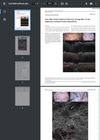
October 2023 in “Skin research and technology” This study found that line-field confocal optical coherence tomography effectively visualized key diagnostic features of classic lichen planopilaris in real time, suggesting its potential as a valuable diagnostic tool.
July 2024 in “Skin Appendage Disorders” This review discusses the role of trichoscopy in diagnosing lichen planopilaris and reports no clinical results; the authors emphasize early recognition to potentially prevent permanent scarring.
1 citations
,
February 2025 in “International Journal of Dermatology” This case report by the researchers observed a complete remission of lichen planopilaris in a 58-year-old woman after treatment with the JAK-1 inhibitor abrocitinib, although they noted that concurrent topical therapy might have contributed to this outcome.
 2 citations
,
October 2020 in “International Journal of Dermatology”
2 citations
,
October 2020 in “International Journal of Dermatology” This study found that lichen planopilaris in men typically presents similarly to women, with a lower likelihood of nonscalp hair loss and a higher association with mucosal lichen planus and thyroid disease.
 February 2024 in “Australasian journal of dermatology”
 This research letter discusses the use of Janus kinase inhibitors for treating lichen planopilaris, although specific results or conclusions from the study are not provided.
6 citations
,
February 2024 in “JAAD International” ChatGPT is preferred for creating dermatology patient handouts, but all models can be useful with oversight.
8 citations
,
January 2019 in “Journal of cosmetic dermatology” This study found that six sessions of a modified phenol peel effectively reduced hyperpigmentation in patients with Lichen Planus Pigmentosus, with 76% of treated individuals experiencing at least a 25% improvement, and no serious side effects reported.
 1 citations
,
January 2023 in “Journal of Drugs in Dermatology”
1 citations
,
January 2023 in “Journal of Drugs in Dermatology” This review discusses Graham-Little Piccardi-Lasseur syndrome, a rare dermatosis with limited treatment options, emphasizing the importance of early diagnosis through physical exam and dermoscopy, but reports no new results.
January 2026 in “JPRAS Open” In this pilot study, PDLLA scalp microinjections showed improvement in physician-rated Global Aesthetic Improvement Scale scores over 12-24 weeks for 90% of patients with non-scarring alopecia, with no serious adverse events reported, although findings remain preliminary due to methodological limitations.
 September 2024 in “Skin Research and Technology”
 This study used atomic force microscopy to identify significant morphological differences in hair from patients with lichen planopilaris compared to healthy controls, noting more scratches, uneven edges, and pitted scales in affected hair, which may aid future research on the condition.
2 citations
,
February 2021 in “Indian Dermatology Online Journal” This case report describes the first instance of classical lichen planopilaris with atrophic lichenoid plaques developing in a Blaschko-linear pattern due to imatinib treatment in a patient with chronic myeloid leukemia.
 November 2023 in “The journal of investigative dermatology/Journal of investigative dermatology”
 In this study, treatment with oral JAK inhibitors was associated with improved disease outcomes in 80.6% of patients with refractory lichen planopilaris over a mean duration of 5 months.