 January 2018 in “Stem cell biology and regenerative medicine”
 This review discusses how the nuclear lamina integrates biochemical and mechanical signals to influence gene expression and skin homeostasis, but reports no new clinical results.
 January 2018 in “Stem cell biology and regenerative medicine”
 This review discusses the interplay between signaling/transcription factor-mediated and epigenetic mechanisms in skin development and regeneration, highlighting the need for further exploration of epigenome reorganization in these processes.
 November 2016 in “Endocrinology&Metabolism International Journal”
 This review discusses the conditions, genetic factors, and treatment options related to polycystic ovary syndrome, but reports no new clinical findings, emphasizing the need for future research.

This review discusses various syndromes of severe insulin resistance, their biochemical and clinical features, and potential therapeutic options, but it reports no new clinical results.
June 2025 in “International Journal of Molecular Sciences” This review compiles current research on the role of long non-coding RNAs in regulating muscle growth and regeneration processes, particularly their influence on Duchenne muscular dystrophy, and reports no new clinical results.
36 citations
,
July 1996 in “The journal of investigative dermatology/Journal of investigative dermatology” This research reports a new autosomal recessive mutation in mice, 'lanceolate hair', causing generalized alopecia and hair shaft abnormalities, which may serve as a model for Netherton's syndrome in humans.
5 citations
,
May 2022 in “Diagnostics” This study found that certain lncRNA gene polymorphisms in HOTAIR and MALAT1 are associated with increased susceptibility to systemic lupus erythematosus, potentially informing clinical applications.
13 citations
,
November 2022 in “Biomaterials Science” This study demonstrated that a device combining hyaluronic acid-based dissolving microneedles and lipid polymer hybrid nanoparticles effectively delivered miR-218 to promote hair growth in a shaved mouse model, outperforming topical smear treatment without safety concerns.
April 2023 in “Journal of Investigative Dermatology” This study found that overexpression of the lncRNA AL136131.3 may inhibit hair shaft growth and promote hair follicle apoptosis in androgenetic alopecia by influencing key metabolic pathways.
 3 citations
,
September 2022 in “Animal biotechnology”
3 citations
,
September 2022 in “Animal biotechnology” This study found that knocking down lncRNA MTC in Liaoning Cashmere goat skin fibroblasts inhibited cell proliferation and increased apoptosis, suggesting its role in facilitating cell growth by regulating specific proteins.
 1 citations
,
November 2024 in “Cutis”
1 citations
,
November 2024 in “Cutis” PLLA injections can cause hair loss and skin issues.
1 citations
,
January 2020 in “International Journal of Agriculture and Biology” In this study, researchers identified known and novel miRNAs in Liaoning Cashmere goat skin and found differences in miRNA expression linked to cashmere fineness, providing new insights into LCG goat skin biology.
January 2022 in “Figshare” This study found that knocking down lncRNA MTC in Liaoning Cashmere goat skin fibroblasts reduced cell proliferation and altered protein expression, suggesting its role in hair growth and regulatory pathways.
October 2025 in “Journal of the Endocrine Society” This case report documented the management of a 46-year-old female with Marine-Lenhart syndrome, combining antithyroids with minimally invasive sclerotherapy to achieve euthyroidism and reduce thyroid nodule size by 58%.
 3 citations
,
March 2012 in “Actas Dermo-Sifiliográficas”
3 citations
,
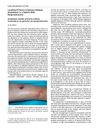
March 2012 in “Actas Dermo-Sifiliográficas” An elderly man with skin amyloidosis and abnormal blood proteins was monitored without finding widespread disease after 18 months.
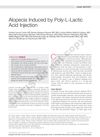
This case study reports that a 35-year-old woman developed nonscarring alopecia following the cosmetic use of poly-L-lactic acid on her face and hairline.
 March 2024 in “Cytologia”
 In this study, researchers observed that melatonin-mediated LncRNA MTC in Liaoning cashmere goat skin fibroblasts enhances cell proliferation by interacting with the GSTM1 protein, affecting its complex formation with ASK1 and thereby inhibiting apoptosis, which may be relevant for improving cashmere growth.
 11 citations
,
December 2010 in “Archives of Dermatology”
11 citations
,
December 2010 in “Archives of Dermatology” This abstract provides no research results, focusing instead on navigation and subscription details for JAMA Dermatology content access.
 September 2024 in “PubMed”
 This study found that patients with alopecia areata have distinct mRNA and lncRNA expression profiles between normal and bald scalp areas, identifying differentially expressed genes and revealing potential biomarkers for diagnosis, with keratin family genes possibly playing a key role in the disease's pathogenesis.

This study identified specific lncRNAs and mRNAs differentially expressed in miniaturized follicles compared to normal follicles in patients with androgenetic alopecia, with AL136131.3 potentially inhibiting hair growth and accelerating follicle transition to catagen through effects on glycolysis-related genes.
37 citations
,
June 2000 in “Experimental dermatology” This study investigated a spontaneous mutation in mice resulting in hair abnormalities and elevated IgE levels, which resembles human Netherton's syndrome and monilethrix.
 October 2022 in “The American journal of gastroenterology”
 This case report details a patient with myasthenia gravis and a malignant thymoma whose rising liver function tests, initially thought to be related to antibiotic use, were ultimately attributed to thymoma-associated multiorgan autoimmunity.
 9 citations
,
July 2010 in “British Journal of Dermatology”
9 citations
,
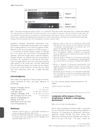
July 2010 in “British Journal of Dermatology” This article reports on lentiginosis observed within plaques of linear atrophoderma of Moulin and discusses its potential classification as a twin-spotting phenomenon but provides no new clinical research results.
 November 2023 in “Scientific Reports”
 In this study, researchers used NIH hairless mice to uncover genetic markers associated with hair loss and identified a Lama3 point mutation as a potential genetic contributor, creating a mutant mouse model that may advance the study of androgenetic alopecia.
December 2025 in “International Journal of Pharmaceutics” PLGA-based microneedles show promise for painless, long-term drug delivery but need design and safety improvements.
48 citations
,
April 2008 in “Human Molecular Genetics” This study found that although progerin expression in mouse skin causes significant nuclear shape changes in keratinocytes, it does not result in alopecia or common skin abnormalities seen in human Hutchinson–Gilford progeria syndrome.
2 citations
,
February 2022 in “bioRxiv (Cold Spring Harbor Laboratory)” In this study, researchers found that correcting the HGPS mutation with Adenine base editing partially rescued accelerated skin cell differentiation and reduced cell death in patient-derived stem cells.
 2 citations
,
September 2022 in “Frontiers in veterinary science”
2 citations
,
September 2022 in “Frontiers in veterinary science” In this study, researchers used high-throughput sequencing to explore lncRNA interactions in cashmere goat hair follicles during embryonic development, finding lncRNAs potentially regulate genes in the Wnt and PI3K-Akt pathways related to hair follicle growth.
 August 2024 in “Current Issues in Molecular Biology”
 In this study, researchers analyzed skin tissue from two sheep breeds during the growing period and identified 56 differentially expressed lncRNAs and 616 mRNAs linked to hair follicle development, suggesting potential targets for improving sheep wool quality through genetic and molecular approaches.
 12 citations
,
September 2018 in “Naturwissenschaften”
12 citations
,
September 2018 in “Naturwissenschaften” This study found that melatonin at 0.2 g/L for 72 hours most effectively enhances cashmere growth in Liaoning cashmere goats by upregulating the lncRNA MTC, which activates NF-kB signaling.