 June 2025 in “Mutiara Jurnal Penelitian dan Karya Ilmiah”
 This study observed that using moringa leaf extract in hair tonic reduced hair loss among the sampled students, with the average hair loss decreasing from 118.75 strands to 79.25 strands per day.
 March 2025 in “International Journal For Multidisciplinary Research”
 This study reports that Murraya koenigii (curry leaf) extract, rich in bioactive compounds, shows potential in promoting hair growth and improving scalp health through increased follicle density, reduced hair loss, and antimicrobial effects, with clinical trials supporting these benefits.
March 2025 in “Molecules” This study explored the in vitro skin penetration of two compounds from Tectona grandis leaf extract used for standardization and found that compound 1 penetrates more efficiently than compound 2, especially with a propylene glycol enhancer.
 January 2025 in “International Journal of Veterinary Science”
 In this animal study, hibiscus leaf simplicia ointment was found to protect red blood cell levels and promote better hair growth in UV-exposed rats, though it did not maintain normal skin histology; the ointment showed no significant acute dermal toxicity.
 December 2024 in “Biomedical & Pharmacology Journal”
 In this study, researchers developed and assessed two polyherbal hair tonic formulations, finding that Hair Tonic A containing 10% white tea extract improved hair thickness, manageability, and anti-frizz properties, particularly for blonde and black hair, while demonstrating greater stability compared to Hair Tonic B.
May 2024 in “Pharmacia/Farmaciâ” In this study, Ipomoea batatas leaf extracts exhibited significant hair growth stimulation and strong antifungal activity against Malassezia furfur, potentially offering a promising treatment for alopecia with further research needed on their androgen receptor inhibition potential.

This review article highlights the potential of various herbal treatments, such as Saw Palmetto and Ginseng, in promoting hair growth and managing alopecia, while emphasizing the necessity for more rigorous clinical trials.
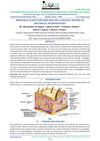 March 2024 in “International Research Journal Of Modernization In Engineering Technology And Science”
 This review highlights the beneficial effects of certain herbal drugs in treating skin diseases, such as their healing, antifungal, antiviral, antibacterial, anti-inflammatory, and antitumor-promoting activities, emphasizing recent technical advancements in the field over the past 17 years.
 March 2024 in “Journal of Evidence-Based Integrative Medicine”
 This study found that a hair tonic containing 1% teak leaf extract significantly increased hair growth and user satisfaction in men with androgenic alopecia after 24 weeks, without causing adverse effects, and was comparable to the standard treatment, minoxidil.
 February 2024 in “International journal of biology, pharmacy and allied sciences”
 This review discusses the potential of plant-based preparations for treating hair loss and reports no new clinical results; the authors highlight herbs with evidence of efficacy against alopecia.
 January 2024 in “Scientific reports”
 This study found that undiluted mint leaf extract effectively inhibited multidrug-resistant Staphylococcus aureus and killed Culex pipiens larvae, suggesting its potential as a biocontrol strategy around hospitals.
 January 2024 in “International Journal of Pharmacognosy and Pharmaceutical Research”
 This review highlights the potential of plant-derived molecules like Epigallocatechin-3-Gallate and Ginsenosides to promote healthy hair growth by enhancing nutrient supply and blood flow to the scalp, and notes their growing role in natural hair care product development.
 November 2023 in “International Journal For Multidisciplinary Research”
 This review explores how herbal hair oils made from ingredients like amla and hibiscus may offer benefits such as reducing hair loss and dandruff, but these are summarized from existing research rather than new experimental data.
 April 2022 in “Molecules”
 This study identified two potent 5α-reductase inhibitors from Tectona grandis leaves, and suggests that ethanol is a preferable solvent for extracting these compounds, which are potential ingredients for hair loss treatments.
 January 2015 in “Hair therapy & transplantation”
 This review discusses natural and botanical products examined for treating alopecia and reports no clinical results; the authors note growing research interest in these treatments.

This review discusses potential cosmeceutical treatments for hair loss, including ingredients like procyanidins and isoflavones, but does not present new clinical outcomes; the authors highlight the promise of further research.
1 citations
,
October 2023 in “Animals” This study found that supplementing raccoon dogs' diets with 0.25 g/kg Platycladus orientalis leaf extract improved growth performance and altered intestinal microbiota, but higher doses may have adverse effects.
 1 citations
,
August 2021 in “International journal of scientific research in science and technology”
1 citations
,
August 2021 in “International journal of scientific research in science and technology” This study evaluated a polyherbal hair oil, containing natural ingredients like Hibiscus and Aloe Vera in a coconut oil base, for its phytochemical properties, antimicrobial activity, and potential to reduce dandruff and hair loss while promoting hair growth.
 July 2026 in “Industrial and Domestic Waste Management”
 This study synthesized silver nanoparticles using Gandaria stem bark extract, finding that nanoparticles at a 4% concentration were particularly effective for selectively detecting mercury over lead and calcium, making them suitable as preliminary detection materials for mercury in facial whitening creams.
December 2025 in “Sustainable Chemistry One World” In this study, researchers found that mangosteen pericarp extract, combined with FeSO₄ as a mordant, effectively produced a stable reddish hair dye on bleached hair, with good color persistence and enhanced tensile strength, indicating its potential as an eco-friendly and safer alternative to synthetic dyes.
1 citations
,
June 2025 in “Biomolecules” This study found that extracts from Stauntonia hexaphylla leaves and fruits, particularly those with a higher leaf-to-fruit ratio, significantly enhanced osteogenic activity and inhibited osteoclast-related gene expression in vitro, suggesting potential for osteoporosis prevention.
 16 citations
,
June 2022 in “Agronomy”
16 citations
,
June 2022 in “Agronomy” This study found that the application of plant-derived biostimulants, Trainer® and Auxym®, significantly affected various physiological traits in lettuce, but responses varied depending on the cultivar.
2 citations
,
May 2025 in “Antioxidants” This study examined the phytochemicals and antioxidant activities of methanolic extracts from Cameroonian Prunus africana bark and Leea indica and Paullinia pinnata leaves, identifying various phenolic compounds and significant antioxidant properties through multiple assays.
57 citations
,
December 2012 in “Molecules” This study found that mahanimbicine and a crude extract of Murraya koenigii may enhance wound healing in rats by promoting faster wound contraction and higher collagen deposition.
13 citations
,
June 2005 in “PubMed” In this study, 33% of mice treated with polyphenol extract from green tea showed significant hair regrowth, while no control group mice exhibited hair growth.
 2 citations
,
February 2019 in “JOJ dermatology & cosmetics”
2 citations
,
February 2019 in “JOJ dermatology & cosmetics” The study found that Anagen grow, a herbal serum, promotes hair growth elongation and may inhibit the alpha reductase enzyme, suggesting it as a safe, effective alternative to finasteride and beneficial alongside minoxidil for reducing scalp dryness.
 1 citations
,
April 2018 in “Our Dermatology Online”
1 citations
,
April 2018 in “Our Dermatology Online” This article discusses the familiarity of identifying male androgenetic alopecia but presents no new research findings.
188 citations
,
December 2020 in “Foods” This review explores the potential health benefits of food bioactive compounds, specifically polyphenols, as preventive agents against non-communicable diseases like cancer and cardiovascular disorders, while also addressing challenges like bioavailability and industrial applications.
 67 citations
,
November 2019 in “Molecules”
67 citations
,
November 2019 in “Molecules” This review collected findings on the various cosmetic and therapeutic properties of tea extracts, highlighting their antioxidant, anti-inflammatory, and photoprotective effects among other benefits for skin and hair care.
34 citations
,
January 2022 in “Molecules/Molecules online/Molecules annual” This review highlights the use of natural products in cosmetic-containing herbals for skin and hair care but reports no new clinical results, calling attention to their claimed curative properties and minimal side effects.