1 citations
,
May 2022 in “International Journal of Cosmetic Science” This study reports that Edelweiss extract significantly prolonged the anagen phase and increased hair density, suggesting potential as an anti-hair loss treatment.
January 2019 in “Journal of the American Leather Chemists Association” This study observed that processing techniques such as degreasing, bating, and tanning influence mink skin by altering the distribution of fat glands and collagen fibers, potentially impacting hair follicle structure and mink product quality.
 30 citations
,
August 2009 in “Journal of the American Academy of Dermatology”
30 citations
,
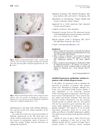
August 2009 in “Journal of the American Academy of Dermatology” This study found that while bimatoprost was safe for 16 weeks, it was not effective for eyelash growth in patients with significant loss due to alopecia areata, though some with less loss experienced growth.
 15 citations
,
November 2009 in “Clinical and Experimental Dermatology”
15 citations
,
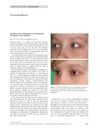
November 2009 in “Clinical and Experimental Dermatology” This case study describes a 16-year-old girl with alopecia areata affecting her eyelashes and eyebrows, who showed very limited response to treatment with topical mometasone furoate and subsequent partial hair loss upon stopping the treatment.
 September 2023 in “Pharmaceuticals”
 This study found that nanoparticles containing minoxidil and betamethasone improved drug delivery to hair follicles, with lipidic nanoparticles significantly enhancing minoxidil and betamethasone penetration compared to control, making them a promising option for alopecia areata treatment with reduced side effects.
2 citations
,
February 2025 in “PLoS ONE” This study used TMT-based quantitative proteomics to analyze the development of secondary hair follicles in fetal sheep, revealing increased follicle density and key proteins involved, such as COL1A1 and THBS4, indicating their potential role in wool quality traits.
2 citations
,
September 2022 in “Drug Delivery” This study found that a transdermal drug delivery system using nanostructured lipid carriers and polymeric microneedles for β-sitosterol significantly enhanced hair growth in testosterone-induced alopecia rats, suggesting potential for treating androgenic alopecia.
 28 citations
,
March 2014 in “International Journal of Nanomedicine”
28 citations
,
March 2014 in “International Journal of Nanomedicine” This study developed lipid nanoparticles for delivering minoxidil and finasteride to the dermis and hair follicles, showing stability and a desired prolonged release, though with low skin penetration levels.
January 1962 in “Archives of Dermatology” This case report describes a 5-year-old girl with lipoid proteinosis, characterized by a raspy voice, thinning scalp hair, and recurrent crusted lesions leading to pock-like scars.
January 1981 in “Purdue e-Pubs (Purdue University)” This study observed that the pig integument is similar to human skin in both light and electron microscopy, with minimal postnatal developmental differences noted.
January 2014 in “Journal of Guangdong Pharmaceutical University” This study found that an acne complex animal model using rabbits showed more pronounced clinical symptoms and measured changes compared to the traditional Kligman model.
This study found that the FOS gene may play a significant role in promoting hair follicle development in Tan sheep, with elevated expression during the Er-mao period.
This case report describes successful treatment of a 21-year-old patient with lichen planopilaris using keratolytic lotions, a combination of corticosteroids, salicylic acid, and tacrolimus cream, which stopped disease progression.
13 citations
,
September 2012 in “Cell & tissue research/Cell and tissue research” In this study, researchers found that the pCLCA2 protein is expressed in specific areas of pig skin, but its role in skin structure or function remains unclear.
This study found that neurosteroids influence oxytocin secretion in sheep, particularly during stress and pregnancy, suggesting their role in protecting and maintaining pregnancy under harmful conditions.
February 2026 in “International Journal of Pharmaceutics” 1 citations
,
January 2011 in “Journal of Animal Science and Veterinary Medicine” This study found that injecting melatonin in female goats did not significantly affect follicle characteristics but did improve cashmere yield, potentially by enhancing secondary follicle growth and extending the cashmere growth period.
 17 citations
,
June 2019 in “BMC genomics”
17 citations
,
June 2019 in “BMC genomics” This study cataloged several long non-coding RNAs and microRNAs in cashmere goat dermal papilla cells, suggesting these non-coding RNAs may play a role in hair follicle stem cell activation and hair growth.
October 2018 in “Focus on surfactants”  7 citations
,
January 2010 in “Animal”
7 citations
,
January 2010 in “Animal” This review discusses studies on hair growth and protein synthesis in hair follicles, highlighting the differing responses of mohair and cashmere goat follicles to signaling molecules, biotin, and amino acids, but contains no new results.
 23 citations
,
April 2010 in “Clinical, cosmetic and investigational dermatology”
23 citations
,
April 2010 in “Clinical, cosmetic and investigational dermatology” This review discusses the cutaneous application of bimatoprost ophthalmic solution 0.03% for enhancing upper eyelash growth and suggests it is both safe and effective; no new clinical results are reported.
 April 2023 in “Dermatology practical & conceptual”
 This study observed that a tacrolimus solution (0.1%) applied to the scalp was effective and well-tolerated for treating inflammatory scalp conditions, with 72.7% of patients showing an excellent response after 2 months of treatment, which persisted after 6 months.
 March 2005 in “Journal of The American Academy of Dermatology”
 Two cosmetic lotions used day and night may be a good alternative to minoxidil for hair loss treatment with better cosmetic effects and tolerance.
January 2016 in “Xumu Shouyi Xuebao”  46 citations
,
March 2019 in “Journal of Pineal Research”
46 citations
,
March 2019 in “Journal of Pineal Research” The study found that melatonin treatment in early postnatal cashmere goats increased both the quantity and quality of cashmere by promoting secondary hair follicle development and enhancing antioxidant enzyme activities.
48 citations
,
February 2010 in “Molecular biology reports” This study found that KAP7.1 and KAP8.2 genes were significantly more expressed in secondary hair follicles than primary follicles, suggesting their role in regulating cashmere fiber diameter.
50 citations
,
March 2018 in “BMC Genomics” This study expands knowledge of non-coding RNAs in goats and other mammals, enhancing understanding of their roles in hair follicle growth and regression.
 April 2025 in “Ukrainian Journal of Veterinary and Agricultural Sciences”
 This study observed that feeding ewes a water-soluble complex of fatty acids increased primary hair follicle bulb diameter and mitotic activity, suggesting a positive correlation with wool growth.
 7 citations
,
May 2018 in “Curēus”
7 citations
,
May 2018 in “Curēus” In this case report, a 60-year-old woman with eyebrow hypotrichosis experienced significant and lasting eyebrow growth after daily use of bimatoprost 0.03% solution, highlighting its potential as an effective treatment for eyebrow hair restoration.
 38 citations
,
March 2017 in “Expert Opinion on Investigational Drugs”
38 citations
,
March 2017 in “Expert Opinion on Investigational Drugs” This review examines the potential of bimatoprost for treating various types of eyelash and eyebrow hypotrichosis, discussing its pharmacological properties but providing no new clinical results.