This study found that the novel alcohol-free topical foam CG2001, combining minoxidil and finasteride, was safe and well-tolerated in Chinese males with androgenetic alopecia, with significantly lower systemic exposure to finasteride compared to oral administration, potentially reducing sexual side effects.
November 2024 in “Elsevier eBooks” 1 citations
,
February 2005 in “The Journal of Laryngology & Otology” This case report describes a 19-year-old farmer who experienced difficulty breathing due to a fungal infection in the neck, successfully treated with antibiotics and antifungal medications.
 3 citations
,
January 2023 in “Journal of Pharmaceutical Negative Results”
3 citations
,
January 2023 in “Journal of Pharmaceutical Negative Results” This study reports that fluconazole emulgel formulations, using jojoba oil and liquid paraffin, showed effective drug release and improved characteristics for treating skin diseases compared to traditional oral formulations.
 1 citations
,
February 2014 in “Revista de investigaciones veterinarias del Perú”
1 citations
,
February 2014 in “Revista de investigaciones veterinarias del Perú” This case study describes a Lop male rabbit with Malassezia-associated dermatitis, initially treated with griseofulvin but requiring ketoconazole for complete recovery after recurrence.
 August 2024 in “Journal of Clinical Medicine”
 This study evaluates the effectiveness of hydroxychloroquine in treating lichen planopilaris, suggesting varying success based on a real-life retrospective analysis.
 13 citations
,
July 2011 in “Journal of Dermatological Treatment”
13 citations
,
July 2011 in “Journal of Dermatological Treatment” This study found that topical pimecrolimus is as effective as clobetasol propionate for treating alopecia areata, with better tolerability in terms of side effects.
 19 citations
,
September 2020 in “Pharmaceutics”
19 citations
,
September 2020 in “Pharmaceutics” This study investigated a new formula called SV-loaded nanospanlastics for topical application to treat androgenic alopecia. It showed similar effectiveness to minoxidil lotion but with fewer adverse effects when used to enhance dermal delivery and efficacy of sodium valproate.
 November 2023 in “PubMed”
 This study showed that intralesional injections of pentoxifylline may be an effective and safe alternative to triamcinolone acetonide for treating localized alopecia areata.
December 2020 in “Jurnal RSMH Palembang (Online)” This case report described a 50-year-old male with end-stage renal disease who experienced improvement in his black dot tinea capitis after treatment with griseofulvin and ketoconazole shampoo.
 1 citations
,
October 2023 in “Skin research and technology”
1 citations
,
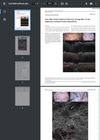
October 2023 in “Skin research and technology” This study found that line-field confocal optical coherence tomography effectively visualized key diagnostic features of classic lichen planopilaris in real time, suggesting its potential as a valuable diagnostic tool.
May 2024 in “Reactions weekly”  5 citations
,
December 2011 in “Drug Research”
5 citations
,
December 2011 in “Drug Research” This study found that cortexolone 17α-propionate showed strong topical antiandrogenic activity, outperforming progesterone and several known antiandrogens, but lacked systemic antiandrogenic effects in animal models.
 September 2023 in “Pharmaceuticals”
 This study found that nanoparticles containing minoxidil and betamethasone improved drug delivery to hair follicles, with lipidic nanoparticles significantly enhancing minoxidil and betamethasone penetration compared to control, making them a promising option for alopecia areata treatment with reduced side effects.
January 2010 in “USFEU Scientific Library (Ural State Forest Engineering University)” This study developed a grooved microneedle platform enabling precise transdermal delivery of triamcinolone acetonide for alopecia areata, achieving accurate dosing by controlling groove position and drug concentration.
January 2020 in “Journal of the Brazilian Chemical Society” This study suggests that using nanostructured lipid carriers may improve the targeting of 17-α-estradiol in treating alopecia by improving skin penetration and stability.
January 2024 in “Acta dermato-venereologica”  January 2010 in “Yearbook of Dermatology and Dermatologic Surgery”
 Topical latanoprost and bimatoprost ophthalmic solutions don't help eyelash growth in patients with alopecia areata.
 November 2023 in “Pakistan Journal of Health Sciences”
 This study found that clobetasol propionate 0.05% was significantly more effective in stimulating hair re-growth in alopecia areata patients compared to topical tacrolimus 0.1%, with an excellent response observed in 74.3% of the clobetasol group versus 40% in the tacrolimus group.
4 citations
,
January 1989 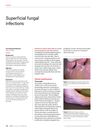 54 citations
,
October 2019 in “Australian Journal of General Practice”
54 citations
,
October 2019 in “Australian Journal of General Practice” This article provides an updated overview of the diagnosis and management of tinea infections but reports no new clinical findings.

This comparative clinical study found no statistically significant difference in the remission and recurrence rates between intralesional triamcinolone acetonide and methotrexate for treating localized alopecia areata, suggesting similar efficacy between the two treatments.
January 2021 in “Figshare” This study developed a nanostructured lipid carrier for 17-α-estradiol that showed stable physicochemical properties and improved targeting to hair follicles in alopecia treatment.
17 citations
,
February 2001 in “Journal of the American Academy of Dermatology” This case report suggests that lithium, either alone or with haloperidol, may induce skin changes resembling follicular mycosis fungoides.
 November 1996 in “Inpharma Weekly”
 Lotion with piroctone olamine and triclosan improves hair loss in men.
2 citations
,
January 2025 in “Naunyn-Schmiedeberg s Archives of Pharmacology” Nanostructured lipid carriers can improve alopecia treatment by enhancing drug delivery and promoting hair growth.
 17 citations
,
January 2009 in “Nippon Ishinkin Gakkai Zasshi”
17 citations
,
January 2009 in “Nippon Ishinkin Gakkai Zasshi” This case report details a 10-year-old boy diagnosed with kerion celsi caused by Microsporum gypseum, successfully treated with itraconazole over 4.5 months.
9 citations
,
October 1947 in “The Lancet” 1 citations
,
November 1947 in “The Lancet” 1 citations
,
January 2024 in “Journal of clinical medicine” This literature review highlights the changing epidemiology of tinea capitis due to global migration and underscores the importance of early recognition and treatment of atypical variants in immunocompetent children to minimize prolonged systemic antifungal therapy and prevent adverse events, especially regarding liver health.