 24 citations
,
September 2014 in “Journal of the European Academy of Dermatology and Venereology”
24 citations
,
September 2014 in “Journal of the European Academy of Dermatology and Venereology” This study suggests that trichoscopy with a handheld dermatoscope may help differentiate temporal triangular alopecia from other localized alopecia by identifying specific hair features.
 April 2026 in “American Journal of Dermatopathology”
 This study identified a new dermoscopic feature, plexiform erythema, in lichen planopilaris lesions, suggesting it may indicate active disease and the potential need for more aggressive treatment.
 16 citations
,
December 2017 in “Journal of The American Academy of Dermatology”
16 citations
,
December 2017 in “Journal of The American Academy of Dermatology” This study found that low-level laser therapy may reduce inflammation and increase hair thickness in patients with lichen planopilaris after six months of treatment, though the small sample size limits the findings.
 March 2012 in “Journal of The American Academy of Dermatology”
 Hand-foot-mouth disease may cause nail loss in children.
 19 citations
,
August 2018 in “International Journal of Dermatology”
19 citations
,
August 2018 in “International Journal of Dermatology” In this study, lupus panniculitis of the scalp was associated with a high incidence of recurrence and progression to systemic lupus erythematosus, despite various treatments showing complete response within weeks.
10 citations
,
October 2009 in “Photomedicine and laser surgery” This study found that intense pulsed light treatment achieved a mean of 85% hair reduction in two patients with faun tail, although local anesthesia may be needed due to severe pain associated with neurological abnormalities.
42 citations
,
September 2002 in “The Journal of Comparative Neurology” This study found that in the dorsal horn's lamina III, most afferent boutons form synapses with presynaptic boutons immunoreactive for GABA and/or glycine, influencing sensory pathways.
 143 citations
,
October 2008 in “Journal of The American Academy of Dermatology”
143 citations
,
October 2008 in “Journal of The American Academy of Dermatology” This study found that comma hairs are a distinctive feature of tinea capitis caused by Microsporum canis, distinguishing it from alopecia areata, which is characterized by exclamation mark hairs.
 July 2026 in “bioRxiv (Cold Spring Harbor Laboratory)”
 In this study, researchers found that the efflux of calcium in root hairs of Arabidopsis thaliana, particularly through the ER-localized ACA2 and ACA7, is crucial for modulating cytoplasmic calcium signals and enabling proper root hair growth, with disruptions leading to impaired elongation.
 January 2023 in “International Journal of Molecular Sciences”
 This review discusses the biologically active compounds in Maxillariinae orchids, highlighting 62 semiochemicals with medical potential, but reports no new clinical findings.
2 citations
,
November 2006 in “Pump Industry Analyst” This study found that pilomatricomas exhibit co-expression of hair keratin hHa5 and HOXC13 in lower transitional cells, but lack LEF1 and β-catenin co-expression necessary for canonical Wnt signaling pathway-controlled cortical differentiation.
1 citations
,
August 2016 in “Dermatology - Open Journal” In this study, the researchers found that optic atrophy 1 (OPA1) is involved in the transition between filamentous and rounded mitochondria in hair follicle dermal papilla cells, potentially influencing cellular energy dynamics.
1 citations
,
January 2020 in “Skin Appendage Disorders” Treatment with methotrexate and prednisolone led to complete hair regrowth and no relapse for 2 years.
73 citations
,
June 2017 in “Experimental Dermatology” The authors suggest that tooth, dermal scale, epidermal scale, feather, and hair evolved in parallel from a shared placode/dermal cell unit in an early vertebrate gnathostome with odontodes, around 420 million years ago.
August 2026 in “ACS Applied Bio Materials” This study found that exosome-like nanoparticles derived from leeks promoted hair follicle stem cell proliferation and migration, enhanced antioxidant capacities, reduced inflammation, and inhibited hair maturation in rats by altering differentiation pathways, suggesting potential therapeutic benefits for managing hirsutism.
2 citations
,
December 2019 in “The Open Dermatology Journal” This article describes the first reported case of isolated linear discoid lupus erythematosus on the scalp, suggesting it should be considered in the differential diagnosis of linear scarring alopecia.
 6 citations
,
May 2021 in “Stem Cell Reviews and Reports”
6 citations
,
May 2021 in “Stem Cell Reviews and Reports” This study identified and characterized progenitor cells from equine feet that may play a role in the pathogenesis and recovery of laminitis, suggesting potential therapeutic targets for treatment.
April 2018 in “Journal of Investigative Dermatology” Mutations in Far2 mice cause hair loss due to sebaceous gland issues.
 8 citations
,
June 2022 in “Scientific Reports”
8 citations
,
June 2022 in “Scientific Reports” Using a transgenic pig model, this study demonstrated that LGR5 is a marker of hair follicle stem cells across different species, with important similarities and differences in gene expression and developmental processes.
 1 citations
,
February 2014 in “Hair therapy & transplantation”
1 citations
,
February 2014 in “Hair therapy & transplantation” This case report describes a one-year-old boy with combined occipito-linear and triangular fronto-temporo-parietal alopecia and discusses the possibility of these lesions being a variant of neonatal occipital alopecia.
 23 citations
,
July 2018 in “BMC Complementary and Alternative Medicine”
23 citations
,
July 2018 in “BMC Complementary and Alternative Medicine” This study used association rule mining and network analysis to identify frequently combined herb sets for treating alopecia from 56 articles, highlighting the potential of Polygonum multiflorum, Angelica sinensis, and Ligusticum chuanxiong in traditional medicine and suggesting further bioinformatics research to understand their efficacy.
2 citations
,
January 2025 in “Naunyn-Schmiedeberg s Archives of Pharmacology” Nanostructured lipid carriers can improve alopecia treatment by enhancing drug delivery and promoting hair growth.
This study identified vertex accentuation as the second most common pattern of female pattern hair loss in Asian women.
 8 citations
,
April 2022 in “The journal of investigative dermatology/Journal of investigative dermatology”
8 citations
,
April 2022 in “The journal of investigative dermatology/Journal of investigative dermatology” This study identified biallelic variants in the LSS gene as a possible genetic cause of palmoplantar keratoderma-congenital alopecia syndrome type 2, highlighting the role of cholesterol synthesis in skin cornification.
10 citations
,
April 2004 in “Journal of the American Academy of Dermatology” Localized hair growth and fat loss may share a common cause in lupus panniculitis.
5 citations
,
December 2023 in “Current Biology” A feedback loop between LRH and RSL4 controls root hair growth in Arabidopsis.
1 citations
,
April 2022 in “Clinical Cosmetic and Investigational Dermatology” In this study, a case of lichen amyloidosis on the scalp significantly improved with a 2-month topical treatment using clobetasol propionate/all-trans retinoic acid ointment.
 October 2022 in “The Journal of Family Practice”
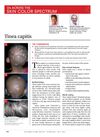
 This article describes cases of tinea capitis in young Black and Latina children, highlighting the condition's diverse presentations such as erythema, scaling, and subtle signs like comma hairs, but reports no new clinical results.
 90 citations
,
January 2009 in “Journal of cosmetic and laser therapy”
90 citations
,
January 2009 in “Journal of cosmetic and laser therapy” In this study, low-level laser therapy showed no statistically significant improvements in hair growth measures, despite some patients experiencing increases in terminal hairs and shaft diameter.
March 2026 in “Plant Science Today” This study investigated the pharmacognostic characteristics of Adenostemma lavenia leaves, identifying key diagnostic features and confirming the presence of major phytoconstituents such as alkaloids and flavonoids, to help standardize this traditional medicinal herb.