 July 2026 in “Pharmacological Reports”
 In this pilot study, topical latanoprost acid was observed to increase hair count and improve hair follicle structure in women with androgenetic alopecia, with no serious adverse events, suggesting potential for further investigation to confirm its efficacy and safety.
January 2020 in “Brazilian Journal of Health and Pharmacy” This study developed nanostructured lipid carriers for finasteride that demonstrated high encapsulation efficiency and reduced cytotoxicity, suggesting potential as a topical treatment for androgenetic alopecia.
This case study reports that a pediatric patient with recalcitrant alopecia areata was treated using a 308 nm excimer lamp and topical tofacitinib 2% gel.
53 citations
,
July 2002 in “Journal of Investigative Dermatology” The Dfl mutation in mice causes poor sebaceous gland function and complete hair loss.
June 2020 in “Research Square (Research Square)” This study identified expression patterns of long non-coding RNAs during the hair follicle cycle in yak, revealing potential functions and sequence conservation with cashmere goats.
 May 2011 in “Dermatología argentina”
 In this case report, a female patient with frontal fibrosing alopecia and lichen scleroatrophicus vulvae experienced excellent results from hair microtransplants combined with finasteride and topical minoxidil, maintained over six years.
 1 citations
,
January 2016 in “International journal of research in ayurveda and pharmacy”
1 citations
,
January 2016 in “International journal of research in ayurveda and pharmacy” This study found that a herbal formulation optimized with specific concentrations of plant extracts showed promising antifungal activity against Malassezia furfur.
 April 2026 in “Zenodo (CERN European Organization for Nuclear Research)”
 In this study, Dodatek A operationalizes the Functional Androgen Axis framework by defining three system-level indices and an efficiency metric to describe androgen function, incorporating key methodological improvements and acknowledging significant limitations for future empirical validation.
April 2005 in “World Journal of Pharmaceutical and life sciences” This article discusses the formulation and evaluation of hair gels that may improve the treatment and prevention of dandruff by providing longer-lasting effects compared to traditional shampoos and lotions, but it reports no new clinical findings.
 20 citations
,
January 2016 in “Intractable & Rare Diseases Research”
20 citations
,
January 2016 in “Intractable & Rare Diseases Research” In this clinical experience, treating frontal fibrosing alopecia with oral finasteride, hydroxychloroquine, tacrolimus, and excimer laser was associated with optimal results in patients with active inflammation.
 6 citations
,
November 2018 in “Photodiagnosis and Photodynamic Therapy”
6 citations
,
November 2018 in “Photodiagnosis and Photodynamic Therapy” This study found that using a wearable low-level light therapy device for photodynamic therapy significantly reduced actinic keratosis lesions and improved quality of life in patients with AK of the scalp.
September 2021 in “Pediatrics in review” This case report describes a 2-year-old girl with Majocchi granuloma, a deep granulomatous folliculitis, which improved after treatment with oral terbinafine despite relapses leading to multiple treatment courses.
This review examines the factors influencing the formation of lamb skin in Tan sheep, highlighting the role of follicle development and gene regulation but reports no new experimental findings.
 1 citations
,
May 2024 in “Dermatology and Therapy”
1 citations
,
May 2024 in “Dermatology and Therapy” This review article examines the current understanding of frontal fibrosing alopecia, noting its prevalence in different demographics and the roles of genetic and environmental factors in its pathogenesis, while highlighting that treatment approaches remain varied and lack standardization.
 52 citations
,
February 2006 in “Archives of Dermatology”
52 citations
,
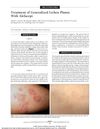
February 2006 in “Archives of Dermatology” This case report describes a 25-year-old woman with widespread lichen planus who did not respond to multiple systemic treatments, including antihistamines, hydroxychloroquine sulfate, and corticosteroids.
5 citations
,
May 2023 in “Clinical Rheumatology” This case report highlights a 33-year-old female with systemic lupus erythematosus and refractory alopecia who experienced significant hair regrowth after treatment with tofacitinib, maintained even after glucocorticoid tapering over two years.
 January 2013 in “Dermatology”
 The ILDS Newsletter reported on efforts to support albinism patients in Tanzania and dermatological conferences.
 3 citations
,
September 2022 in “Veterinary Dermatology”
3 citations
,
September 2022 in “Veterinary Dermatology” This study found that 18 mg melatonin implants did not significantly prevent recurrence of canine flank alopecia compared to placebo in dogs, though the treatment was well-tolerated, with no evidence of improved efficacy.
 April 2023 in “Journal of Investigative Dermatology”
 This study found that NIMP-R14-conjugated nanoparticles, loaded with roflumilast, effectively targeted neutrophils to reduce inflammation and improve symptoms in a mouse model of psoriasiform dermatitis, suggesting potential for targeted therapy in autoimmune skin diseases.
13 citations
,
November 2017 in “BMC Veterinary Research” This study suggests that topically applied fusidic acid may penetrate only the most superficial layers of canine skin but can reach sufficient concentrations to potentially treat infections caused by pathogenic staphylococci.
2 citations
,
January 2016 in “Dermatology online journal” This case report describes a 46-year-old man diagnosed with frontal fibrosing alopecia, a condition primarily affecting postmenopausal women, highlighting its rare occurrence in men.
 May 2026 in “AAPS PharmSciTech”
 This study found that PEGylated LUT-Aspasomes significantly improved neuroprotective effects in stressed rats, enhancing spatial memory, reducing depressive-like behavior, and preserving hippocampal architecture better than free luteolin. Additionally, it increased brain delivery and stability, suggesting potential for treating stress-related neurobehavioral disorders.

This study found that protein hydrolysates from mealworms, especially those derived using flavourzyme, significantly enhance adipogenic differentiation in 3T3-L1 preadipocytes, suggesting their potential as sustainable ingredients for glycemic control, skin health, and tissue regeneration products.
 December 2016 in “Journal of Dermatology and Dermatologic Surgery”
 In this study, the Instant Follicular Hair Unit Transplant technique demonstrated superior hair growth compared to conventional FUE in patients with androgenetic alopecia, although it requires a steeper learning curve for surgeons.
2 citations
,
January 2024 in “Revista Paulista de Pediatria” In this case report, researchers described a 6-year-old girl with severe mandibuloacral dysplasia type A, noting unique physical deformities and a rare homozygous LMNA gene mutation not commonly associated with the condition.
This study found that in an ex vivo model simulating alopecia areata, the DHODH inhibitor farudodstat reduced T-cell proliferation and MHC protein expression in hair follicles, suggesting it may protect against immune privilege collapse without cytotoxic effects.
39 citations
,
December 1998 in “Journal of Cell Science” This study found that the LEF-1 binding site acts as an enhancer element for the wool keratin intermediate filament gene promoter in hair follicle cortex, with specificity regulated by additional factors.
 July 2013 in “Journal of clinical & experimental dermatology research”
 This study found that prototype right heart circulatory assist devices significantly improved hemodynamics and reduced pulmonary vascular resistances in piglet models of acute hemodynamic shock.
 20 citations
,
December 2010 in “Burns”
20 citations
,
December 2010 in “Burns” This study found that longitudinal partial follicular unit transplantation may be an effective method for regenerating hair follicles and achieving satisfactory cosmetic outcomes in patients with facial and scalp burns, while preserving the donor area.