March 2026 in “Anais Brasileiros de Dermatologia” Lichen planopilaris and frontal fibrosing alopecia are likely distinct diseases with different tissue involvement.
April 2014 in “DOAJ (DOAJ: Directory of Open Access Journals)” This study identified 64 chemical compounds in the L. luteus L. plant, including several fatty acids and coumarin, highlighting the pharmacognostic potential of yellow lupine.
3 citations
,
January 2017 in “Acta Dermato Venereologica” This study found that a specific T-cell receptor motif associated with lipid-antigen stimulation may play a role in the pathogenesis of folliculotropic mycosis fungoides.
July 2020 in “Research Square (Research Square)” This study reported distinct expression patterns and potential functions of lncRNAs during the hair follicle cycle in yaks, suggesting insights into lncRNA roles and conservation between yak and cashmere goat.
 October 2020 in “International Journal of Research in Dermatology”
 This review discusses the possible immune-mediated and environmental factors contributing to frontal fibrosing alopecia but reports no new clinical findings, emphasizing the need for standardized treatment evaluations.
 February 2021 in “Indonesian Journal of Perinatology”
 This study found that among 26 pregnant patients with Systemic Lupus Erythematosus, the most common pregnancy complication was intrauterine growth restriction.
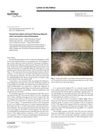 13 citations
,
September 2017 in “Skin appendage disorders”
13 citations
,
September 2017 in “Skin appendage disorders” Some women with Frontal Fibrosing Alopecia also have Lichen Planopilaris, which can lead to more symptoms and affect hair outside the scalp.
April 2024 in “Journal of clinical medicine” This review discusses various therapeutic options for frontal fibrosing alopecia and highlights the need for more research, as existing data are largely retrospective and lack precise treatment guidelines.
September 2025 in “Clinical and Experimental Rheumatology” September 2023 in “Journal of the American Academy of Dermatology” This study found that in participants with notalgia paresthetica, 8 weeks of treatment with difelikefalin significantly improved itch intensity and increased the rate of strict complete response compared to placebo, starting as early as week 3.
 2 citations
,
April 2023 in “Cutis”
2 citations
,
April 2023 in “Cutis” This systematic review discusses the treatment characteristics and outcomes for frontal fibrosing alopecia specifically in Black patients with skin of color, addressing a gap in clinical evidence due to underrepresentation in studies.
8 citations
,
January 2005 in “SKINmed Dermatology for the Clinician” This case report details three patients with follicular mycosis fungoides, highlighting an impressive response to bexarotene in advanced cases, suggesting potential for further research on this treatment's effectiveness.
April 2019 in “Journal of Investigative Dermatology” This study found that frontal fibrosing alopecia involves distinct molecular changes, such as downregulation of steroid and cholesterol pathways and upregulation of fibrotic and immune response genes, which may help guide treatment strategies.
July 2022 in “Journal of Cosmetic Dermatology” This study found that in patients with frontal fibrosing alopecia, combining topical tacrolimus with isotretinoin is more effective after four weeks of treatment compared to tacrolimus with finasteride, though both regimens offered some benefit.
8 citations
,
July 2017 in “The journal of investigative dermatology/Journal of investigative dermatology” This study identified four circulating microRNAs as highly predictive of frontal fibrosing alopecia status, suggesting potential roles in diagnostics and disease understanding.
 May 2023 in “Elsevier eBooks”
 This study found that low-level laser/light therapy is effective and safe for treating mild to moderate androgenetic alopecia in individuals with certain skin types, especially when combined with other treatments, although further research is needed to refine protocols and verify long-term outcomes.
2 citations
,
July 2025 in “Journal of the European Academy of Dermatology and Venereology” This study involved 69 hair experts using a Delphi process to achieve consensus on treating frontal fibrosing alopecia, finding strong agreement on disease monitoring but less on physical and systemic therapies, indicating the need for more research.
1 citations
,
October 2010 in “2010 3rd International Conference on Biomedical Engineering and Informatics” This study successfully cloned and characterized the LEF-1 gene from Inner Mongolia Cashmere Goats, potentially aiding efforts to enhance cashmere production through genetic modification.
3 citations
,
July 2016 in “Tropical Journal of Pharmaceutical Research” This study found that the proposed LC-MS/MS method accurately quantified the drug content in split tablets of finasteride and terbinafine, revealing significant variability and suggesting that non-scored tablets should not be split.
 1 citations
,
May 2025 in “The Journal of Rheumatology”
1 citations
,
May 2025 in “The Journal of Rheumatology” In this case report, treatment with anifrolumab led to significant improvement in symptoms for a 52-year-old woman with refractory systemic lupus erythematosus, including resolution of chronic lupus headaches resistant to previous therapies.
9 citations
,
April 2006 in “International Journal of Dermatology” This article reviews the potential for α-difluoromethylornithine to help control hair growth and prevent cancer, but it does not present new clinical results.
1 citations
,
June 2025 in “Asian Journal of Medical Sciences” In this study, MMF plus prednisolone was found to induce remission in 81% of patients with proliferative lupus nephritis, with fewer adverse effects such as alopecia and amenorrhea compared to CYC plus prednisolone, despite similar overall remission rates.
1 citations
,
September 2024 in “Journal of the American Academy of Dermatology” Farudodstat may effectively treat alopecia areata without harmful side effects.
 115 citations
,
October 2009 in “The Journal of clinical endocrinology and metabolism/Journal of clinical endocrinology & metabolism”
115 citations
,
October 2009 in “The Journal of clinical endocrinology and metabolism/Journal of clinical endocrinology & metabolism” In this study, researchers identified novel LMNA mutations in patients with atypical progeroid syndrome, revealing clinical features distinct from other similar disorders, but unrelated to mutant prelamin A accumulation.
 26 citations
,
September 2018 in “Colloids and Surfaces B: Biointerfaces”
26 citations
,
September 2018 in “Colloids and Surfaces B: Biointerfaces” This study reported that a novel liposomal formulation, SP-bFGF-SF-LIP, enhanced bFGF stability and skin permeability, significantly improving hair follicle recovery and wound healing in a mouse model.
 45 citations
,
January 2014 in “International Journal of Trichology”
45 citations
,
January 2014 in “International Journal of Trichology” This study found that low-level laser therapy may improve hair growth in patients with androgenetic alopecia, either as a standalone treatment or combined with minoxidil or finasteride, without reported adverse reactions.
 April 2026 in “Zenodo (CERN European Organization for Nuclear Research)”
 This research presents the Dodatek A model, elaborating on androgen function through new mathematical indices and methodological improvements, shifting focus from serum hormone concentrations to system interactions to better describe androgen activity comprehensively.
15 citations
,
February 2014 in “PloS one” This study identified two prevalent and one newly proposed founder LIPH mutations in Japanese patients with autosomal recessive woolly hair/hypotrichosis and associated these mutations with different severities of hair loss.
 November 2022 in “bioRxiv (Cold Spring Harbor Laboratory)”
 This study found that conditional deletion of Mof in mice resulted in severe defects in skin development, including compromised epidermal differentiation and hair growth, leading to perinatal lethality.
 69 citations
,
August 2008 in “Journal of The European Academy of Dermatology and Venereology”
69 citations
,
August 2008 in “Journal of The European Academy of Dermatology and Venereology” Oral dutasteride and topical pimecrolimus can safely and effectively treat Frontal Fibrosing Alopecia, leading to significant hair regrowth.