33 citations
,
May 2018 in “Stem Cell Reports” This study demonstrates that Krt15 marks long-lived, multipotent, and injury-resistant crypt cells in the small intestine, which may serve as the cell of origin in intestinal cancer.
27 citations
,
November 2007 in “Genomics” This study found that mutations in type I IRS keratin genes disrupt keratin protein complexes in mice, suggesting crucial roles for these genes in proper hair coat formation.
93 citations
,
July 2006 in “Journal of Investigative Dermatology” This study describes the expression patterns of type I inner root sheath keratin proteins K25–K28 in human hair follicles, highlighting their distinct distribution within different layers.
8 citations
,
January 2012 in “General and Comparative Endocrinology” 5α-Reductase helps regulate hormone action in toad testes, especially during breeding season.
37 citations
,
August 2011 in “Journal of Bone and Mineral Research” This study reported a case of hereditary vitamin D–resistant rickets caused by a single heterozygous missense mutation in the VDR gene, showing dominant-negative effects and reduced response to 1,25-dihydroxyvitamin D3.
15 citations
,
May 2014 in “Journal of Biological Chemistry” In this study, targeting the expression of a keratin KRT5/KRT8 chimeric cDNA in keratin-deficient mice partially restored structural defects in epidermal cells, but did not fully normalize skin health.
61 citations
,
February 1997 in “Differentiation” Hair differentiation starts earlier than thought, involving multiple type-II keratins.
January 2013 in “Kidney international” This report describes a clinical case of a 38-year-old man diagnosed with Birt-Hogg-Dubé syndrome, confirmed by genetic testing, highlighting the presentation of multiple renal tumors and bilateral lung cysts.
 April 2019 in “Journal of Investigative Dermatology”
 This study found that BRG1 is crucial for keratinocyte migration during skin wound healing, as its suppression impairs wound closure by inhibiting migration without affecting cell proliferation or apoptosis.
10 citations
,
December 2015 in “International Journal of Dermatology” This study suggests that basal cell carcinoma and trichoblastoma may share differentiation toward the hair follicle, as indicated by strong positivity in CK 15, follistatin, and Bmi‐1 markers.
January 2009 in “ScholarlyCommons (University of Pennsylvania)” This study provided the first X-ray crystal structure of the mammalian steroid hormone reductase AKR1D1 and identified a disease-related mutant, P133R, which may impact bile acid metabolism and cause clinical symptoms.
53 citations
,
May 1996 in “The Journal of Clinical Endocrinology & Metabolism” This study identified multiple mutations in the 5 alpha-reductase-2 gene among male pseudohermaphrodites in the Dominican Republic, suggesting they do not share a common ancestry.
A new mutation in the TRPS1 gene caused Trichorhinophalangeal syndrome in a 17-year-old, highlighting the need for genetic testing.
284 citations
,
May 2002 in “Proceedings of the National Academy of Sciences” In vitro, this study suggests that CRH may act as an autocrine hormone in human sebocytes, influencing lipid synthesis and potentially impacting skin disorders related to alterations in sebaceous lipid formation.
99 citations
,
May 1998 in “Journal of biological chemistry/The Journal of biological chemistry” This study found that small proline-rich proteins modify the biomechanical properties of cornified cell envelopes in rodent forestomachs, potentially affecting the tissue's ability to withstand mechanical stress.
4 citations
,
November 2024 in “Journal of Advanced Research” In this study, the researchers reported that NMMHC IIA dissociates from PAR1 and activates the CREB3/ARF4 pathway, worsening thrombin-induced blood-brain barrier damage, suggesting it as a potential therapeutic target for blood-brain barrier-related diseases.
 April 2023 in “World Journal of Advanced Research and Reviews”
 This case report describes common thyroid disorders in a β-thalassemia patient with frequent blood transfusions, emphasizing the need for monitoring thyroid function in such patients.
78 citations
,
November 2005 in “Endocrinology” This study found that Hairless (Hr) acts as a corepressor of the vitamin D receptor (VDR) in human keratinocytes, blocking the action of vitamin D on keratinocyte differentiation.
4 citations
,
August 2013 in “Chinese Medical Journal” This study found that a mutation in the seventh exon of the KRT86 gene plays a major role in the pathogenesis of monilethrix in a Chinese family.
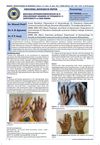 July 2021 in “PARIPEX INDIAN JOURNAL OF RESEARCH”
 This study highlighted knuckle hyperpigmentation as an early sign of vitamin B12 deficiency, indicating a potential link to megaloblastic anemia in the vegetarian population in India.
12 citations
,
January 2001 in “Der Hautarzt” This report on a 37-year-old patient found that trichorhinophalangeal syndrome type I is associated with hair abnormalities, including fine and brittle hair with altered biomechanical properties, but no treatment exists for the hair defects.
 46 citations
,
September 2013 in “PLOS ONE”
46 citations
,
September 2013 in “PLOS ONE” This study identified thyrotropin-releasing hormone (TRH) as a stimulant of wound healing in both frog and human skin models, suggesting it as a potential neuroendocrine wound repair promoter.
33 citations
,
October 1996 in “Journal of Investigative Dermatology”  November 2022 in “The journal of investigative dermatology/Journal of investigative dermatology”
 This study found that hemoglobin α is upregulated in epidermal keratinocytes after UV exposure and may function as an antioxidant, particularly for hair follicle stem cells.
March 2026 in “Tissue Engineering and Regenerative Medicine” 64 citations
,
March 2004 in “The journal of investigative dermatology/Journal of investigative dermatology” This study describes GPRC5D's unique expression pattern in tissues that produce hard keratin, with retinoic acid inducing its expression in hair bulb cells and affecting keratin gene regulation.
January 2008 in “HAL (Le Centre pour la Communication Scientifique Directe)” This study identified complex regulatory elements and interactions involving the Hr gene and HR protein that are crucial for hair follicle formation and cycling in mammals.
6 citations
,
April 2012 in “Journal of Oral Pathology and Medicine” This study suggests that Rushton’s hyaline bodies form through both epithelial changes leading to hair keratin production and hemorrhage supplying erythrocytic substances, resolving previous debates about their origin.
12 citations
,
September 2014 in “Bone” This study characterized two siblings with hereditary vitamin D resistant rickets and a mutation in the vitamin D receptor, finding no immune-related disorders despite a defective T cell response to vitamin D.