 3 citations
,
February 2011 in “Journal of Biomedical Research/Journal of biomedical research”
3 citations
,
February 2011 in “Journal of Biomedical Research/Journal of biomedical research” This study identified a novel mutation, R430Q in the KRT86 gene, in a Han family with monilethrix, which may contribute to the disease's pathogenic mechanism.
11 citations
,
May 2013 in “Journal of Investigative Dermatology” KRTAP10 proteins help form the hair shaft's tough outer layer by interacting with specific hair keratins.
65 citations
,
September 2014 in “BMC genomics” This research found that variations in the KRTAP gene family are likely responsible for the diverse hair phenotypes seen among mammals, influenced by gene repertoire differences, expression, and evolutionary factors.
In this study, researchers identified the c.296C>T (p.T99I) variant in the KRT32 gene, which co-segregates with loose anagen hair syndrome, and found it decreases binding affinity to KRT82, potentially weakening hair anchorage.
141 citations
,
February 1988 in “Molecular and Cellular Biology” This study found that despite strong homology between two K16 genes, only one encoded a functional protein that assembled into keratin filaments in epithelial cells, possibly due to promoter strength differences.
 40 citations
,
June 2013 in “Scientific Reports”
40 citations
,
June 2013 in “Scientific Reports” This study found an association between a splice site variant in the KRT71 gene and curly hair in Selkirk Rex cats, identifying a significant locus on chromosome B4.
27 citations
,
April 2004 in “Biochemical and Biophysical Research Communications” In this study, two novel clusters of keratin-associated protein genes on human chromosome 11 were analyzed, suggesting their products are crucial for hair formation due to preferential expression in hair roots.
 3 citations
,
June 2022 in “European journal of human genetics”
3 citations
,
June 2022 in “European journal of human genetics” This study reports the first cases of recessive KRT17-related pachyonychia congenita involving all ectodermal derivatives in seven members of two consanguineous Pakistani families.
13 citations
,
July 1994 in “PubMed” This study found that TPA treatment induced expression of keratins K6 and K16 in mouse epidermis, with K6 expressed across all cell layers and K16 only in post-mitotic cells.
15 citations
,
May 2014 in “Journal of Biological Chemistry” In this study, targeting the expression of a keratin KRT5/KRT8 chimeric cDNA in keratin-deficient mice partially restored structural defects in epidermal cells, but did not fully normalize skin health.
10 citations
,
April 2013 in “Journal of Investigative Dermatology” This study reports a semidominant inheritance of epidermolytic ichthyosis due to a KRT1 mutation, which was previously thought to be only inherited dominantly.
8 citations
,
September 2020 in “Genes & Genomics” 18 citations
,
January 2015 in “Experimental Dermatology” This study reports new monilethrix cases in Venezuela, the Netherlands, Belgium, and France, expanding the known mutational spectrum of the disorder with novel mutations in KRT81, KRT83, and KRT86 genes.
 April 2017 in “Journal of Investigative Dermatology”
 This study identified that dominant mutations in the KLHL24 gene cause epidermolysis bullosa through dysregulated autoubiquitination, leading to excessive degradation of keratin 14.
January 2017 in “Journal of Chemical Biological and Physical Sciences” This study found that human hair keratin genes contain a few simple sequence repeats, with one repeat in the exon of KRT31 and additional repeats in introns, varying in length compared to their orthologues.
35 citations
,
October 2002 in “Biochemical and Biophysical Research Communications” This study reports that K7 expression patterns observed in mice are similar to those in humans, revealing previously unreported expression in the gastrointestinal tract, tongue, and various "hard" epithelial tissues.
29 citations
,
October 2010 in “Journal of Investigative Dermatology” This research found that activating a KrasG12D mutation in mice led to skin thickening, papillomas, and hair growth issues, suggesting that even rare KRAS mutations can mimic human RAS/MAPK syndrome symptoms.
130 citations
,
April 2003 in “Journal of Investigative Dermatology” This study reports the cloning and expression details of two new human type II keratins, K6irs3 and K6irs4, in the hair follicle's inner root sheath, suggesting a distinct functional role related to hair structure.
46 citations
,
September 2007 in “Journal of Investigative Dermatology” 15 citations
,
January 1993 in “DNA sequence” This study sequenced a related gene to KRT2.9 called KRT2.13, which encodes a type II keratin protein not expressed in the hair follicle, and found significant sequence homology suggesting possible gene conversion or conservation of functional sequences.
 60 citations
,
August 2008 in “Human molecular genetics online/Human molecular genetics”
60 citations
,
August 2008 in “Human molecular genetics online/Human molecular genetics” This study suggests that a position effect disrupting TRPS1 expression may be linked to hypertrichosis in both Ambras syndrome in humans and a similar phenotype in Koa mice.
119 citations
,
September 2000 in “Journal of Biological Chemistry” This study found that the K19 promoter is active in certain gastrointestinal cancer cells and its activity is influenced by the interaction between GKLF and Sp1 transcription factors.
7 citations
,
May 2025 in “Journal of Biomedical Science” This study found that KRT6A expression increases after epidermal barrier disruption, worsening skin inflammation in disease conditions, and suggests that targeting KRT6A could offer a new treatment approach for inflammatory skin diseases linked to epidermal dysfunction.
2 citations
,
May 2024 in “BMC Genomics” This study analyzed the genetics of the patchiness phenotype in New Zealand rabbits and found that the gene KRT82, with identified SNPs in its promoter, may serve as a potential biomarker for breeding these rabbits.
38 citations
,
October 2001 in “British Journal of Dermatology” This study identified a new keratin, K6irs, as a potential histological marker for the inner root sheath of hair follicles in mice and humans, and as a candidate gene for hereditary hair defects.
14 citations
,
September 1999 in “Journal of Investigative Dermatology” Lack of TrkC receptor delays hair follicle development.
49 citations
,
October 1989 in “Genomics” Type I keratin genes are closely linked to the rex locus on mouse chromosome 11, affecting hair development.
 6 citations
,
October 2012 in “Journal of Heredity”
6 citations
,
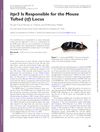
October 2012 in “Journal of Heredity” This study identified the Itpr3 gene as responsible for the tufted hair loss phenotype in the BTBR mouse strain.
93 citations
,
July 2006 in “Journal of Investigative Dermatology” This study describes the expression patterns of type I inner root sheath keratin proteins K25–K28 in human hair follicles, highlighting their distinct distribution within different layers.
 January 2023 in “European journal of gynaecological oncology”
 This study found that depletion of KRT17 in endometrial cancer reduced cell growth, motility, and angiogenesis, suggesting KRT17 as a potential therapeutic target.