 17 citations
,
August 2018 in “BMC Genomics”
17 citations
,
August 2018 in “BMC Genomics” The researchers found that HOXC13 regulates different keratin proteins in a mixed manner, with certain SNPs impeding this regulation, while also demonstrating negative-feedback by HOXC13 and positive regulation by LEF1 and melatonin on the HOXC13 promoter.
 9 citations
,
August 2017 in “Photochemistry and Photobiology”
9 citations
,
August 2017 in “Photochemistry and Photobiology” This study found that isolated red light may serve as an alternative for photo-immunotherapy without additional photosensitizers, as it did not reduce keratinocyte differentiation markers or increase photo-oxidative damage, unlike treatment with IL-4 or UVA1/blue light.
 9 citations
,
March 2012 in “Experimental dermatology”
9 citations
,
March 2012 in “Experimental dermatology” This meeting report discusses the first symposium on natural gene therapy for skin, preceding the 41st annual meeting of the European Society for Dermatological Research, and reports no new experimental findings.
 6 citations
,
September 2019 in “Archives of Dermatological Research”
6 citations
,
September 2019 in “Archives of Dermatological Research” In this study, researchers identified 32 differentially expressed genes involved in androgenetic alopecia, with down-regulated genes associated with Wnt and TGF-beta signaling and up-regulated genes linked to oxidative stress pathways.
 4 citations
,
February 2025 in “GeroScience”
4 citations
,
February 2025 in “GeroScience” This study found that restoring hypothalamic NPY levels in mice delayed aging-related characteristics such as fat loss, hair loss, and memory decline, suggesting that maintaining these levels could be important for counteracting aging and its effects.
 2 citations
,
August 2013 in “British Journal of Dermatology”
2 citations
,
August 2013 in “British Journal of Dermatology” This case report observed a dramatic improvement in a 15-year-old girl's pachyonychia congenita symptoms during chemotherapy for Ewing sarcoma, suggesting chemotherapy's potential role in managing hyperkeratotic conditions.
 September 2025 in “Experimental & Molecular Medicine”
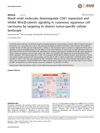
 This study observed that the small molecules KY19382 and KY19334 inhibited cancerous traits in human cutaneous squamous cell carcinoma cells by suppressing the Wnt/β-catenin pathway, indicating their potential as treatments for cancers involving CDK1 overexpression and diseases related to CXXC5 accumulation.
 April 2021 in “Journal of Investigative Dermatology”
 In this study, researchers observed that different ERK signal activation dynamics during hair follicle regeneration are linked to cell fate specification and are affected by distinct upstream signaling pathways.
 May 2018 in “Cell stem cell”
 This study reports that myoepithelial cells in submucosal glands can act as reserve stem cells, regenerating surface airway epithelium after severe injury through a mechanism involving Sox9 and Wnt signaling.
 April 2017 in “The journal of investigative dermatology/Journal of investigative dermatology”
 This study reports that 71% of patients treated with the gamma-secretase inhibitor PF-03084014 for desmoid tumors experienced dermatologic side effects, such as follicular lesions and pruritic eruptions, which were managed with topical or systemic treatments.
 April 2017 in “Journal of Investigative Dermatology”
 This study found that the PON1 192 R allele was associated with an increased risk of psoriasis and altered lipid profiles in patients from Western Mexico.
 April 2017 in “Journal of Investigative Dermatology”
 This study suggests that PKCß plays a critical role in modulating the dermal inflammatory microenvironment in response to dietary lipids in mice.
 April 2017 in “Journal of Investigative Dermatology”
 This study demonstrates that genome-edited epidermal stem cells can continuously monitor blood glucose levels in vivo and potentially aid in diabetes treatment through skin somatic gene therapy.
 April 2017 in “Journal of Investigative Dermatology”
 This study suggests that mutation-targeted siRNA therapy could potentially treat keratitis-ichthyosis-deafness syndrome by selectively reducing harmful GJB2 mutant gene expression in patient-derived keratinocytes.

In this study, researchers found that alopecia areata is linked to immune cell activation against hair follicle autoantigens and is associated with heart changes and cardiac marker alterations in humans and mice.
 December 2012 in “Journal of Dermatological Science”
 This study found that activating Wnt/beta-catenin signaling in hair follicles is sufficient to induce adipocyte generation in the dermis, affecting both hair follicle stem cell activation and adipocyte differentiation.
 April 2021 in “Journal of Investigative Dermatology”
 This study developed a transgenic mouse model to explore androgenetic alopecia, finding that inducible COX2 expression led to sebaceous gland changes and hair miniaturization, with reversible effects upon reducing COX2.
 April 2017 in “Journal of Investigative Dermatology”
 This study identified altered neurological pathways and potential drug targets involved in androgenetic alopecia, suggesting areas for future research and possible therapies.
 April 2023 in “Cancer research”
 This study suggests that KRTAP2-3 may serve as a novel biomarker to identify cells in the polyaneuploid cancer cell state, which is linked to therapy resistance and poor prognosis in prostate cancer.
46 citations
,
September 2007 in “Journal of Investigative Dermatology” 15 citations
,
May 2014 in “Journal of Biological Chemistry” In this study, targeting the expression of a keratin KRT5/KRT8 chimeric cDNA in keratin-deficient mice partially restored structural defects in epidermal cells, but did not fully normalize skin health.
34 citations
,
January 2004 in “Genomics” In this study, researchers identified a cluster of hair-specific keratin-associated protein genes within the 21q22.3 region, revealing a novel transcription mechanism involving TSPEAR/C21orf29 that may bypass typical transcriptional termination sites.
3 citations
,
January 2011 in “生物医学研究杂志:英文版” In this study, a novel heterozygous transition mutation in the KRT86 gene was identified, which may be pathogenic for monilethrix in a Chinese family.
18 citations
,
January 2013 in “Veterinary Dermatology” This study found that K15 is a useful marker for investigating the role of stem cells in canine hair follicle tumours, while nestin is not optimal.
54 citations
,
September 1999 in “PubMed” This study suggests that immunostaining for Keratin 15 may be a useful tool for differentiating between basal cell carcinoma and trichoepithelioma.
38 citations
,
February 1988 in “Molecular and Cellular Biology” This study found that among the two highly homologous K16 genes on chromosome 17, only one produced a functional protein due to stronger promoter activity.
 1 citations
,
January 2023 in “Biochemical and biophysical research communications”
1 citations
,
January 2023 in “Biochemical and biophysical research communications” This study found that hepatic KRT79 expression is regulated by PPARA and is significantly associated with liver stress, suggesting it may serve as a diagnostic marker for liver diseases.
 1039 citations
,
February 2009 in “Nature Reviews Molecular Cell Biology”
1039 citations
,
February 2009 in “Nature Reviews Molecular Cell Biology” This review discusses the reuse of molecular mechanisms involved in embryonic skin development for maintaining adult epidermal homeostasis and reports no new results.
 835 citations
,
October 2008 in “Nature Genetics”
835 citations
,
October 2008 in “Nature Genetics” Lgr5 is a marker for active, long-lasting stem cells in mouse hair follicles.
 759 citations
,
February 2009 in “Current Biology”
759 citations
,
February 2009 in “Current Biology” This review summarizes fundamental concepts and recent advancements in hair follicle biology, including insights from mouse models into broader molecular and cellular processes relevant to regeneration and development.