51 citations
,
January 2007 in “The journal of investigative dermatology/Journal of investigative dermatology” This study identified a novel keratin-associated protein, KAP24.1, which is specifically expressed in the human scalp and located in the hair cuticle.
47 citations
,
September 2004 in “Journal of Biological Chemistry” This study provides evidence supporting a regulatory relationship between the transcriptional regulator Hoxc13 and Krtap16 genes, which are crucial for proper hair growth in mice.
January 2015 in “Kölner Universitäts PublikationsServer (Universität zu Köln)” 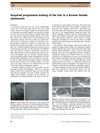 1 citations
,
October 2012 in “The Journal of Dermatology”
1 citations
,
October 2012 in “The Journal of Dermatology” This letter to the editor describes a case of acquired progressive kinking of the hair in a Korean female adolescent, but no new research findings are reported.
 July 2022 in “Biomedicines”
 This study found that 4-aminopyridine significantly enhanced skin wound healing by accelerating wound closure, improving skin architecture, and promoting hair follicle neogenesis and tissue regeneration.
 June 2021 in “bioRxiv (Cold Spring Harbor Laboratory)”
 This research found that the microtubule catastrophe factor KIF18B plays a crucial role in promoting spindle orientation in keratinocytes, linking this process to cell fate decisions during hair follicle morphogenesis.
57 citations
,
January 2019 in “Stem Cell Research & Therapy” OCT4 helps hair stem cells renew and fight aging, potentially aiding hair regrowth.
 11 citations
,
September 2011 in “Biochemical journal”
11 citations
,
September 2011 in “Biochemical journal” This study found that neurotrophin-4 regulates Cav3.2 T-current expression in D-hair neurons via TrkB receptor activation, highlighting its role in mechanosensitive function.
36 citations
,
March 2011 in “Stem Cell Reviews and Reports” 40 citations
,
September 2010 in “Journal of Biological Chemistry” This study found that keratin K80, structurally similar to hair keratins, is broadly expressed in various epithelial tissues and is involved in intermediate filament formation with multiple type I partners.
January 2011 in “Anhui nongye kexue” This study reports that the recombinant expression vector pcDNA3.1-KK demonstrates specific expression in the skin of newborn mice.
44 citations
,
August 1990 in “PubMed” This study provides evidence for K1 and K10 derivatives' presence in the inner root sheath and hair cuticle, suggesting that these hair follicle parts may follow familiar keratinization principles.
6 citations
,
April 2005 in “Journal of dermatological science” This study identified the expression sites of five KAP5 genes on human chromosome 11q13.5 in scalp skin sections but did not explore their detailed distribution within hair follicles.
32 citations
,
November 1998 in “Journal of Biological Chemistry” This study found that the unique functions of keratin 16 are likely determined by its tail domain, challenging the previous hypothesis about the role of the helix 1B subdomain.
January 2022 in “Indian dermatology online journal” This case report presents the first documented instance in India of cutaneous amyloidosis causing pigmented papules on the ear pinna, with lesions resolving after treatment with topical tretinoin.
November 2021 in “Research Square (Research Square)” This study found that 4-aminopyridine significantly improves skin wound healing by enhancing various cellular and molecular processes, suggesting its potential for rapid translational development in wound treatment.
 January 2025 in “Cellular and Molecular Life Sciences”
 Using mouse hair follicle organoids, this study demonstrated that BMP4 plays a key role in controlling hair follicle coloration and growth, as well as directing Nestin-positive stem cells towards becoming melanocytes, the pigment-producing cells responsible for hair color.
 September 2017 in “Pediatric Dermatology”
 This source provides no abstract, offering no results or conclusions on a case involving a 14-year-old boy with abrupt-onset hair changes presented in a photo quiz format in Pediatric Dermatology.
 May 2026 in “Theranostics”
 This study found that the DKK3-CKAP4 signaling axis is involved in fibroimmune remodeling in androgenetic alopecia and that targeting this pathway may restore a regenerative hair follicle environment, offering a potential therapeutic strategy to counteract hair follicle miniaturization.
 16 citations
,
May 2000 in “Endocrinology”
16 citations
,
May 2000 in “Endocrinology” This study identified a new gene, mrp4, in mice, which suggests it may have a unique role in the growth and development of hair follicles in the ears and tails.
 126 citations
,
October 2012 in “PLoS ONE”
126 citations
,
October 2012 in “PLoS ONE” This study found that reduced cytokinin levels allow plants to adapt to low potassium conditions by enhancing root hair growth, reactive oxygen species accumulation, and expression of a key potassium transporter gene.
8 citations
,
August 2020 in “International Journal of Molecular Sciences” This study found that in Arabidopsis root hairs, oscillating cytoplasmic potassium dynamics precede growth oscillations, suggesting a complex interplay with calcium signaling and microfilament structure in regulating root hair growth.
October 2025 in “Journal of Neurophysiology” In this study, researchers identified two types of potassium channels, BK and Kv4.2, in rat Merkel cells and reported that these channels play important roles in repolarizing action potentials and maintaining resting membrane potentials, potentially influencing tactile encoding in these cells.
March 2026 in “International Journal of Cosmetic Science” This research reports that KCV and its palmitoylated derivatives show strong effectiveness in strengthening hair proteins, indicating their potential for use in advanced hair care products.
August 2001 in “The Journal of Cell Biology” In this study, the researchers identified a third keratin 6 gene in mice and developed a double knockout model that could aid in hair growth research.
17 citations
,
June 2003 in “The journal of investigative dermatology. Symposium proceedings/The Journal of investigative dermatology symposium proceedings” This study found that genes in the human keratin-associated protein 1 family may have evolved mainly through gene duplication of cysteine-repeat motifs.
5 citations
,
March 2011 in “Proceedings : 格差センシティブな人間発達科学の創成=Science of human development for restructuring the "gap widening society"” This study introduces a non-invasive photoacoustic imaging technique that accurately measures hair follicle density and subdermal angles, showing strong correlation with the gold-standard photographic method.
57 citations
,
July 2000 in “Toxicology Letters” This study found that the K6/ODC transgenic mouse model is highly sensitive to identifying genotoxic carcinogens, showing 100% concordance with traditional rodent bioassays.
2 citations
,
February 2021 in “FEBS open bio” In this study, transfection experiments showed that mutations in the K85 gene affect filament formation with K35, which may impact hair formation related to ectodermal dysplasia.