 1 citations
,
September 2024 in “Frontiers in Cell and Developmental Biology”
1 citations
,
September 2024 in “Frontiers in Cell and Developmental Biology” Pigs are a good model for studying human hair growth and disorders.
 1 citations
,
August 2023 in “bioRxiv (Cold Spring Harbor Laboratory)”
1 citations
,
August 2023 in “bioRxiv (Cold Spring Harbor Laboratory)” This study explores ear pinna development in mice and reports that elastic cartilage formation is disrupted in a short ear mutant, correlating with increased adult adipocytes and impaired chondrogenesis.
 1 citations
,
April 2022 in “Cell Death Discovery”
1 citations
,
April 2022 in “Cell Death Discovery” This study found that SMAD2 overexpression in human hair follicle stem cells promoted differentiation and apoptosis while inhibiting proliferation, and Smurf2 upregulation limited mouse wound healing by suppressing the SMAD2/NANOG/DNMT1 axis.
 1 citations
,
January 2018 in “Springer eBooks”
1 citations
,
January 2018 in “Springer eBooks” Photobiomodulation is an effective and safe treatment for increasing hair growth in people with hair loss.
 January 2024 in “Frontiers in immunology”
 This review highlights the crucial role of histone modification in the pathogenesis and treatment of chronic inflammatory skin diseases, and explores therapeutic strategies targeting these epigenetic changes to improve management of conditions such as psoriasis and atopic dermatitis.
 November 2022 in “bioRxiv (Cold Spring Harbor Laboratory)”
 This study found that conditional deletion of Mof in mice resulted in severe defects in skin development, including compromised epidermal differentiation and hair growth, leading to perinatal lethality.

This study identified a genetic locus associated with rhabdomyosarcoma susceptibility in mice and found that specific differentiation markers are linked to the regression of basal cell carcinoma.
 December 2018 in “IntechOpen eBooks”
 This review discusses recent advancements in understanding neuroendocrine regulation of keratin biology and highlights the potential of neurohormones to treat skin disorders, but it reports no new clinical results.
 April 2018 in “D-Scholarship@Pitt (University of Pittsburgh)”
 This study found that keratin-75, discovered in enamel tissue, is secreted by ameloblasts using an unconventional pathway involving the ER-Golgi-Intermediate-Compartment and Golgi, differing from typical cytokeratin localization.

This study found that proretinal nanoparticles, applied topically, are safe and effective for penetration into hair follicles, enhancing retinoid biological activity in the skin while reducing irritation compared to conventional retinal formulations.
 January 2018 in “Elsevier eBooks”
 This chapter reviews various in vitro and laboratory animal models for studying potential therapies for alopecia and reports no new results.
 January 2014 in “Journal of Investigative Dermatology”
 Proteins like aPKC and PDGF-AA, substances like adenosine and ATP, and adipose-derived stem cells all play important roles in hair growth and health, and could potentially be used to treat hair loss and skin conditions.
 January 2012 in “Durham e-Theses (Durham University)”
 This study found that knock-down of keratin 15 in various cell lines affected cell spreading, morphology, migration, differentiation, and proliferation, suggesting its role in maintaining the stem cell nature of keratinocytes.
 July 2011 in “British Journal of Dermatology”
 Dermatologists give better information on pathology forms, hypersensitivity vasculitis is a common skin issue, misdiagnoses can occur, and various skin conditions are linked to loss of elastin or genetic factors.
 January 2011 in “International Journal of Trichology”
 The document concludes that doctors should recognize congenital triangular alopecia to avoid unnecessary treatments, as it does not respond to steroids like alopecia areata does.
 December 1991 in “Annals of the New York Academy of Sciences”
 This article discusses themes in the molecular structure of hair and reports no new research findings.
 June 2026 in “Nano Research”
 In this study, researchers developed a novel 3D bio-printed skin scaffold using exosomes from liver cells, which enhanced wound healing by promoting cell growth, angiogenesis, and reducing inflammation in large skin injuries, suggesting potential applications in treating chronic skin conditions.
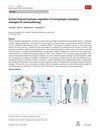
This review highlights that surface mechanical regulation can program macrophage behavior through specific mechanical cues on material surfaces, potentially advancing immunotherapies and regenerative medicine by enabling precise control over macrophage functions.

This study used a mouse model to reveal that S100A4-positive cells, specifically fibroblasts and immune cells, play a crucial role in nipple development, essential for successful lactation, despite no issues with mammary morphology or milk production.
 January 2026 in “Frontiers in Bioscience-Landmark”
 This study reported that, in a laboratory setting, araliadiol derived from Centella asiatica activated antioxidant pathways, mitigating urban particulate matter-induced oxidative stress and skin damage.
 January 2026 in “Communications Biology”
 This study constructed a single-cell atlas of hair follicle cells from yaks and taurine cattle, revealing that differences in WNT signaling within dermal papilla cells may be key to the yak's adaptation to cold environments on the Qinghai-Tibet Plateau.
 November 2025 in “EXPERIMENTAL ANIMALS”
 In this murine study, researchers found that topical treatment with Philippine stingless bee propolis increased folliculogenesis, epidermal thickness, and melanogenesis, but not hair length, potentially supporting hair follicle regeneration and melanocyte function in chemotherapy-induced alopecia models.
 October 2025 in “Frontiers in Veterinary Science”
 This study found that treating secondary hair follicle stem cells from Arbas cashmere goats with 10 μg/mL quercetin for 48 hours significantly boosted cell proliferation and reduced apoptosis by activating several signaling pathways, suggesting a potential strategy to enhance cashmere production.
 January 2025 in “bioRxiv (Cold Spring Harbor Laboratory)”
 This study found that rhamnose can restore hair-inducing gene expression in dermal papilla cells and accelerate hair follicle regeneration by promoting the hair cycle into the anagen phase, suggesting its potential therapeutic application for alopecia treatment.
 January 2025 in “American Journal of Stem Cells”
 This review discusses the role of melanocyte stem cells in skin pigmentation and potential regenerative therapies, but reports no new clinical results.
 January 2025 in “Scripta Medica”
 In this study, PDO, PLLA, and PCL thread implants in ageing rat skin did not alter MMP1 gene expression but maintained collagen levels similar to young skin without UV-B exposure, suggesting possible benefits for skin collagen but not gene expression modification.
 July 2024 in “Frontiers in Pharmacology”
 This study suggests that pilose antler extracts promote hair regrowth in androgenetic alopecia mice by activating the AKT and Wnt pathways, enhancing hair follicle stem cell proliferation.
 February 2024 in “Planta”
 This study found that TRM21 acts as a positive regulator of flavonoid biosynthesis at the translational level in Arabidopsis, leading to changes in root hair growth and a decrease in flavonoid content when TRM21 is mutated.
 October 2023 in “Scientific reports”
 In this study, researchers found that the synthetic stress hormone dexamethasone caused opposite effects on hair growth-related proteins, reducing SFRP2 and increasing SFRP3, which respectively stimulate and inhibit hair follicle cell proliferation in human dermal papilla cells.
 November 2022 in “CARDIOMETRY”
 This article discusses the potential benefits of GcMAF and oral MAF, developed by "Saisei Mirai", for cancer and other conditions, but reports no new clinical results.